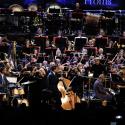
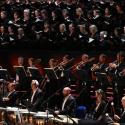
It’s always fun to watch the Orchestra of the Age of Enlightenment. As members of a self-governing orchestra, and often soloists in their own right, the players like to do things their way. Come the ripe second theme of the Bruckner Adagio and the cellos were giving it lashings of vibrato; muesli-wearing adherents to pure tone be damned. So were six of the eight basses ranged across the back of the Royal Festival Hall stage. That just left two basses, left-hand fingers resolutely unmoved. They weren’t going to vibrate for Bruckner, for Sir Simon Rattle or for anybody.
There are many positive aspects to this independence of spirit. The OAE members demand much of themselves and each other. They were on fine form last night, leaning with Rattle into the big tunes of this musical postcard from the year 1880, almost entirely free of the tuning slips that dogged their even later foray into the 19th century last week with Mahler’s ‘Resurrection’ Symphony. This was also a supersized OAE, and the opening Tragic Overture brought back good memories of the all-Brahms Prom they gave last year in similarly massed numbers with Marin Alsop. On stage with them, Rattle seems to unleash a pack of orchestral animals whose blood is up; whereas in Bruckner and Haydn over the past week he has still been controlling the sound of the LSO as a tamer and trainer.
The Brahms was both impulsive and implacable, spinning between the two sides of tragedy’s coin with more even, Sophoclean balance than in Schumann’s Manfred (not the first or last time Brahms used works by his mentor as a hidden model). Trombones and echoing horns were magically poised, hollow yet resonant ghosts wandering from the ‘Wolf’s Glen’ Scene in Weber’s Der Freischütz, that textbook of German orchestral Romanticism. Before the denouement, Stephen Saunders on bass trombone played a noble and melancholy oration of the kind Elgar would steal for himself.
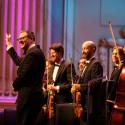
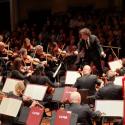
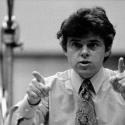
A Berlin-style weight of sound lies behind Rattle’s patient approach to BrucknerDebts and borrowings came still more explicitly to the fore with the Scherzo from Hans Rott’s Symphony. Rott killed himself at 26 after getting the critical brush-off from Brahms, who may have taken umbrage at some comic over-scoring for triangle that makes the Scherzo of his own Fourth Symphony sound positively austere. Rott’s fellow students at the Vienna Conservatoire included Gustav Mahler, who evidently stashed away a copy of the symphony and pulled it out of the bottom drawer when his own inspiration was running dry. The First, Second, Fifth and Seventh all contain appropriations from this Scherzo as shameless as an RBS bonus or a BoJo hymn to Brexit, not only in the matter of melodic shape but the engineering of harmonic crises. More subtly, as Rattle (pictured above) showed in a nimble account, Rott’s piece – and this movement in particular – takes shape as a structural missing link between the 19th century symphonists such as Schumann, and the through-composed reinventions by Mahler and Nielsen of what a Scherzo can and should do.
After the interval, Bruckner’s Sixth opened with a stealthy purpose that belied its speed, distinguished as the Eighth had been by frictionless movement between themes and sections. This is not quite Bruckner freed of tradition and habitude as was the aim of the historically informed and Modernist-inclined conductors, as far distant from each other in spirit as Michael Gielen and Sir Roger Norrington. A Berlin-style weight of sound lies behind Rattle’s patient approach to the composer, cultivated from Nikisch to Furtwängler to Karajan to Abbado – all different personalities, responding to their times with a common instrument. Only the ‘period’ bulge and elegant tail to the first movement’s main theme bore the signature of the OAE.
If there were aspects of the Eighth last week that satisfied head more than heart, this Sixth was more wholly successful, especially in tying together the threads of the finale. Space and time was given to Bruckner’s surprising twist back to the pathos of the Adagio. When the first movement’s main theme finally returned, it did so not as a brusque sign-off, but in richly deserved triumph.