

One day, when superhero films are as rare as westerns, we will appreciate the brilliant talent applied to the best of them. X-Men: Dark Phoenix moves with a classic’s smooth conviction from its very first scenes. The simple changing of a family’s car radio station on a sunny Seventies day gives mutant Jean Grey a taste of her power’s tragic potential, then we slam into the film’s Nineties present, where the adult Grey (Sophie Turner) is part of the X-Men’s rescue of a space shuttle crew, a desperate mission of seat-clenching excitement which ends with her absorbing a cosmic storm. The queasy strings of Hans Zimmer’s superb score are as stuffed with uneasy portent as the script, which signals promises to be fatally broken.
X-Men is the franchise which laid the groundwork for the Marvel boom in 2000, and has been repeatedly contorted, rebooted and recast during its two decades. This is writer – and now debutant director – Simon Kinberg’s third attempt at the comics’ iconic 1980 Dark Phoenix tale, effectively remaking his own script for the studio-compromised, fan-disliked X-Men: The Last Stand (2006).
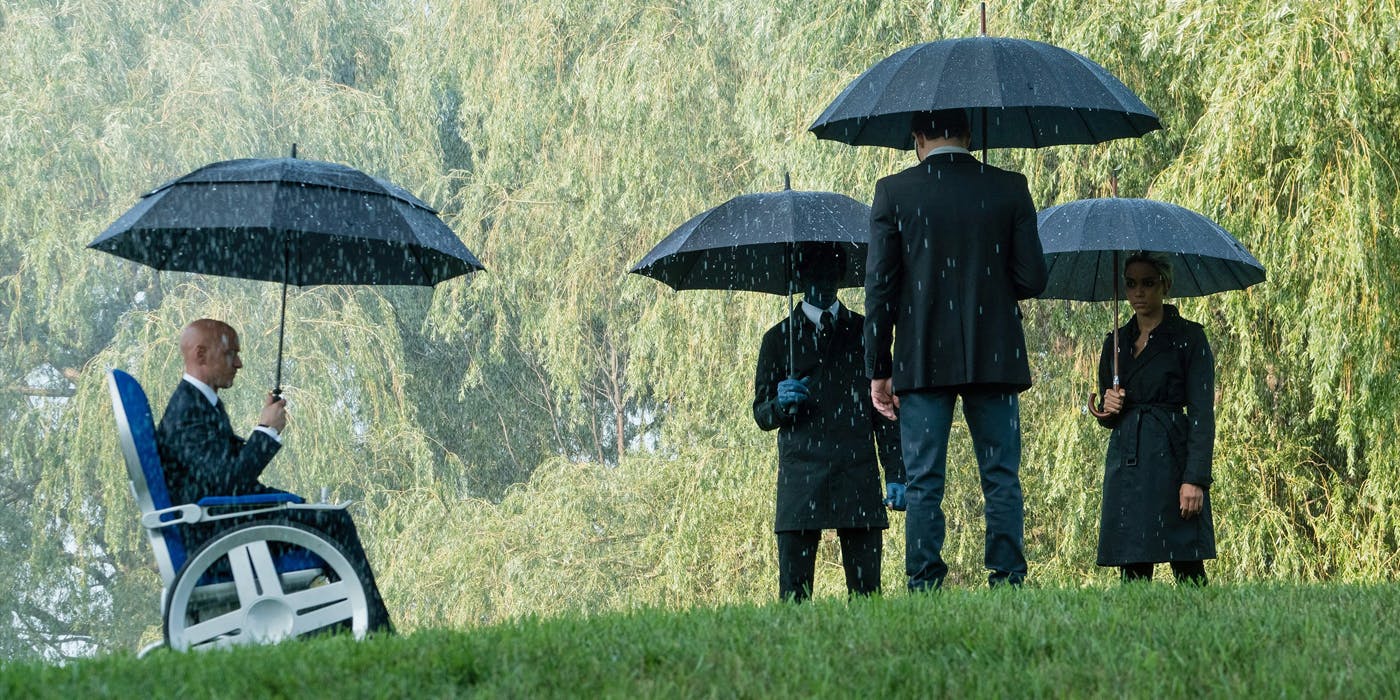 Continuity hang-ups were binned long ago. Like Avengers: Endgame, this is simply the finest finale the series could wish for, both mythic and psychologically modern. The #MeToo movement, which sunk main X-director Bryan Singer, is accommodated to fertile effect. X-Men was always the comic for outcasts, its mutants stand-ins for oppressed sexualities and races. Now at the last, Kinberg interrogates its own gender blind-spots.
Professor X (James McAvoy) has been the paternalistic head of the mutants’ improvised family, taking them into his upstate New York school, often as children. He has been a vain, untrustworthy guardian, Kinberg now suggests. Blue-skinned Raven (Jennifer Lawrence), the team’s new field leader, gives him both barrels after their outer space near-death: “And by the way, the women are always saving the men around here. You might want to think about changing the name to X-Women.” If the script seems initially overloaded with epigrams about difference and identity, it also genuinely addresses shifting gender ground.
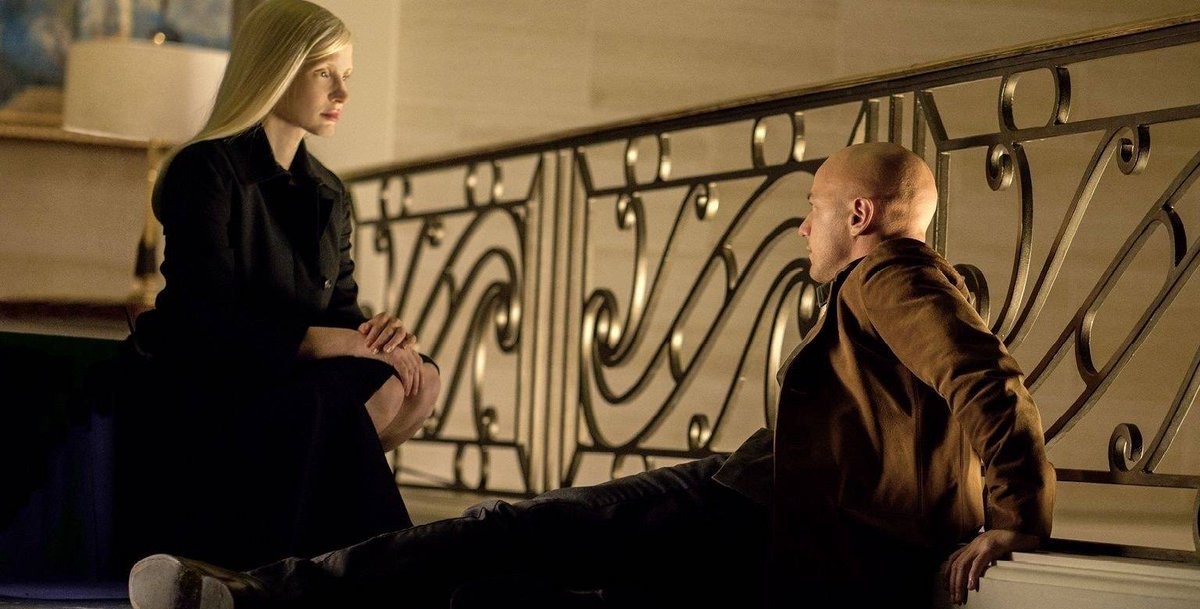 The film anyway belongs to Sophie Turner’s Jean Grey, whose new cosmic might makes her both menacing and tragic. The little girl of the first scene was too, and Turner’s humane performance is riven with pain and power. Freeing herself from the X-Men with terrible violence, she is spurned too by the films’ previous mutant murderer, Magneto (Michael Fassbender), falling instead into the embrace of another hugely dangerous female, the alien Smith (Jessica Chastain, pictured above with McAvoy). X-Men: Dark Phoenix thereby passes an apocalyptic Bechdel Test.
Fassbender, cast in 2011 to pep up a role originated by Ian McKellen, now looks weathered by the character’s wrenching changes, giving pathos to this farewell performance. Kinberg meanwhile belies his directorial inexperience, and Dark Phoenix’s huge budget, with telling intimacy. When the testosterone ratchets up as Magneto and an Army officer argue, the camera’s so close you can almost smell their breath.
The superhero pandemic may be sucking the life from other genres, making cinema-going an exclusively blockbuster affair. Perhaps streaming would always have done so. There is anyway something moving about watching believable characters behave morally on behalf of others, with adult difficulty. This is a worthy tribute to the late Stan Lee, getting his final credit here, and to a golden age of movie fantasy.












Add comment