Music increasingly escapes categories: labels are of course useful, but they also fail to evoke the richness of practices which are led by musical experiment and imagination rather than obedience to one of the genres or sub-genres that have proliferated as musicians no longer define themselves as strictly as they used to.
The Portuguese composer and pianist Rodrigo Leão could be described as "contemporary classical", but this hardly does justice to the singular path he treads, a genre of its own, instantly recognisable and strongly reminiscent of his work as leader of the group Madredeus. The sweetness of melancholy has a particular tinge in Portugal, the country of writer Fernando Pessoa and the fado, an emotional state or colour described as saudade, a longing without specific goal and a sadness with a paradoxical undertone of joy.
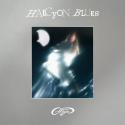
Leão’s new album is anchored in his soulful piano playing – a distant cousin of Harold Budd’s ambient keyboard. Combined with an ethereal choir, gentle electronica, a string section rich in warm low cello sounds, this is music filled with autumnal emotion: the sweet abandon of letting go rather than anything rousing. There is a hint of minimalism here, with cycles of repetition, and a gentle rippling movement, an exploration of the pain and happiness stored in personal memory, rather than meditative stasis. As with Madredeus, this is music whose melancholy is very intense – programme music for introspection and regret. Not surprisingly Madredeus provided nostalgic soundscapes for Wim Wenders’s Lisbon Story, and Leão and his collaborator on several tracks the Italian composer Ferederico Albanese, are often asked to make music for films. They are purveyors of atmosphere, high quality mood music.
There are vocals from Caspar Clausen, from the band Efterlang – a voice rich in vulnerability and well-suited to the music’s moods, Viviena Tupinova, Ângela Silva, and Loão’s daughter Sofia. The best material on the album, though, comes from the moody instrumentals – not least a wonderful track such as “Dresden”, a jewel which best captures the falling motion of the melancholy mood that gives the album such an individual tone.