

It had been a perfect summer's day and around the stadium denim-clad punters sipped ice-cool beer and discussed how this reunion would sound. Everyone knew how Axl had aced it, right here, a year ago, filling in as AC/DC's lead singer. Many hoped it would be just like when the classic line-up last played London in 1992. Except this time the sound quality would be better.
new music reviews
Kieron Tyler

In Summer 1973, Manu Dibango’s “Soul Makossa” peaked at 35 on the American charts. Originally the A-side of a France-only single issued in 1972, the song had been discovered by New York DJ David Mancusso. After Mancusso repeatedly played it, “Soul Makossa” was licensed by Atlantic, charted and became integral to what was bracketed as disco music. The Cameroon-born Dibango had been making records under his own name since 1961 and “Soul Makossa” was his breakout track.
Tim Cumming

It’s the seventh Songlines Encounters festival, with musical meetings ranging from Portugal (Thursday’s Ricardo Ribeiro) to India (Friday’s Bollywood Brass Band with South Indian violinist Jyotsna Srikanth).
Kieron Tyler

Fat cigar at hand, Jim Morrison is pondering the future of music. “Maybe it might rely heavily on electronics, tapes,” he says. “I can envision maybe one person with a lot of machines, tapes and electronic set ups, singing or speaking and using machines.” When that prediction was first broadcast in late June 1969, what he described may have seemed outlandish but it came to pass. He can’t be held responsible for Howard Jones, but whole genres of music evolved which revolved around solo artists utilising, indeed, machines, tapes and electronic set ups.
Kieron Tyler

Hoyt Axton’s songs were heard most widely when recorded by others. Steppenwolf recorded his “The Pusher” in 1967. It featured on their early 1968 debut album but was most pervasive in summer 1969 after it was included on the soundtrack of Easy Rider. Axton himself didn’t release a version until 1971, when “The Pusher” appeared on his Joy to the World album. The title track, another of his best-known compositions, had charted earlier that year for Three Dog Night. Back in early 1963 "Greenback Dollar", which Axton had co-written, was a US hit for The Kingston Trio.
Guy Oddy

There are not many bands who are obtuse enough to begin a gig with a 45 minute unrecorded song, especially when they are preparing to go their separate ways at the end of the tour and have no plans for further recording. Sonic adventurers Swans, however, have no such qualms. After taking to the stage with a minimum of fuss and looking like Sam Peckinpah’s The Wild Bunch gone feral in the backwoods of Twin Peaks, they pick up their instruments and launch into “The Knot”.
Thomas H. Green

While the 36 records reviewed below run the gamut of Wreckless Eric to Democratic Republic of the Congo Afro-electronica, this month there’s also a special, one-off section for modern classical. This is due to an ear-pleasing haul of releases reaching theartsdesk on Vinyl lately.
peter.quinn

Almost 50 years since he started working on it, and following its world premiere in New York in February, it was a huge thrill to hear Jon Hendricks' lyricisation of the classic Miles Davis-Gil Evans album Miles Ahead at Kings Place.
james.woodall

This is the most frustrating film. It’s probably no fault of the makers, but it’s rare to have to assess a documentary for what it doesn’t have. Over nearly two hours of celebrating the Sgt. Pepper’s Lonely Hearts Club Band Beatles period – late 1966 to their record label Apple taking off in 1968 – there is not a note of the group’s music.
Well, alright, in the opening animated credits you detect a phrasal shimmer of George Harrison’s sitar-driven “Within You Without You”, but that’s it. The score, by Andre Barreau and Evan Jolly, is a confection of atmospherics and rhythms that could be the Beatles but absolutely isn’t.
Sgt. Pepper’s Lonely Hearts Club Band is the most famous album of the 20th century. The LP practically defines the last part of it. On paper, it makes real sense to release a half-century anniversary documentary about the trailblazer. But it’s asking a lot of someone aware of the Beatles brand and familiar with, say, a handful of their best-known songs to be amused by or engaged in chitchat about – the here non-heard – “Being for the Benefit of Mr Kite!” or “Lovely Rita” if they don’t know them.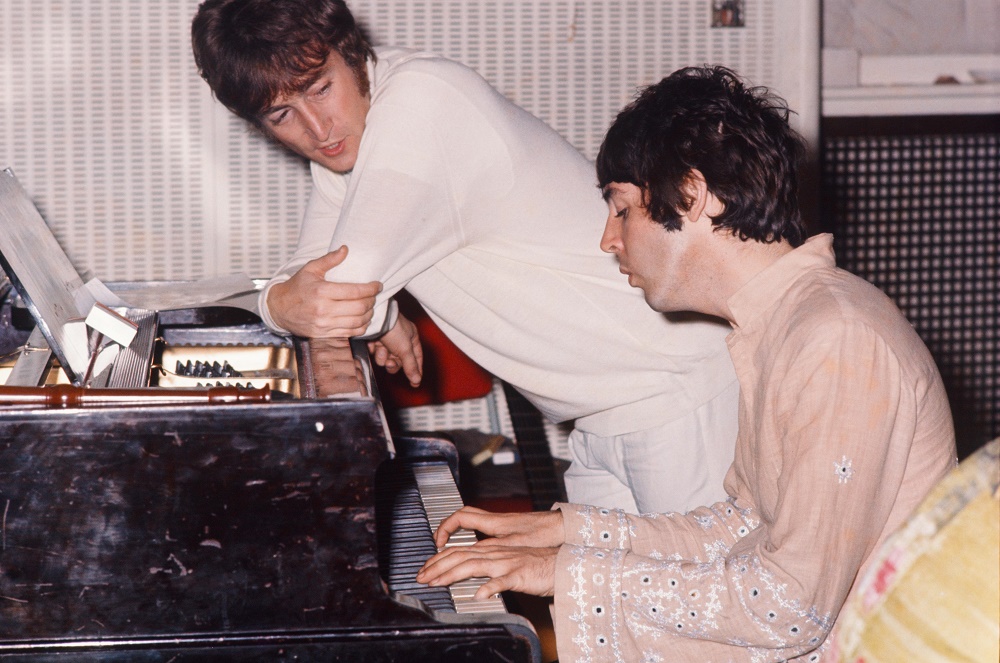 Unfortunately, that is a legacy downside of the group’s global reach: Apple Corps, representing the interests of Paul McCartney, Ringo Starr and the estates of John Lennon and George Harrison, will – putting it simply – just say no to anyone seeking to broadcast or exploit Beatles originals in the public domain, unless four parts are in total agreement and involved. So it was that, by contrast, Ron Howard last year stole a march on Alan G. Parker, maker of this new film, by having – with the help of producer George Martin’s son Giles and presumably Apple – original live sound in Eight Days A Week, about the touring years, as well as new spoken contributions from McCartney and Starr. Neither appears in It Was Years Fifty Ago Today! Who does?
The four themselves, of course, in black and white, from various clips amassing from 1963 in the form of cheeky and, increasingly in 1966, combative press conferences. Many of these can be found on YouTube. One of the more intensive periods of defence-before-the-press was as they headed for the last-ever tour, of America in August 1966. Lennon had set the fires blazing in the Bible Belt by a casual comparison to Christ and the Beatles being more popular… It was really the turning-point in the band’s relation to their gargantuan public. After horrible experiences in the US (and, just before, in the Philippines) they vanished from view. What emerged in 1967 was a completely refashioned quartet, an utterly different sound world and, from behind closed doors, astonishingly innovative recording techniques.
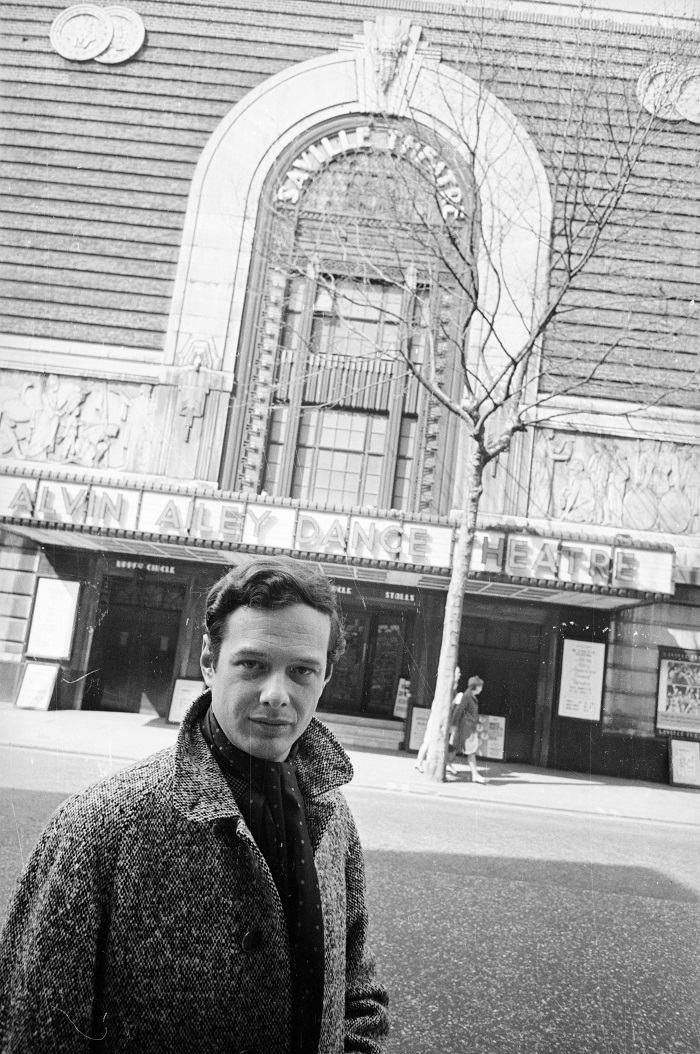 This is the frame for Parker’s film: historical, cultural, anecdotal. Analysis of the Pepper music is of necessity skimpy, as the film gives us in that respect nothing to listen to. Useful and largely articulate talk comes from well-known Beatles commentators such as biographers Philip Norman and Hunter Davies and journalist Ray Connolly, and from – until now – relative unknowns such as Barbara O’Donnell, who worked for manager Brian Epstein, and Jenny Boyd, sister of Harrison’s first wife Pattie, coming across still as a cut-glass 1960s charmer. Rather sweetly, a groomed, smiling, 75-year-old Pete Best, sacked as drummer in 1962, has some screen-time to praise his three long-lost friends, though this is inessential as of course he had nothing to do with Pepper or, indeed, the recorded legacy.
Most interesting of all is ex-pop manager Simon Napier-Bell, fearsomely intelligent, who reckons he was the last person to “hear” Brian Epstein. Epstein’s death from pills and booze in August 1967 was a complicated affair, as traumatic to the four as the death threats of 1966. He, too, hadn’t had much to do with Pepper and without question was feeling sidelined. In his last days he was, if Napier-Bell remembers right, hoping to get the younger man into bed, but Napier-Bell was in Ireland (and never, anyway, going to do Epstein’s bidding). He had invented an early version of the answerphone. On his return to London he heard a succession of blurred messages from the 32-year-old, left through the evening of his death. What Napier-Bell reveals next, one of the more jolting moments in the film, would amount to a spoiler...
Two significant survivors drastically missing here are Epstein’s lieutenant Peter Brown and McCartney’s girlfriend for most of the Beatles era, Jane Asher. Both are alive and thriving, can claim to have been in the eye of the storm from 1963 and would, as interviewees, have been not just feathers in Parker’s cap but lightning-bolt scoops. Alas, they are as likely to talk as Parker was of getting even two seconds of “A Day in the Life”. But those two saw it all.
We must be content with some rare footage not of Pepper-making – that would be gold-dust – but of events early in the Apple years: glimpses of each Beatle in a world even further removed from the protective luxuries and early-form showbiz high security of the touring years. After Pepper they rocketed into, even for them, entirely untested territory of fame. The main virtue of It Was Fifty Years Ago Today! is to remind us how they shaped not only the late 1960s but, in senses more than musical, the very culture of the 20th century’s last third.
Overleaf: watch the trailer to It Was Fifty Years Ago Today!
Kieron Tyler

As the producer of the early Kinks and Who, Shel Talmy’s status as one of British pop’s most important figures is assured. He is, though, American. Despite being integral to the mid-Sixties boom years when the Limeys took over, he was born in Chicago in 1937.