DVD: Fire at Sea

Poetic, prize-winning documentary brings the refugee crisis to life

share this article

'A particular society meeting the desperate flotsam from collapsing ones'

There’s a doctor on Lampedusa who has nightmares about the corpses the sea brings to his island: the women who give birth on sinking boats with umbilical cords left uncut, the diesel-poisoned skins, and those left to dehydrate and rot in holds. Perhaps 400,000 refugees have arrived at this Italian outpost nearer to Libya than Sicily, perhaps 15,000 dying. Gianfranco Rosi’s Berlin Golden Bear-winning documentary closely observes both Lampedusa’s enduring seafaring culture, and the death and disaster crashing into it from neighbouring cataclysms.

Rosi wrong-foots expectations by intercutting the high seas interception of floundering refugee ships with the boyhood of 12-year-old Samuele, as he climbs trees, carves catapults, and throws up over the side of the fishing boat he will follow his dad and granddad onto. Considerate, garrulous, anxious Samuele and his family live intertwined with their ruggedly beautiful landscape. His grandmother’s memory of an earlier buffeting of the island by historic storms, when fishermen dodged warships whose rockets turned the 1940s sea red, gives Rosi his title. Samuele’s warmly considerate doctor, Pietro Bartolo, is the same one pained by current fires at sea.

Rosi offers no overt editorial voice, instead spending a year observing the self-sufficient bonds between Lampedusans, and the criminal chaos played out off their coast. His crisply defined digital photography is painterly, but can’t prettify the sight of science-fictional, decontamination-suited crews hauling out the half-dead to twitch and shudder on deck. It’s a traumatic routine. The refugees who survive stay unknown and alien compared to Samuele. But a woman weeping helplessly in the arms of another denies the dehumanising prejudice they’re subject to from politicians and papers. Rosi’s film is about a particular society meeting the desperate flotsam from collapsing ones. His humane, quietly poetic realism places daily horrors amidst ongoing life.    
Add comment

The content of this field is kept private and will not be shown publicly.

Plain text

  • No HTML tags allowed.
  • Lines and paragraphs break automatically.
  • Web page addresses and email addresses turn into links automatically.
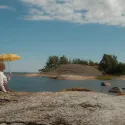
Rosi spent a year observing Lampedusans, and the criminal chaos played out off their coast

rating

4

explore topics

share this article

the future of arts journalism

You can stop theartsdesk.com closing! 

We urgently need financing to survive. Our fundraising drive has thus far raised £33,000 but we need to reach £100,000 or we will be forced to close. Please contribute here: https://gofund.me/c3f6033d

And if you can forward this information to anyone who might assist, we’d be grateful.

Subscribe to theartsdesk.com

Thank you for continuing to read our work on theartsdesk.com. For unlimited access to every article in its entirety, including our archive of more than 15,000 pieces, we're asking for £5 per month or £40 per year. We feel it's a very good deal, and hope you do too.

To take a subscription now simply click here.

And if you're looking for that extra gift for a friend or family member, why not treat them to a theartsdesk.com gift subscription?

more film

Love, loss and belief collide in rural India
Bing Liu directs a lukewarm adaptation of Atticus Lish's novel
Underwhelming parody of ‘Downton Abbey’ and its ilk
A tale of forced migration lifted by close-knit farming family, the Conevs
A chiller about celebrity chilling that doesn’t chill enough
The Iranian director talks about his new film and life after imprisonment
Inspiring documentary follows lucky teens at a Norwegian folk school
Seymour Hersh finally talks to a documentary team about his investigative career
Jafar Panahi's devastating farce lays bare Iran's collective PTSD
A queer romance in the British immigration gulag
The French writer-director discusses the unique way her new drama memorialises the AIDS generation