

This 3D film lets you see the whites of Metallica’s eyes. Filmed live last year, the band are already gurning and grinning sufficiently to project their exuberance at playing their songs of rage and pain to the biggest hall's back without video assistance (singer James Hetfield is pictured below). Nimrod Antal’s cameras anyway let you experience US metal’s biggest and most enduring band as if you’re on-stage with them.
film reviews
Veronica Lee

There will be some who will sneer at this film, but ignore them. Director Dexter Fletcher has fashioned a wonderfully enjoyable movie from a play by Stephen Greenhorn (who also wrote the script), in which a good-natured story about family, love and friendship is set to the music of The Proclaimers.
Tom Birchenough

Not long ago James McAvoy finished a brutal run as Macbeth, and he’s back in Filth as another manic Scotsman hurtling towards self-destruction. The setting is Nineties Edinburgh, and his character, dodgy policeman Bruce Robertson, has a Machiavellian genius for getting one over on his copper colleagues, until his addiction-fuelled luck runs out, and he comes crashing down. He’s the first-person narrator for most of the story, and though repulsively believable, his grip on the narrative starts separating from reality.
Matt Wolf

The new puritanism of the American cinema continues apace with Thanks For Sharing, which follows on from the more elegantly made but comparably dispiriting Shame in positing Manhattan as the most sexually dysfunctional place on earth. What did New York do (besides elect Michael Bloomberg as mayor three times over) to deserve all this carnal angst and obsessiveness and shame? Lord knows, but even the wonderful Mark Ruffalo can't lift the spirits of a film that wallows in its therapy-speak environs.
Nick Hasted

What would you do if your six-year-old daughter vanished in broad daylight, and the man you’re sure took her is walking free? The answer for Keller Dover (Hugh Jackman, pictured bottom left) is as plain as the paranoid survivalist’s stockpiles that fill his basement. But his direct action against Alex Jones (Paul Dano), the apparently child-like man he’s sure is a monster, ripples against multiple traumas and secrets in this crime film of novelistic breadth.
The most interesting character in Prisoners’ superbly cast assembly of victims and victim-predators isn’t Jackman’s shattered vigilante, a selfless Maria Bello as his stunned, shrinking wife, Terrence Howard as the amiable friend and shocked accomplice in retribution whose daughter was also stolen, Paul Dano’s latest vulnerable, dangerous misfit, or The Fighter’s Melissa Leo, unrecognisable as his grey-haired, flinty aunt (Leo is pictured left with Dano below).
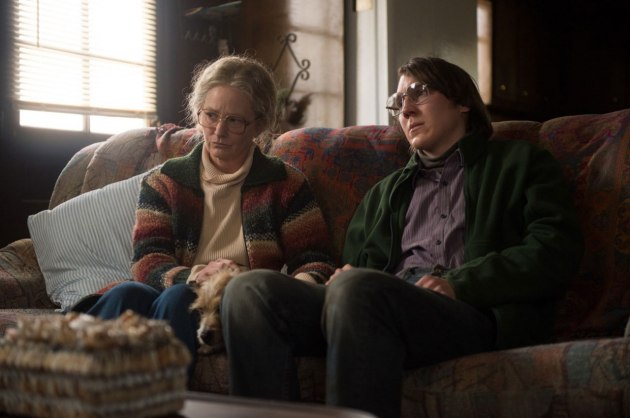 No, the creation that really lingers in the memory is Jake Gyllenhaal’s Detective Loki. The first time you see him, alone in a diner in the working-class Pennsylvania suburb where two children are lost, he seems like the sort of man who might have them. His eyes twitch with tiredness under werewolf-thick brows. He says little, instead simmering watchfully, his damped-down violence occasionally exploding. In a film stuffed with hidden compartments and cages, physical and mental, he plainly has plenty. It’s a great performance, built on stoically silent fury, and a stillness so intense it nearly quivers. Gyllenhaal gives what could be just another brilliant, damaged cop human weight of black hole gravity.
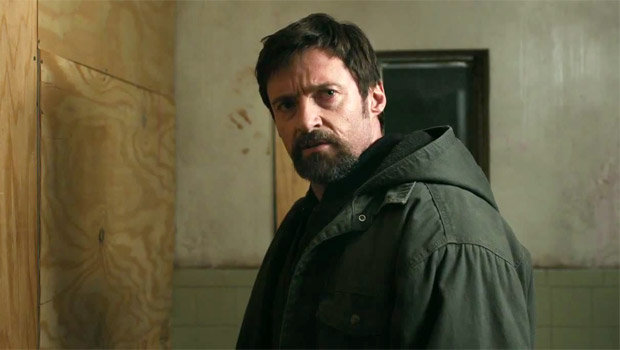 There’s a lot to admire about Prisoners. Aaron Guzikowski’s screenplay has the range and realism of one of Richard Price or George Pelecanos’s epic crime novels. Director Denis Villeneuve finds a quietly sinister, defeated atmosphere in his grey American town’s winter nights. Actually shot in an Atlanta suburb, Conyers, Pennsylvania doesn’t even seem a happy place in the opening minutes, as the Dovers and Birches relax at Thanksgiving with their kids. The dread of an accident waiting to happen, of streets secretly prowled by wolves, is there from the start.
This is a film where everyone worked honestly and well. Why, then, doesn’t Prisoners convince me? Guzikowski has crafted a fine thriller plot and many memorable characters. But each gets in the way of the other. There’s too much loaded contrivance, and multiple points of view spread the cast thinly through a leisurely 2 ½ hours. Villeneuve’s subtle touch, admirable in so many ways, also makes him pull his punches. As with Peter Jackson’s The Lovely Bones, it’s a relief not to have to wallow in the potentially awful crimes against children which Prisoners portrays. But polite veils are pulled down too often. The full nightmare never arrives, or seems likely to. Finally, Prisoners is true to its narrative’s nature, burying its best effects, some of which bloom and haunt days later. It adds up to less while it’s actually on.
Overleaf: watch the trailer for Prisoners
emma.simmonds

In this refreshingly rowdy, distinctly feminist film from debut writer-director Maggie Carey an inexperienced, tirelessly sensible teenage girl prepares herself for college life by taking charge of her own sexual awakening. She does so in a way that's hilariously overly administrative, with her plans taking the form of the title's tawdry, quite literal "to do list".
Demetrios Matheou

Jean-Pierre Jeunet, of Amélie fame, makes so few films that whenever he pulls one out of that magic hat of his it feels like an event. At least it used to. The Young and Prodigious T.S. Spivet, which has just had its world premiere at the San Sebastian Film Festival in Spain, is a lovingly made and sweet film; but the novelty of the director’s style – that minutely observed production design and full-blown whimsy – has now completely worn off, leaving one wishing for a new dimension.
Karen Krizanovich

Created in a time when we could be shocked, The Wicker Man shows its power by being shocking still. Conceived by its director Robin Hardy, writer Anthony Shaffer and star Christopher Lee as a reaction to New Age-ism, The Wicker Man delights, thrills and horrifies in this latest version, restored to the American theatrical cut.
Matt Wolf

An immensely likeable cast gets pushed to breaking point and beyond in Girl Most Likely, a Kristen Wiig quasi-romcom that is preposterous and obnoxious in turn. The tale of a playwright called Imogene (Wiig) who starts over by returning to her New Jersey home and to Zelda, her former go-go dancer of a mum (an unplayable role here foisted upon the great Annette Bening, if you please), the film wants to be distinctively quirky and merely ends by shutting the audience out.
Jasper Rees

There is a life-size cardboard cut-out of Colin Firth in Austenland. He blends in very nicely. The only way you can tell him apart from the other actors in this cloth-eared, cack-handed romantic comedy of paramount awfulness is you can't see the despair and self-loathing in the whites of his eyes.