Founder rate ends 9th September.

We’re rebuilding theartsdesk to secure the future of real arts journalism. Be part of it by subscribing: if you do it now, the founders’ rate of just £40 yearly is yours FOR LIFE!

SUBSCRIBE NOW 

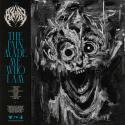
Album: Tim Hecker - Shards

Finessed expressiveness as a compilation of soundtrack work coheres

share this article

The question of personality in abstract and ambient music has always been a fascinating one. Without conventional signifiers of expressiveness, and especially in the age of AI, it’s easy for people to think “a computer could have done that”. Indeed, there’ve been plenty of musicians from Brian Eno levels of prominence on down who have played with this, using algorithmic generation, anonymity and so forth as part of the project.

That’s never been the case for Canadian musician Tim Hecker, though. The fact that this is a collection of extracts from Hecker’s recent film and TV soundtrack music, yet holds together perfectly as a short, intense album as such tells you all you need to know about the coherence and distinctiveness of his work. This isn’t entirely abstract electronica: “Morning (Piano Version)” for example has stand-up bass and, yes, piano – and it’s followed by “Monotone 3” which has rippling clarinet repetitions running through it. But in fact even the purely electronic tones hit the emotional centres hard and instantly, and the feelings pile up throughout the album.

The most important thing is, no matter how detached it is from normal rhythm, tonality or playing, Hecker’s work always has been and still is bodily. Human emotions are measured in heartbeats, breaths, mental lags between reflex and reaction – and Hecker understands how texture, suspense, the difference between a flicker and a rumble, impact on these in the most direct ways. The distinctiveness of his music is like that of the greatest fine dining chef: he plays tricks on the senses, but never just for cheap thrills, always to trigger the memories and feelings in profound ways. So whether it’s pure tone glissandi or rough-edged thuds, every single sound has its place, and the whole is greater than the sum of its parts.

@joemuggs.bsky.social

Listen to "Sunset Key Melt":
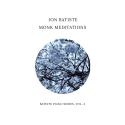
The most important thing is, no matter how detached it is from normal rhythm, tonality or playing, Hecker’s work always has been and still is bodily

rating

5

explore topics

share this article

Help secure the future of arts journalism

In this era of algorithmic recommendation, opaquely sponsored content and AI slop, theartsdesk’s mission to preserve real journalistic and critical values has never been more important.

If you like what you see here, please join us 
in this mission.

Subscribing to the site will help us in our coming 
redesign and expansion.


If you do this before the 9th September this will be at our guaranteed founder’s rate: 
your subs will never increase again.

Subscribe now for £5 per month. 
or yearly for just £40.

Or if you simply want to support us with a one-off donation, you can do so here.

more new music

Two decades on from Patti Smith and the original pink sheep, the anniversary edition proved again that Latitude's real headliners are rarely at the top of the bill
From Korean bluegrass to gigantic Ugandan xylophones, the global diversity of musical life is here
A championing, but also perhaps a dilution, of South African innovation
The return of a punk-era landmark of British art rock
With a danceable rock feel she displays her burgeoning creativity
The garage rockers don't do themselves justice on new album
Andy Dragazis’ musical alter-ego offers nods to legendary arranger and producer Charles Stepney
The welcome return of a foundational album of electronic minimalism