I'll be straight: I wasn't sure what to expect at this show, because I've never been a Björk fanatic as such. I loved – and saw live – The Sugarcubes as a teenager, I've raved to her Nineties Debut and Post era tracks, and I've enjoyed plenty more since, not least the intimacies of Vespertine [2001] and the wild expansiveness of Volta [2007]. I've been impressed with her choices of collaborator, and always considered her a vital cultural mover and shaker.
But there's never been that thrill at hearing of a new release or need to learn all the words to a song. Sometimes I've found the collaborations, the costumes, the virtual reality videos, the concepts or the electronic explorations the most interesting part of her work. And yes, just occasionally, I've found myself wishing she'd more often write songs with instantly catchy choruses, like she used to. All of which probably put me at odds with 99 percent of the gathered crowd at the Royal Albert Hall last night, who queued round the block to see Ms Guðmundsdóttir perform her first show accompanied only by strings, and were clearly extremely excited to be there.
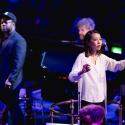
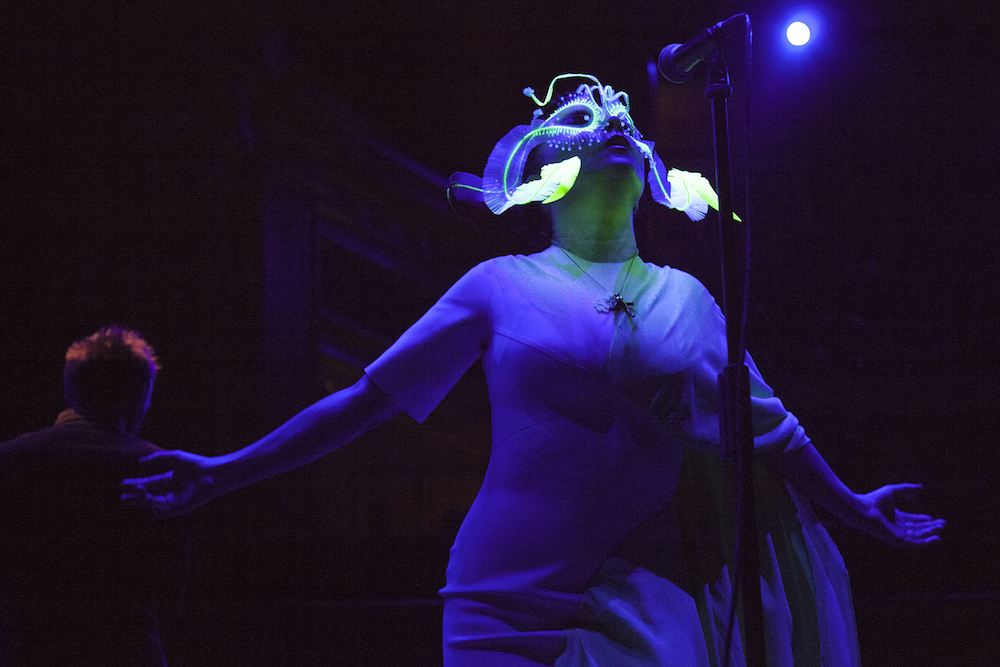 This set may have been stripped of electronic whistles and bells – but Björk still put on a show. She followed her chamber ensemble on to stage, wearing a duckling yellow cape stitched to a white plastic minidress with white platform shoes and a Chinese dragon-like, tendrilled mask/headress, to ecstatic applause, and began the careful picking out of wishes for a relationship from “Stonemilker” - the first and most immediately memorable song on last year's Vulnicura. Even with her face mostly covered, her presence was arresting, her movements simple but deliberate and her voice perhaps stronger than it's ever been. It's easy to think of her as a highly mannered singer, but here the catches and exaggeration of words were barely there – reduced to that simple care with articulation – and the strength and purity of her tone rang out.
As she worked her way through the songs of Vulnicura in order, the string arrangements were subtle, with not a lot added to make up for the removal of the electronic and other sounds. There were gentle hints of early 20th century romanticism, and steadily the idea of Björk as composer made more and more sense. With each record she's moved further and further away from her alternative pop roots, perhaps putting up barriers to entry with the complicated meandering melody lines – it's hard to imagine anyone covering a latterday Björk song – but listening last night, the complexity of the counterpoint and number of insidious melodic hooks in the backing became very clear. You're expected to eschew expectations and give your attention fully to take in these songs, and in the concert hall context, rather than the atmosphere of a gig or rave, you are drawn right in close to their emotional realities.
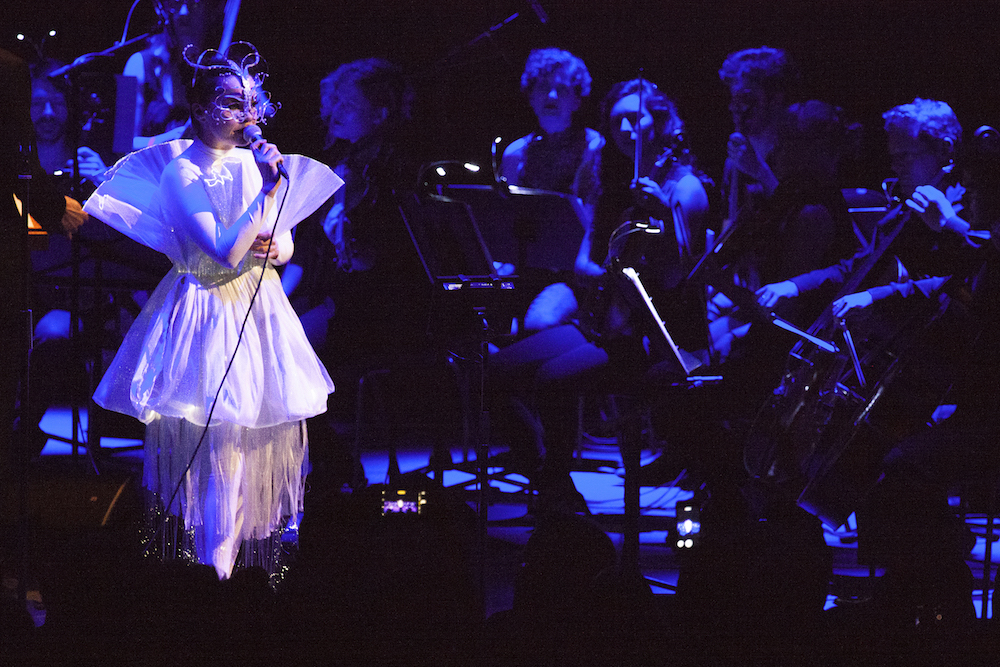 Vulnicura is more than anything a relationship breakup record, so those realities are painful, and when she reached the fourth track, “Black Lake”, they became devastating. As on the record, the song structure periodically dissolves completely into orchestral drones that rise angrily, or fade to almost nothing, before the song tentatively re-starts. These felt like moments of horrible threat of annihilation or breakdown, but also brought home the note-perfect integration of Björk's voice and songwriting with the arrangements. Hearing her voice so bare brought home how, for all that she dresses up and explores ideas that are more-than-human, it is still a very human sound. And this in turn also made her lyrics, which can seem detached in their analysis of human feelings, hit brutally hard and directly. Her prosaic and factual approach to emotional intensities and abstractions made absolute sense.
After an interval, dressed in a fibre-optic lampshade and mask that showed more of her face, she dipped back into her back catalogue, getting wilder and wilder reactions each time a song intro sparked recognition in the audience. In particular two tracks from 1997's Homogenic – “Joga” and, in an encore, “Pluto” – worked brilliantly shorn of the heavy dance music production, while “Pagan Poetry” from Vespertine sparked an impromptu and extraordinarily well in-tune backing vocal singalong from the crowd, once more reminding how many hooklines are hidden beneath the lead vocal lines in Björk's songs. From the unflinching examinations of pain and resentment in the first half, the show had transformed into a glorious celebration, and the palpable love for the performer was infectious. Consider me a convert.