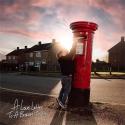
Dylan aficionados will get the cover art reference immediately: one of Elliott Landy’s celebrated Woodstock photos, taken in 1968. Joan Osborne, Grammy nominated “no-nonsense Dylan” (New York Times) interpreter, is wearing neither hat nor guitar on the sleeve of her latest album but the allusion is clear and two of the songs on what she hopes will develop into a “songbook series” (in the manner of Ella Fitzgerald’s homage to the great American songwriters) are from The Basement Tapes.
On this her ninth studio album, the Kentucky-born singer-songwriter who’s called New York City home for some 30 years, spans Dylan’s long career, from Freewheelin’ (1963) to Love and Theft (2001), though she doesn’t revisit “Tears of Rage”, which she sang with Dylan and the Grateful Dead in 2003. The Band’s Richard Manuel, who co-wrote “Tears” at Big Pink back in 1967, has described Osborne as “the most gifted vocalist of her generation and a singer who understands the nuance of phrase time and elocution”. No pressure then!
She herself has said that when she sings Dylan she feels “like an actor must feel doing Shakespeare”. While many of his songs have become a staple of the repertoire, others – songs so uniquely and indelibly Dylan, “Highway 61 Revisited” for example – do represent a challenge. But Osborne rises to it and while you feel she’s lent an ear to others who’ve put their stamp on his work, including Joan Baez, his earliest interpreter, she takes ownership of every song. Supporting musicians include Jack Petruzzelli on guitar and Keith Cotton on keyboards.
“Masters of War” and “Ring Them Bells” are among the standout cuts, Osborne’s understated handling causing you to reflect anew on the oh-so-familiar lyrics in dark times that are now scarily close to those in which Dylan was first writing. “Rainy Day Women #12 and 35” is measured, bluesy, meaningful – half a century and light years away from the celebrated Blonde on Blonde opener. Drone and ostinato propulsion are the key to “Highway 61”, the lead guitar a reference to the 1965 original, the biblical imagery thrown in to stark relief. “Tangled Up in Blue” and “You’re Gonna Make Me Lonesome When You Go”, both from Dylan’s 1975 masterpiece Blood on the Tracks, are tender and touching.