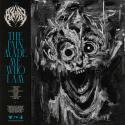
Gagner l’argent Francais (which translates as “to earn French money”) begins, like any other West-targeted West African album, with the pitter-patter of tiny congas and some delicately picked kora. But then, two minutes in, a bright stab of reverb-heavy keyboard heralds the entrance of grungy rock guitar and drums. It’s a bold way to open an album in that it may alienate some of the Radio 3 Late Junction world music demographic. But it isn’t the first time Mamani Keita has put before her audience challenging and innovative music. I have particularly fond memories of Electro Bamako, her 2001 collaboration with Marc Minelli. This was a unique fusion of sophisticated Parisian pop, jazz and electronica juxtaposed to Malian melodies and rhythms, which - unlike many such throw-everything-into-the-pot exercises - was actually greater than the sum of its parts.
Or perhaps I should say, Mamani melodies rather than Malian melodies. Because the woman has both a unique voice - precise, linear and seemingly almost indifferent to expressing emotional variety – and a unique sense of melody, which sometimes brings to mind the poised austerity of much traditional Japanese music. Perhaps she got so used to suppressing emotional complexity – as almost all backing vocalists tend to do - when she performed with Salif Keita (no relation). But this curiously detached delivery, despite its inarguable charm, in an odd kind of way puts the weight of responsibility on the instrumental aspect of the music to provide the light, shade and dynamic variety.
This worked superbly on Electro Bamako but perhaps a little less well here. The opening title track is an absolute stormer. And then there’s “Doussou” which subtly tips its elegant hat towards reggae without ever just sounding like the token reggae track. But then sometimes – such as on the rather lumbering “Sinikan” - the rock drumming gets too oppressive in its click-track-enslaved solidity and consequently one’s attention drifts. But for anyone who likes their African music overlaid with rock, this admirably solid and engaging album should be investigated.