There’s a specific vocabulary that attends the arrival of a new Nick Cave album in the 21st century. Words like redemptive, cathartic, stark, unsparing are a crucial part of his music’s terroir. They’re as inescapable as the figure of death, and that’s something that looms large too, in the art and in the life.
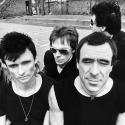
With a Gothy, druggy, doomy and well-dressed back story trailing from the Birthday Party and post-punk years of the 1980s, through to the presence of the Lord, interventionist or not, on The Boatman's Call, and the epic, wracked albums of the past decade, you suspect any new work from Nick Cave is going to have a lower centre of gravity than most cultural products, and a higher density. It’s going to have impact. And you’re going to feel it
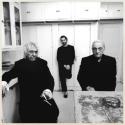
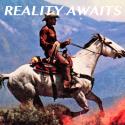
So it is with Wild God, with Cave saddling up and riding through a misty land of choirs and strings, and glimmering against that the leaner textures of the band – which includes longtime co-creator Warren Ellis, plus a guest turn from Radiohead’s Colin Greenwood on bass, joining veteran drummer Thomas Wydler and guitarist George Vjestica, among the nine-strong ensemble.
On listening to the first few songs, including the title track, the dark intensities of Ghosteen are leavened by something peculiar in Cave’s oeuvre: joy. Opener “Song of the Lake” has a lot of nice band play obscured by the orchestrals, and I’d be minded to wipe some of the choir parts, too, which you’ll find spread across a lot of the record. Its lyric encompasses the sinister concision of nursery rhyme and the push and pull of good and evil, past and present, immersion and desertion, the repeated "never mind, never mind" refrain fading the song out to a kind of light-stepping cosmic despair, the song’s central figure alone and palely loitering, aka the knight in Keats’ ballad. At least he’d be wearing a good pair of shoes.
The title song is big and ambitious, but sounds to me on the cusp of overwrought lyrically, vocally and musically, straining at an intensity that shouldn’t be strained at, and that’s before the choir blows its top at the three-minute mark.
It takes the leaner band sound of “Joy” and the compelling “Conversion” for the album to start to click, but even they get slathered in a sauce of choruses and symphonic textures that the songs could live without – give me Cave’s piano and voice, Ellis’s subtle sonic textures, and the lean support of the rhythm section, and set the rest adrift.
But “Joy” is the pivotal song here, the singer addressing a vision of his dead son in an associative lyric that’s bigger and better than it is. It’s a blues that extends to poetry, because it has a proper life of its own, until, that is, the choirs and symphonic brass blow back in with a long and unneeded coda.
Further in, “Long Dark Night” is a night-haunting of a ballad with the band to the fore, strings left on the cutting room floor, and all the stronger for it. Ditto “Wow oh Wow”, an affecting elegy, complete with a personal phone recording, of former musical and onetime partner Anita Lane reminiscing about their life together from the land of the dead. Album closer “As the Waters Cover the Sea” (how does that work?) recalls the suspended sound textures of the opening “Song of the Lake”. Its intensely religious lyric more or less gets up and places a fresh bowl of blood under the bed of the injured knight from the “Corpus Christi Carol”. It’s all good, until that bloody choir starts in again.