It's understandable that people get put off leftfield dance music, given how much micro-genre delineation and dog-in-a-manger protectionism there can be in underground scenes. It can seem a shame sometimes, but then again, these are part and parcel of the fertile creativity and passion that exists around the music, so it's swings and roundabouts. However, there are some areas you're guaranteed not to find frowning chin-strokers, and one of those is inhabited by Brighton label Tru Thoughts, which consistently produces music that's friendly, welcoming and veritably insists you forget nitpicky definitions, kick your heels up and enjoy yourself.
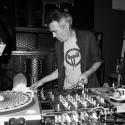
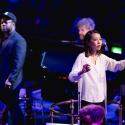
Watch Anchorsong perform "Ghost Touch" live
Tokyo-born London resident Masaaki Yoshida has such a natural way with his loops of (mostly) recognisable real instruments that it never seems like he is trying to imitate a particular style; rather that he is simply playing around with the sounds and riffs for precisely as long as they sound fun, and no longer. His tracks range from less than one minute to almost six, and take in rhythms that reference everything from the slithery, skippy UK garage of the late 1990s (“Plum Rain”, “Ginko”) to hypnotic mid-1970s Krautrock (“Split”, “Ghost Touch”). But this referencing doesn't seem to be for the sake of scoring cool points, but for the very particular sensual bodily effects that those rhythms afford.
The instrumentation throughout suggests classic soul: Fender Rhodes electric pianos, string quartets, shakers, handclaps. Its smoothness in lesser hands would risk being bland, but Yoshida is clearly so involved with his process (his recent live shows [see video above] have proved as much) that the pleasure principle is strong enough to take it well beyond the merely “nice”. In a similar vein to recent records from Kieran Hebden aka Four Tet, it requires no prior hipness or involvement to be drawn into its lushness.