Juraj Herz’s acclaimed dark comedy The Cremator proved too much for post-1968 censors, the film withdrawn from circulation in 1973 and banned until 1990. While several prominent Czech directors left the country after Soviet tanks had rolled into Prague, Herz stayed put, shrewdly realising that making "genre" films allowed him to tackle challenging subjects without much state interference.
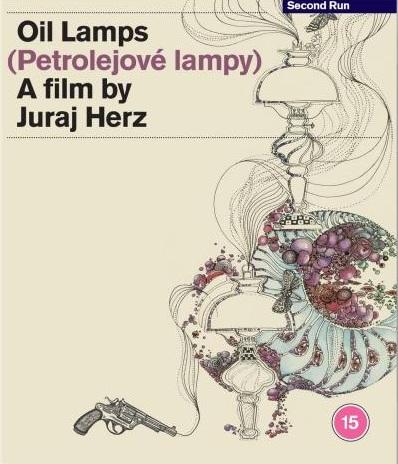
Released in 1971 and adapted from a novel by Jaroslav Havlícek, Oil Lamps opens in a cosy theatre on the very cusp of the 20th century, one affluent audience member confidently predicting that the coming decades will usher in an age of global prosperity and an end to all wars. Iva Janžurová’s Štepa Kiliánová is among those celebrating, a feisty, intelligent 30-year-old with a taste for beer and skittles. A continual subject of gossip in her small town, she’s keen to marry and start a family before being perceived as too old.
All of which leads her to consider as a partner the cousin she once loved as a child, Petr Cepek’s Pavel, a charismatic if shifty former lieutenant in the Austrian army with a taste for drinking and gambling. Štepa’s parents predictably disapprove, but the pair’s courtship is brilliantly staged, Janžurová beaming as her fiancé attempts to teach her how to fire a pistol. What she doesn’t realise is that Pavel actually wants her dowry to help save the rundown farm managed by his oafish father and brother.
Herz and cinematographer Dodo Šimoncic make the couple’s new home look almost medieval, the squalor palpable. And, after an excruciating and unsatisfactory wedding night, Pavel cold and impassive in the marital bed with his back to Štepa, comes the revelation that he has syphilis. Unable to consummate the marriage, Pavel refuses to seek medical help, at one point inviting a former comrade to rape his wife to give her the child she craves.
The film’s sexual frankness is startling, as is the sheer horror of witnessing Pavel’s physical and mental deterioration as the illness takes hold, Cepek’s performance based on extensive research. Štepa tries to remain positive, even while she and her drooling, twitching husband are dressed up and walking arm-in-arm among her fellow townsfolk. In a rare moment of lucidity, Pavel urges Štepa to push him off a precipice so that she can move on without him.
Oil Lamps is a tough watch, but Herz’s ability to draw performances of such emotional honesty from his two leads makes it compelling. Janžurová in particular is a mesmeric, luminous presence and went on to star in the director’s next film Morgiana, another atmospheric period drama. Second Run’s HD restored print looks exquisite, and Peter Hames’ booklet essay gives us a detailed and useful overview of this versatile and overlooked director’s career. As a bonus, there’s a 1947 Czech public information short about the dangers of alcohol and STDs. This stresses the economic damage caused as much as any human costs, and concludes with an unintentionally hilarious depiction of the “pleasurable, healthy activities” which the nation’s youth should really be indulging in.