A confession – one I have made down the years to many friends, who mostly disagree. I have never much liked Joni Mitchell. Yes, she has written some good and enduring songs, but the voice? To me it has no substance, no texture. Admirers say she led the way – those intimate, confessional songs. So ground-breaking!
You want intimate and ground-breaking, coupled with real musicianship? Then listen to Janis Ian, in my opinion a far greater songwriter and a more complete musician than Mitchell. Check out Leonard Bernstein interviewing her on his 1967 television documentary Inside Pop: The Rock Revolution. Janis was 15, “Society’s Child”, her brave and powerful song about interracial friendship both acclaimed and reviled. Astonishing talent.
More than half a century on and a career that has brought great success and great pain, Janis Ian is releasing her final album and heading out on the road for the last time – the US is broadly mapped out, but there are as yet no UK or European dates. I will miss her, as will all her fans, though she will continue to play as the mood takes her. And, of course, she will write. Songs and whatever else: she has always regarded herself as writer first and foremost. “At Seventeen”, “Jesse”, and “Stars” are among a catalogue of highly polished gems, lyrically and musically brilliant, fearlessly honest, yet she remains under-sung and under-appreciated still. Fellow musicians certainly get her, and Ian's work has been recorded by artists as diverse as Joan Baez, Roberta Flack, Dusty Springfield, Barbara Cooke, Celine Dion, Shirley Bassey and even Mel Torme.
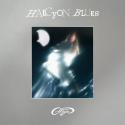
Ian doesn’t lack for awards, but it’s to be hoped that The Light at the End of the Line garners a Grammy or two, for (like every one of her score of albums) it deserves it. At heart, it’s a largely acoustic affair, Janis and her guitar or piano – and boy, does she know how to play them, subtle and intricate riffs and harmonies where usually you just find I, IV, V7, VI chords and a lot of vamp till ready. Beneath their simple sonic beauty, the songs themselves deal with some of the biggest issues of our time in concise and striking imagery. Circles are closed: the title track picks up from “Stars”, “I’m Still Standing” is a defiant revisiting of “At Seventeen”, while “Resist” is every bit as uncompromising as “Society’s Child”, which the Hammond Organ fanfare specifically references. Indeed, Ian could have called the album “No Holds Barred” or “Take No Prisoners”. The song was debuted at the Cambridge Folk Festival, the last before lockdown, and the entire audience – men and women – punched the air as Ian rapped her way through a charge sheet that’s both personal and universal; an indictment of the music business and of a world that hasn’t changed that much after all in its attitude to women.
Not that this is agit-pop – that’s never been Ian’s style, for she’s too great an artist. And the album contains the tenderest of ballads. “Nina”, a meditation on Nina Simone, is a love-song in its away, one to a great but inevitably flawed artist. “Summer in New York” is another love-song, this time to the city that formed her, the city where she honed her talent, where she began her performing life aged fourteen, and by the song's very style to the jazz and blues which has always so inspired her and on which she has drawn so often. So too “Swannanoa”, a folk-styled song that is at once an hommage to the folk revival amid which Ian came of age and to the great North Carolina celebration of folk arts at which she’s been a regular performer and teacher.
And “The Light at the End of the Line” is a love song to both her wife of two decades and to her audience of almost six. Quiet, thoughtful, heartbreakingly poignant as only Ian can be:
I was yours, you were mine
Just a heartbeat away
Close enough to be kissed
Far enough to be missed
From the cradle to silver and grey
Anyone who’s seen Ian in concert will know that intensity. As she sings, “the song will remember/The spark will still shine”.
What songs, what sparks. A singular talent.