“Hull Suite” is an important work in the canon of British-Bengali pianist Zoe Rahman, because it evokes themes – voyage, migration and family – which resonate strongly with her. The composition was commissioned at short notice by the Hull Jazz Festival (as a work for solo piano) for World Piano Day in 2024.
Rahman drew inspiration from two statues overlooking the water in Hull. “The Crossing” is a bronze statue depicting a migrating family, and honours over 2 million people from Northern and Eastern Europe who passed through the port on their way to America between 1836 and 1914. The other statue, “Voyage”, commemorates centuries of sea trading and fishing between Iceland and Hull.
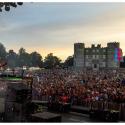
If that might appear to be the cue for an album in the shadow of delicate introspection...it isn’t. Jamie Cullum has characterised Zoe Rahman's piano playing affectionately as "always exciting, playful, muscular and a tiny bit unhinged." and in the context in which she plays here, a live performance of the new work as part of her long-standing jazz trio, with New York-born drummer Gene Calderazzo and star British bassist Alec Dankworth, the pianist is constantly throwing out energetic and defiant challenges in the direction of these two forceful musicians, and having them returned with precision, venom and intent. There is nothing here on "Hull Suite Live" (Manushi), which, for example, quite matches the extended feeling of calm of “Little Ones”, the long-phrased and gentle piece she wrote for clarinettist brother Idris Rahman on the 2023 album Colour of Sound. The track “Voyage” on the new album starts gently, but as it progresses it starts to feel more overtly and publicly celebratory and triumphant - in a good way.
This is an album brim-full of life and assertiveness. If one is inclined to locate a lineage for Rahman’s playing, or maybe just some sense of affinity, then it is definitely worth checking out the superbly adventurous California-born pianist Joanne Brackeen – who taught Zoe Rahman at Berklee in Boston – and in particular her recently re-released 1998 album “Pink Elephant Magic”. There is a similarity in the infallible, irresistible way in which both these great pianists establish a powerful and defiant groove.
The movements of the suite are played joined-up, which reinforces the spirit of a continuing journey, maybe even the need to keep on the move to a different place, as befits the album's theme. Maybe that’s the paradox: through keeping such a strong sense of narrative and flow, Zoe Rahman’s piano playing and composing, always accessible, melodic, persuasive, have landed in a really good place.