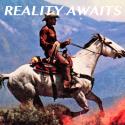
It’s been 14 years since Alison Krauss and Union Station released an album – 2011’s Paper Aeroplane. The world’s shed a few skins since then, and little resembles the way it was. The ten songs on their new album, Arcadia, recorded in studios across Nashville, are tied up in that cat’s cradle of time, of the past and how it is remembered.
“The stories of the past are told in this music,” Krauss has written. “It’s that whole idea of ‘in the good old days when times were bad.’ There's so much bravery and valour and loyalty and dreaming, of family and themes of human existence that were told in a certain way when our grandparents were alive. Someone asked me, 'How do you sing these tragic tunes?’ I have to. It’s a calling. I feel privileged to be a messenger of somebody else's story. And I want to hear what happened.”
The album opens with Jeremy Lister’s song “Looks like the End of the Road”, which was the song that kickstarted Krauss into making the album at all. It sets the darker tones of the set, and the following “Hangman” underlines them in heavy black marker, a stark song based on an early 1950s poem by Maurice Ogden, about the rise of the kind of genocidal politics that sees a hangman come to town in the first verse, and by the end, the only figure still standing is the hangman himself.
“Granite Mills”, from the pen of Tim Eriksen, is an epic industrial disaster ballad, sung by new Union Station member Russell Moore, joining lifers Jerry Douglas, Ron Block and Barry Bales while Dan Tyminski, with his grainy vocals, takes time out to continue his solo adventures.
“One Ray of Sunshine” is a reflective ballad, Krauss’ clear, limpid soprano backed by the delicate airs of Union Station’s deft instrumentation, opening up space and atmosphere, while Robert Lee Castleman’s “Forever” is a sweet, clever, lyrical song that draws on riddle formulas (“not all who wander are lost, not all who gaze see clearly...”) in its search for affirmation and connection. Album closer “There’s a Light Up Ahead” sits well with the glimmering twilight shadows cast across the album, as a natural drawing back of the veil, perhaps. Onto what? The Arcadia here may be the world of bluegrass itself, the songs and sentiments, its mythos and what it conjures in its forms and instrumentation, not nostalgia so much as recognition. A tip of the hat, a raising of glasses. A toast. The good old days, maybe, but days that were tough and crooked as nails sticking out of the ripped panelling of a condemned tenement block.