

Every visit by Vladimir Jurowski, the London Philharmonic Orchestra's former Principal Conductor and now Conductor Emeritus, is unmissable, and this fascinating programme outdid expectations. If there was any link with the LPO's "Harmony with Nature" season theme, it was ironic - discord being the keynote - but the concert was perfectly wrought.
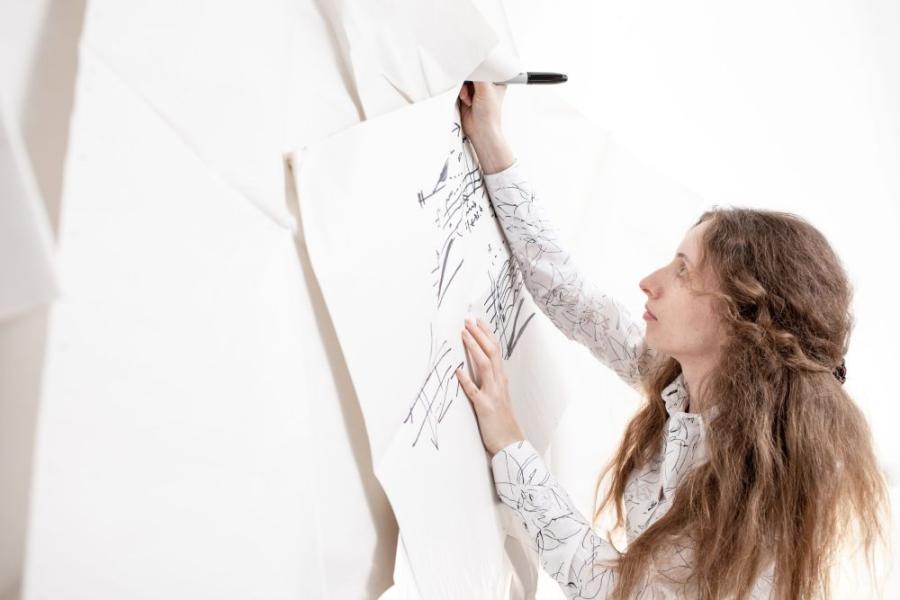
Jurowski balanced Mosolov's 1920s mini-thrash depicting an iron foundry with contemporary Ukrainian composer Anna Korsun's soundcape initially tied to an image of mining waste mountains in the Donbass (the composer pictured below by Konrad Fersterer), the variations of Rachmaninov's incessantly brilliant Rhapsody on a Theme of Paganini with those in the second movement of Prokofiev's steely Second Symphony. If there was any link with the LPO's Harmony with Nature theme, it was ironic - discord being the keynote - but
There was conducting creativity even in the short heavy-metal stomp of The Foundry, with a telling coming-up for air and a magnesium-flare accelerando at the end. Jurowski mostly kept the elegant cool of the best technique in the business to make this and the first movement of Prokofiev's late-1920s bid to outdo the mechanics of Honegger's Pacific 231, never about mere noise. But he leapt at the climaxes, making sure the returning trudge of the first-movement chant in the Theme and Variations was the most overwhelming of four (the first three coming in the opening Allegro ben articolato (and, despite the declaration of the programme note, there's a clear sonata form here, complete with an intricately wrought development and a thrilling hurl back into a varied recap).
Prokofiev's concept only makes sense when the second of the two movements arrives, a becalmed and beautiful oboe solo given the right degree of cool by Ian Hardwick, its variations batting off the intrusion of more steel until that terrifying, apocalyptic sixth variation. Full marks, of course, to the tireless lip power of trumpets, horns and bassoons (unique family scoring there from the composer).
Rachmaninov's justly celebrated and never routine Rhapsody, the work of a Russian exile living in a modernist villa on Lake Lucerne, never seemed retrospective in such company; if anything, Korsun's Terricone felt more of a throwback, this time to the sound-over-substance atmospheres of the 1960s, though the vocalising players contributed to a striking start and there was plenty of textural contrast.
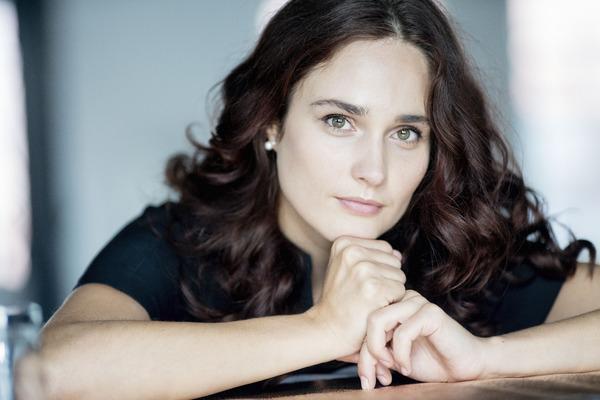
The dovetailing and flight of Rachmaninov's every variation was pefectly negotiated by Jurowski's orchestra, always in sync with Anna Vinnitskaya's forward motion (the pianist pictured above by Marco Borggreve) . If she doesn't quite have the crystalline fascination of, say, Yuja Wang, her steely approach worked just fine, thrillingly so with the double octaves in the tumultuous final variations. And the famous turn-the-Paganini-theme-on-its head tune was never self-indulgent - deeply moving, in fact.

Add comment