Haydn and Mozart symphonies from John Eliot Gardiner and his English Baroque Soloists are bound, at the very least, to be high, lucid and bright. Last night the X-factor was there too, and trebled in a surely unsurpassable account of Mozart’s Sinfonia Concertante for violin, viola and orchestra by two of the world’s most communicative soloists, Isabelle Faust and Antoine Tamestit.
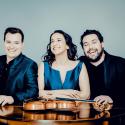
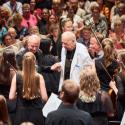
There was amazement even as early as the opening orchestral ensemble here, Faust and Tamestit joining their fellow violinists and viola-players and acting as two more conductors to bring a crescendo to a climax even Rossini, let alone Mozart, could only have dreamed about. The two were peerlessly together in harmony (pictured below), keeping vibrato to a minimum to match the period-instrument approach, but didn’t try to close the gap between their very distinctive personalities in solo work: Faust the more introspective, giving us time to dream, Tamestit more extrovert but still capable of scaling back his essential viola personality. 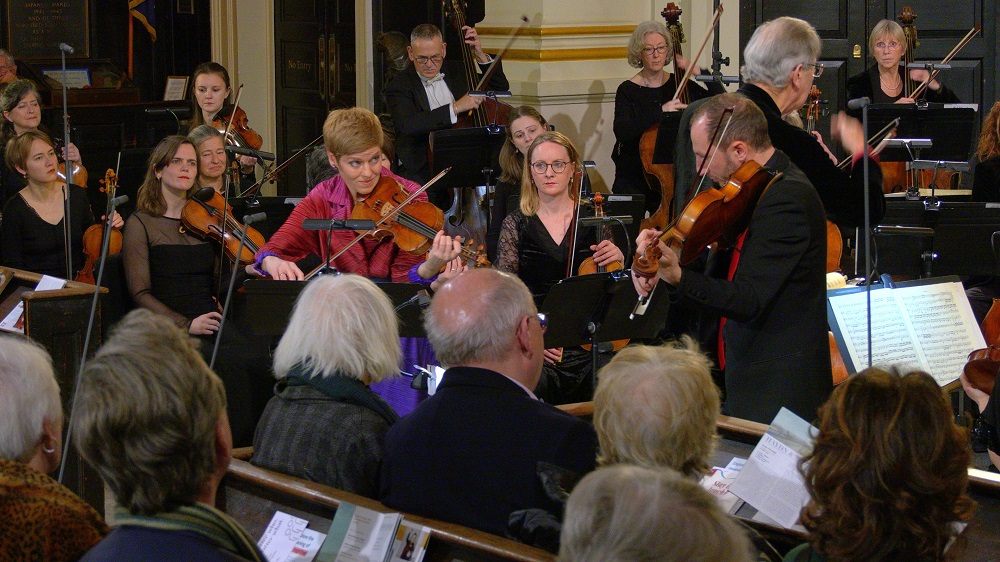 It’s always claimed that the pathos of the C minor Andante is the most striking thing about this work, but I’m not sure the 23-year-old Mozart felt it as strongly as he would a few years later at his creative zenith; the real magic was reserved for the soloists’ reducing of the theme to its essence in the cadenza. What took the breath away here was the composer’s sheer perfection in interplay between violin and viola, soloists and orchestra, in the most characteristically joyful of finales. Quite something to be able to say, only two weeks into 2023, that there won't be a better concerto performance this year, though I hope some will be just as excellent.
The symphonies weren’t obvious choices. Gardiner presented Haydn’s No. 84 in E flat major as a magic cape, brilliantly coloured on the outside, silky-black within to conjure sudden Sturm und Drang flicks to the minor, always triumphed over (most charmingly and originally in the Andante). The publishers heralded the “Paris” symphonies, of which this is one, as “of the most beautiful character and astonishing craftsmanship”, and this performance proved that to be no seller’s hype. There’s a very special brightness to the middle range of the orchestra which the singular, revealing acoustic of St Martin-in-the-Fields highlights; EBS and SMitF have found each other, and long may it continue.
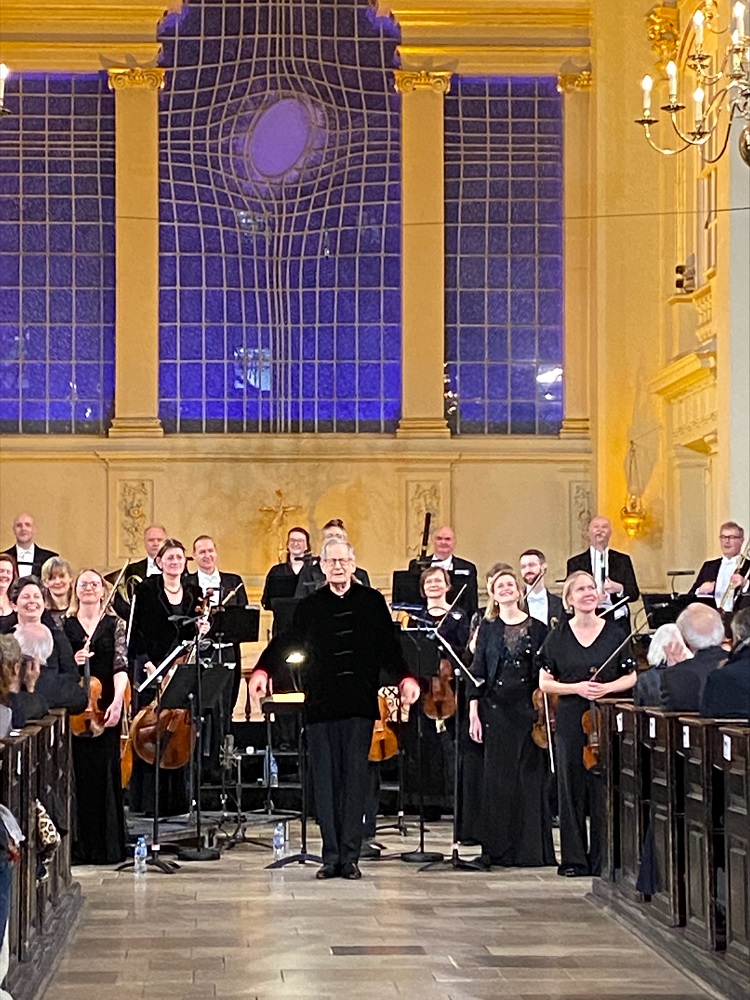 How to follow Faust and Tamestit after the interval with the Mozart symphony, No. 36 ("Linz"), which to me is the least easy to love of his greats (25, 29 and the last six), with the exception of another witty-brilliant finale? Gardiner had the perfect solution, to get all those players who could to stand, as he’s done with the LSO in Mendelssohn, Schumann and even a bit of Berlioz.
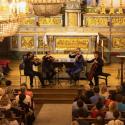
Mozart’s C major festival with drums and trumpets – lining the woodwind very unusually in the first movement – blazed into technicolor as a result: the selective approach to discarding the seats really worked (it’s also important visually, since with no raking most of the audience downstairs are destined not to see more than a few of the visibly expressive and collegial EBS members). Gardiner’s encore approach is often to reprise a finale; in the December performance of Bach’s Christmas Oratorio he went back to the opening movement, while here we got one of Haydn’s two naughtiest finales, the prestissimo one to Symphony No. 60 (“Il Distratto”) where the violins decide they need to retune their strings (twice). My companion was hoodwinked into thinking Gardiner was reprimanding them mid-flow; clever old Papa Haydn.