Not everyone knew what to expect from this fascinating programme. Rachmaninov’s Symphonic Dances, last of his orchestral masterpieces, is nothing like the more familiar aspects of his piano concertos. Nor is Busoni’s nominal attempt at the form, which seems more of a Symphony-Concerto than anything else, and style-wise impossible to pin down. Both works had the fullest care and focus last night.
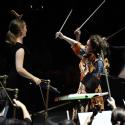
It felt counter-intuitive to have Rachmaninov's very personal swansong in the first half; if some of us couldn't quite tune in to the depths at first, that was no fault of the performance. Edward Gardner has always excelled in the taut dance rhythms and the punchier aspects of the outer movements – a 2011 performance on YouTube already shows complete identification with the idiom – and it was startling to hear the hard-hitting chords ricocheting around the Albert Hall.
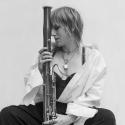
Maybe Martin Robertson's saxophone was too full and fleshy to catch the singing sadness of the first dance's middle sequence, but other London Philharmonic woodwind kept us cradled. Gardner's careful flexibility gave us exactly the right tense and release in the central Valse Triste. But it was the midnight battle of the finale which properly levitated, extra intensity pulled out of the bag as the dance hurtles, then stomps, to the syncopated "Alleluia" quotations from the Vespers. The final cut-off was perfect, tam-tam crash lasting just that little bit longer than the final chord, as Rachmaninov indicates in the score (it's become customary to let it resound for a good while longer, which can also work). 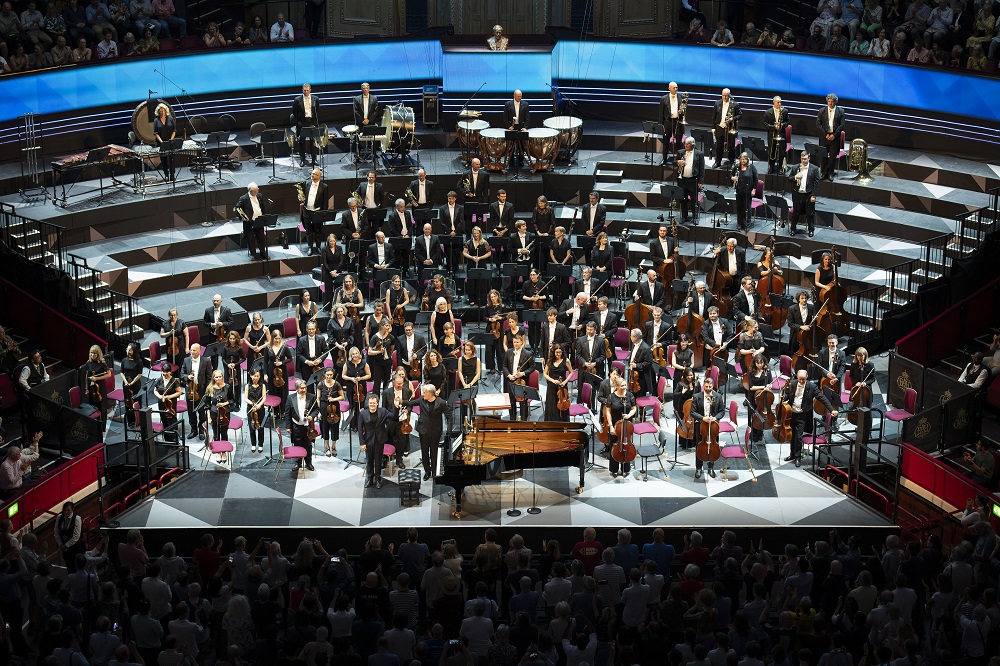 That ritual alone would have given many their money's worth, though it was baffling to see the full Arena empty by about a third for the Busoni. More drifted away through the long and challenging slow movement ("Pezzo Serioso"). Even several hearings will leave one wondering what the sometimes Germanically inclined Italian was getting at – the noodling around several notes, the fraught return of the angular opening gesture twisted on the rack – so it wasn't surprising to see Prommers leaving in twos and threes during its course. They would have missed the second and even more fantastical of the two scherzos, a strip-cartoon Tarantella that offers some correspondence with Mahler's use of banal tunes in a symphonic context.
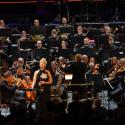
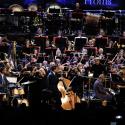
Yet Busoni doesn't sound like Mahler, or anyone else. He seems to have mined his own secret cave, taken minerals and alchemised them into – well, not gold exactly, but something rich and rare. Everything feels oddly authentic, and Benjamin Grosvenor dominated with discombobulating virtuosity when he had to. Yet the piano seems more like a monster obbligato instrument, adding an extra dimension of colour to the peculiar orchestral palette. So does the final chorus in praise of Allah, the "Power Eternal" of Adam Oehlenschlager's epilogue to the German version of his massive oriental play Aladdin. Men's voices of the Rodolfus and London Philharmonic Choirs resonated down to us from the Gallery (pictured below); but it's piano and orchestra which have the final crazy flourish. 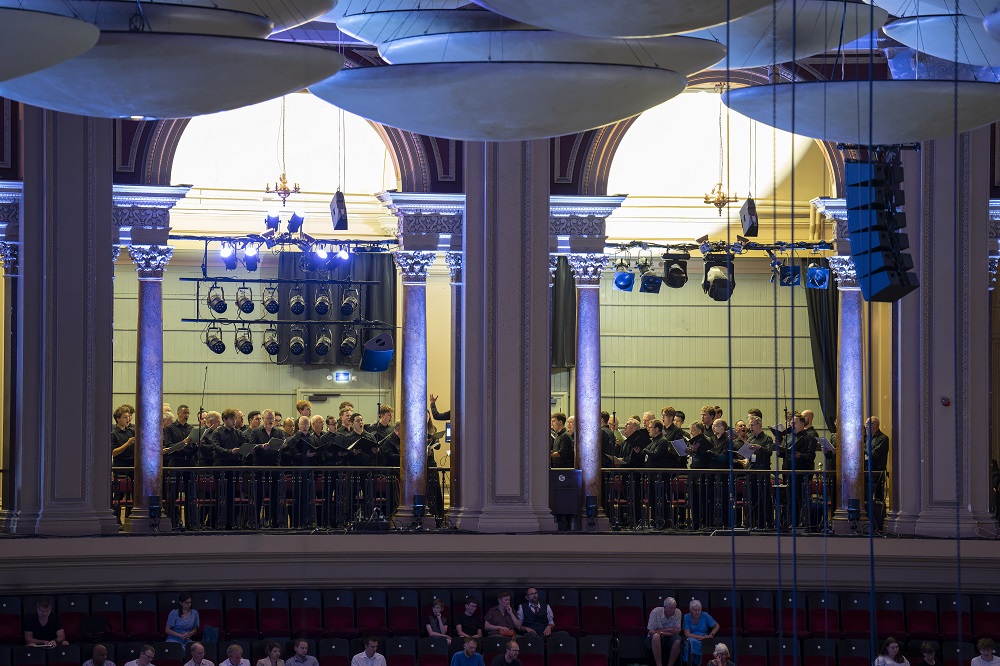 Cool as a cucumber, Grosvenor gave us the perfect sendoff – Busoni's beloved Bach, not an arrangement of his but one by Alexander Ziloti, of the Prelude in D minor, melancholy eased by a final major chord as benediction. Now, can these Proms stop being so good? Readers will be suspicious of all the stars we keep giving them. But it's certainly been an extraordinary sequence over the past week.