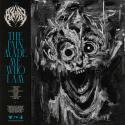
Death Songbook is, says Charles Hazlewood, founder, artistic director and conductor of Paraorchestra, an album of “music which is about death, or the death of love, about loss, about anxiety.” Suede’s Brett Anderson, on board for this endeavour, notes “I've always found dark material more inspiring than upbeat songs. Upbeat songs always make me depressed somehow. I've always liked those songs that deal with the murkier sides of life.”
The resultant 12-track album also features Nadine Shah (on two tracks) and Gwenno (on one track). Sebastian Rochford and Adrian Utley are in there too. The songs chosen to represent this voyage into darkness range from Echo & The Bunnymen’s “The Killing Moon” and Black’s “Wonderful Life” to Skeeter Davis’s country classic “The End of the World” and the Jacques Brel via Scott Walker and David Bowie chestnut “My Death.” Also covered are Depeche Mode’s “Enjoy the Silence” and Mercury Rev’s “Holes.” Anderson’s own catalogue offers five songs, which has the odd effect of inserting him and Suede into the pantheon embodied by what else has been gathered.
Overall, Death Songbook doesn’t hang together as an album; it is not a unified listen. Most tracks were recorded at Cardiff’s Donald Gordon Theatre without an audience, and feel like studio recordings. “She Still Leads me on,” “Enjoy the Silence” and closer “Brutal Lover” were recorded there subsequently, at a show with an audience. With these, the applause and snatches of stage chat break the listening flow.
Further destabilisation comes with “He's Dead” and “She Still Leads me on,” where electric guitar is to the fore. Each is quite rocky, so comes across as Suede with additional orchestration. Otherwise, what’s heard is along the torch-song/Scott Walker lines. The best track is a version of Japan’s “Nightporter,” where the original recording’s skeletal nature makes it more ripe for reinterpretation than most of the other songs. Chalk this up as artistically laudable, but not as coherent as it could be.