It’s been a long wait. More than five years have passed since Maria Schneider’s most recent "magnum opus", the double album Data Lords came out. That was in July 2020, and the album went on to win not only a sixth and a seventh Grammy for the composer/bandleader, it was also a finalist for the 2021 Pulitzer Prize for Music. And I can’t help noting with some pride that theartsdesk’s review of that album is extensively quoted on the Pulitzer Prizes website (link below).
In the intervening years, the main addition to Schneider’s catalogue has been Decades, a retrospective package released in early 2024. That was a luxurious 3-LP set consisting only of previously released material, with each disc concentrating on one decade, going right back to the track “Gush” from Evanescence, recorded in 1992, the first year of the Maria Schneider Orchestra’s existence.
And here’s something for the Schneider ultra-completists: they will not want to be without a very brief composition from the end of 2024. Schneider’s beloved American football team, the Minnesota Vikings, commissioned her to write a new "thunderous battle anthem", and the composer is to be seen on video gamely donning full leather jerkin and a Wagnerian horned helmet, to honour them with a customarily impassioned triple shout of “SKOL!”
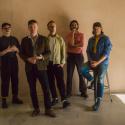
What is being released now is American Crow (Artistshare) – with one track freely available on YouTube (link below). It is “only” an EP with four tracks with around half an hour’s music. The composition was a commission from Emory University in 2022, and the recording by Schneider’s orchestra of the very-best-of-the-very-best of New York musicians was made in 2025. In fact, there is only one new work, the title track, and we hear two versions of it. There is also a new version of “A World Lost” one of the compositions from Data Lords, and one track lasting less than a minute, which is a field recordings of crows, natural sounds which are then imitated by the instrumentalists.
And yet, as ever the music draws the listener, demands attention and holds it. The track “American Crow” feels like an important step forwards from Data Lords. The double album portrayed two consciously contrasted, opposite worlds. “The Digital World” was a place of anger and ugliness with dissonance and density of texture, “The Natural World” a place of listening and solace, the idyll which Schneider’s loyal listeners know well. Here in "American Crow", neither has lost its character (the contrabass trombone of George Flynn is a truly haunting sound), but we have them combining. In a brutal, uncaring world, we are drawn to voices of reason, and that is what the soloist – Mike Rodriguez on trumpet – represents. There are strong and persuasive voices, and we need them.
It is worth taking the trouble to listen to the two versions of “American Crow”. The first has more aggression, and the dichotomy of the enlightened soloist and the horrors around him is portrayed with overwhelming vividness. The second version of the same piece has more definition and control, and the way the intensity build is shaped is magisterial. "A World Lost" has different protagonists from on the Data Lords version: the meditative and deep-voiced accordion of Julien Labro is hypnotic, and Jeff Miles on guitar has an irresistible way of searching and exploring, capturing uncertainty in a remarkable way.
Everything that Maria Schneider writes or directs not only demands but also rewards close and detailed listening. And if this briefer-than-normal statement leaves the listener wanting more, where’s the harm in that?