Dubstep is everywhere – and if you will excuse a little self-promotion I have, in my small way, helped this state of affairs come about. The bass-heavy, rhythmically exploratory and very British electronic dance music genre has now – via Magnetic Man and Katy B – proved it can produce bona fide top-10 hits, and it has become the de facto sound of every summer festival to boot, while still keeping both feet in the underground clubs from whence it emerged.
Watch the video of "Katy on a Mission" by Katy B:
Regular readers of theartsdesk will know that I have written extensively about the sound's cultural and artistic significance (here, here, here and here, for example); I have also covered it month-in month-out for some years in Mixmag and Wire magazines, and this week sees the release of a compilation that I curated on the huge Ministry of Sound label entitled Adventures in Dubstep and Beyond... Which, of course, begs the question: what is beyond dubstep?
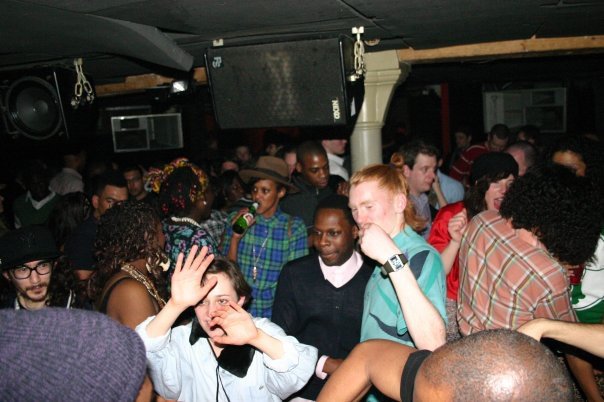 It's an oddly problematic question. Dubstep has a couple of peculiarities which make defining it, let alone predicting where it is going, difficult. Firstly, it is in the odd position of being a new sensation roughly a decade into its existence: the sound itself emerged in the south London suburb of Croydon some time around the turn of the millenium and the term “dubstep” was first used in 2003. Since then it has evolved and spread first slowly then exponentially, to the point now where a commercial dance label like Ministry simply cannot ignore it, and nor can radio programmers.
Until 2005, it was all but invisible, its fans and practitioners part of a hermetic underground of possibly only a few hundred people worldwide, then it burst onto the international stage, infiltrating first other underground scenes, then the wider world of youth culture, and finally in the last year or so the absolute heart of the mainstream. At every stage, naysayers predicted its demise or stagnation, but it has proved that its resilience and flexibility make it nothing if not unpredictable.
Second is its fecundity and its intrinsic hybrid nature. It is, as its 24-year-old figurehead and member of Magnetic Man Ollie Jones aka Skream (pictured below) says, “mongrel music”. From the very outset, it pilfered from all other club genres, and as it began to spread it then reached into and hybridised again with those genres, to the point where now across house, techno, drum and bass, trance and all the more 'traditional' club sounds, it's increasingly hard to find something that doesn't bear its sticky fingerprints, while dubstep itself no longer appears tethered to a particular tempo or rhythm, just a loose set of sonic signatures.
 So dubstep's borders are diffuse and permeable. But on my compilation, I have tried to demonstrate how many different sounds orbit the strange attractor of dubstep's distinctive basslines: on it there is blissed-out house music, but also furious grime MCing from London's estates, drifting tracks with thickly layered psychedelic detail, but also gung-ho, rough-and-ready rave tunes. Both of the tracks in the YouTube clips below, for example, feature on the album. Yet the progression of the tracks works to show how all are connected, even though any given two may appear to share almost no similar qualities. And what is “dubstep” and what is “beyond” its ruleset is as yet undetermined, and may become clear only in retrospect. Apologies if this seems a cop out, but in fact it is precisely this indeterminacy which makes the possibilities so thrilling. The sound's future is not written.
It's a fascinating thing to behold the unfolding of this very 21st-century movement; something which is completely of the digital age, and doesn't adhere to the structural rules of the 20th-century youth revolutions of the summer of love, punk rock or acid house. As its mainstreaming accelerates there is a fear that it may become ossified into simplistic versions, its multivariant nature stifled – which is one reason I have compiled this mix: as an attempt to note and promote its mongrelism and blurred-edge zones. These are exciting times, and it is worth getting a taste of this music while it is still so insanely fertile.
Listen to "Back Again" by Kozzie:
Listen to "Natural Selection" by Martyn:
I am also moderating a panel discussion at the Are We Here arts festival in Croydon in November, with several generations of the borough's musicians discussing their roots and futures – of which more on theartsdesk anon.