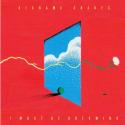
Jazz Dari Angkasapuri and Tiga Trombone are two albums dedicated to giants of Malaysian jazz. The first collects compositions by Johari Salleh, while the second focuses on work by Alfonso Soliano.
The status of Soliano (1925-1990) is confirmed next week, when Kuala’s Lumpur’s Petronas Philharmonic Hall – the Dewan Filharmonik Petronas – hosts an evening dedicated to his music. On 2 September, the Malaysian Philharmonic Orchestra, under conductor Ahmad Muriz Che Rose, present A Tribute to Alfonso Soliano. Family members Condrado Soliano, Don Alfonso Soliano, Isabella Soliano and Tristano Soliano will also be playing and singing together on stage at the tribute. The concert is promoted as celebrating “a visionary pianist, arranger and conductor…widely known as a pioneer who laid the foundation for the country’s music scene especially jazz.”
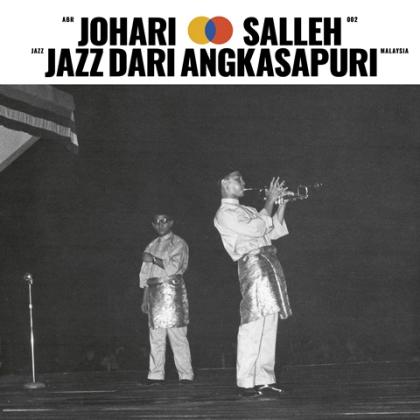
One of the compositions scheduled for the programme is “Ku Kan Kembali.” It appears on Tiga Trombone. The new album takes its title from a series of LPs which appeared under that name in 1974.
Alfonso Soliano, born Ali Bong Alfonso Soliano in Singapore, got his first job as a musician at age seven – as the pianist for the touring Grand Jubilee Bangsawan Troupe. Around 1951, he embraced bebop, formed a band to showcase his fondness for jazz and based himself in Kuala Lumpur. George Shearing was a prime influence on his piano style. National radio noticed, and in 1959 he was tapped to lead a band for the broadcaster which, in 1961, settled on the name Orkes Radio Malaya. Johari Salleh (born 1940) had joined the band in 1959. From this point, there was an ebb and flow between them: Soliano and Salleh’s paths criss-crossing and dovetailing.
Obviously, embracing jazz meant both musicians/composers were looking beyond their border for inspiration. Salleh studied in the US at Berklee College of Music in 1967. While there, he played with Dizzy Gillespie. In 1970, Soliano was in Germany taking part in national broadcaster NDR’s Jazz Workshop – he was on TV there. His internationalism had attracted criticism – when Malaysia became independent in 1965, Soliano resigned from the radio network as he would not conform to the station’s strictures. He decamped to Bangkok, where he played piano in a band at an American servicemen’s club. The essay in Tiga Trombone’s booklet says “Soliano [was characterised] for allowing too much ‘western’ influence in the form of jazz and Latin to dilute Malay musical tradition that got him branded as ‘ketiak arat’ (too westernized). Radio Malay was after all widely perceived as the voice of the government.”
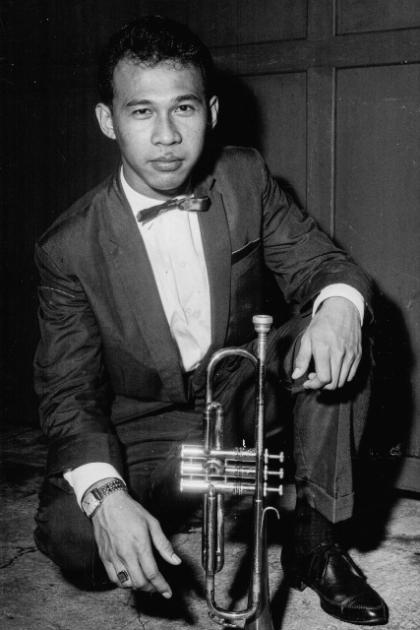
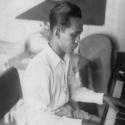
After a while, Salleh – who Soliano recommended for the job – took on the role of leader of the Orkes Radio Malaya. Once the political temperature lowered, Soliano returned to Kuala Lumpur and Radio Malaya in 1973 – ironically, with Salleh still leading the band. Their roles had been reversed. There is more to these intertwining stories. A lot more. It is all told in the in-depth essays in the heavily illustrated booklets coming with each of the new albums. (pictured left, Johari Salleh in 1958)
The music heard on Jazz Dari Angkasapuri and Tiga Trombone was not – originally, that is – available in shops. From around 1972 or 1973, Radio Talivihsen Malsiya (RTM) pressed transcription albums of specially recorded music, which were then distributed around the country for broadcast. There seems to be at least 200 such albums, an unknown number of which feature the music of either Johari Salleh and Alfonso Soliano. Some were given umbrella titles: Tiga Trombone is used for at least four different albums with a Soliano credit (for composition and, assumedly, also arranging and conducting, as well as piano). Jazz Dari Angkasapuri is another series of albums, with Salleh’s name in the credits. Everything on the two new albums draws from these rare radio-station albums.
What’s here tells a story ostensibly not well known outside Malaysia, so a level of trust is necessary on the part of listeners and potential buyers to accept that what has been compiled represents the music of Johari Salleh and Alfonso Soliano sympathetically. As the tracks on Jazz Dari Angkasapuri have been licensed from Salleh himself, he presumably approves. The same likely applies with the family of Soliano, who have licenced what is on Tiga Trombone.
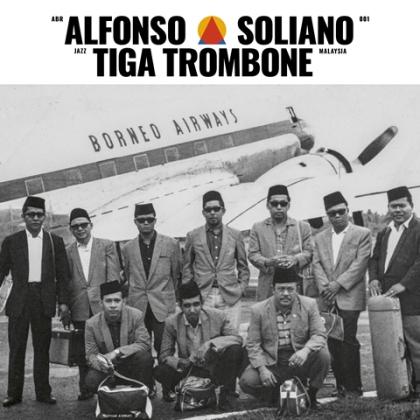
Tiga Trombone collects 11 tracks, drawn from five different RTM albums – two apiece from 1973 and 1974, and one from earlier (maybe 1972). “Masth Chantani” is the opener. It begins with traditional-sounding percussion. Soon, a spindly guitar figure begins weaving in and out. There is a build, incorporating brass. Then, it refocuses entirely on percussion after which the guitar returns. Next up, “Ida.” Here, the general thrust is jazzier, cool, grooving and vaguely in the Lalo Schifrin bag. After this, “Surya Pagi,” a skittish, summery composition which could be from a Western soundtrack. “Ku Kan Kembali,” chosen for the A Tribute to Alfonso Soliano concert has a slight Oscar Peterson feel. There is a lovely piano section from Soliano, which gives way to a glidingly smooth guitar solo. Soliano’s dance across the keyboard during penultimate track “Kenangan Abadi” is particularly striking. Underpinning much of the album is a big-band quality, suggesting Soliano was equally at home with small combo arrangements and large-ensemble settings.
Jazz Dari Angkasapuri draws its nine tracks from four different RTM albums from 1973 and 1974. The first three cuts, “Johana,” “Khayalan” and “Erie,” are more stately than what’s on Tiga Trombone and, naturally, showcase Salleh’s controlled trumpet style. He does not let rip, but floats through what sounds like a quartet or quintet setting (there are bass, drums, piano and sax, as well as the trumpet). “Mangpapa” showcases muted trumpet and edges towards a blue – blue, rather than blues – feeling. It is very atmospheric. Although obviously a later style of sound and mainly a platform for trumpet rather than piano, “Pesan Ku” has a “Round Midnight” ambiance. The jumpy, spiralling “Anda” is interesting, and suggests Salleh was tipping a nod to fusion.
Both albums intrigue. Taste is whetted. This is elevated stuff. Nothing about what is collected is difficult listening or niche. Clearly, though, there is more to Johari Salleh and Alfonso Soliano than what is on Jazz Dari Angkasapuri and Tiga Trombone. The albums are snapshots of a few years from what were long careers in music. Until the gaps are plugged, these attentive albums will do nicely.
- Next week: 1989-1992 – the early years of US indie outfit Velocity Girl are compiled
- More reissue reviews on theartsdesk
- Kieron Tyler’s website