“The Laughing Gnome” was David Bowie’s second single for the Deram label. It was released on 14 April 1967. That same day, he was on stage at the Ludwick Youth Centre in Welwyn Garden City. He was appearing as the singer in a band named The Riot Squad. Despite his solo status and on-going contractual tie with Deram – through its parent label Decca – he’d joined the band a month earlier. Curious.
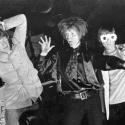
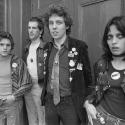
The day before the Welwyn Garden City booking and the arrival of “The Laughing Gnome” in record shops, the Bowie-including Riot Squad played in London, at Oxford Street’s Tiles, where they posed before a camera. There was Bowie, in a satin shirt and cravat, with electric-shock back-combed hair and a make-up daubed face. Due to his record contract, Bowie was identified as “Toy Soldier” while with The Riot Squad. It wasn’t quite the Ziggy Stardust or Thin White Duke roles, but the ploy predicted an element of the future David Bowie template.
During his spell with The Riot Squad, Bowie went even further than playing live. There was a recording session at Decca’s West Hampstead Studio on 5 April with engineer Gus Dudgeon – the same set up Bowie had with Deram. The Riot Squad were without a record contract and certainly not meant to be in this studio.
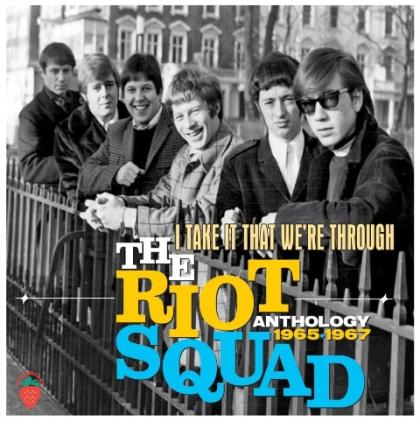
Even so, four tracks were taped: “I'm Waiting For my Man,” “Toy Soldier,” “Silly Boy Blue” and “Silver Treetop School For Boys.” The first was a cover of the Velvet Underground song; the second a cheeky rewrite of their “Venus in Furs.” Both VU songs were from their first album, released only weeks earlier – Bowie had an advance test pressing of the LP. Bowie had already recorded “Silly Boy Blue” for Deram in December 1966: a version which ended up on his debut album. “Silver Treetop School For Boys” would crop up on single twice, with versions by The Beatstalkers and The Slender Plenty. Re-recording his own songs; moonlighting with a band while under contract to a record label – what Bowie was up to was anyone’s guess. All four of these tracks were first released physically on an EP in 2013. Now they are included on the three-CD Riot Squad set I Take It That We’re Through – Anthology 1965-1967.
Bowie’s final show with The Riot Squad was on 2 May, at Leighton Buzzard’s Bossard Hall. On the first day of the next month, his debut album was released. The brush with The Riot Squad was bizarre. Considering the band’s story overall, it was emblematic of their erratic path through the music business.
The North London band coalesced in December 1964 and fell apart around May or June 1969. There were at least 15 different line ups. No one from the mark one Riot Squad was in the final iteration. Bowie wasn’t the only memorable name to pass through. Mitch Mitchell, the future Jimi Hendrix Experience drummer, was in the first line up. He left in September 1965, as did singer Graham Bonney, He subsequently scored a massive German hit with the classic pop-soul single "Super Girl” and went on to be a major star there.
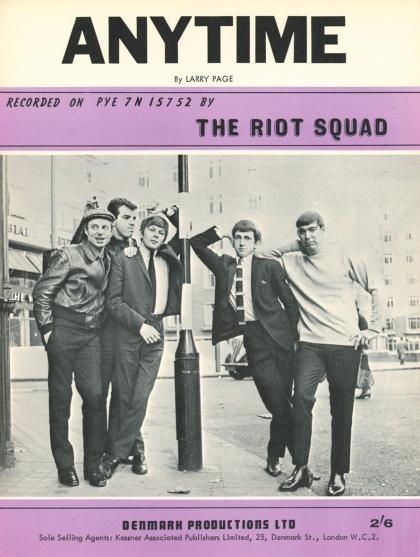
On the face of it, the story was pretty straightforward. Three Riot Squad singles were issued by Pye over January to May 1965. Then first was the groovy “Anytime,” released 8 January. For this trio of 45s, the band was produced by Larry Page – he was involved with The Kinks, also on Pye. The sound was soul/R&B, a little like Georgie Fame. Next up, four more Pye singles between January 1965 and January 1966. These were produced by Joe Meek and are harder to stylistically pigeonhole. January 1966’s rough-hewn “Cry, Cry, Cry” was a form of hard-edged R&B. April 1966's fantastic "I Take it That We're Through" was what would later be called freakbeat.
None of the seven singles were hits and although The Riot Squad remained a live circuit perennial, they were running out of stream when they assimilated Bowie. A major downward-pointing factor was Meek murdering his landlady and killing himself in February 1967. This left them without a label.
Following the David Bowie episode, the next potential break came in October 1967 when they recorded enough tracks for a proposed album with past-his-sell by-date US music business veteran Lee Magid. In the late Forties and mid Fifties, Magid had worked for Savoy Records and at various times was associated with Marlena Shaw, O.C. Smith, Big Joe Turner and T-Bone Walker. The Riot Squad’s recordings with him were not released, and were first issued in 2013. That was it for The Riot Squad and anything which may have potentially hit vinyl. The band ploughed on into 1969.
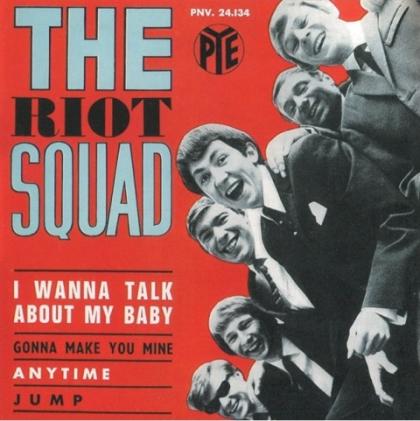
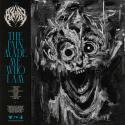
All of this and more is captured by the all-inclusive I Take It That We’re Through – Anthology 1965-1967. Both sides of each of their seven singles are collected. These are supplemented by the four tracks with Bowie, and the 11 recorded for the stylistically incoherent shelved LP made with Lee Magid – it includes a remake of the "Venus in Furs"-aping “Little Toy Soldier.”
Across the three discs there are there are 83 tracks overall, of which a whopping 41 are previously unheard. A lot of the Riot Squad. This is their most exhaustive compilation so far. The bulk of the newly issued material has been recovered from Joe Meek's Tea Chest Tapes, and consists of alternate versions, backing tracks and demos of released tracks. There are also tracks where they back singers Glenda Collins, Flip (Vivienne Cherring) and John Drysdale. Meek saw The Riot Squad as a house band for his studio. Their versatility fit this bill. But that did not result in hits. Even so, they made some amazing records
I Take It That We’re Through – Anthology 1965-1967 is the last word on this intriguing band. Ultimately, the singles and session with Bowie are what matter. Start with these and, then – if the appetite is whetted – dig further.
- Next week: Malaysian jazz with Alfonso Soliano's Tiga Trombone and Johari Salleh's Jazz Dari Angkasapuri
- More reissue reviews on theartsdesk
- Kieron Tyler’s website