Although the bulk of the 20 tracks collected on Eternal Journey - The Arrangements and Productions of Charles Stepney were originally issued between 1967 and 1971, the period evoked by this compilation dedicated to the titular musical polymath is not limited to the late Sixties and the early Seventies. There is an early Nineties character too.
That was when a lot of what’s heard on the compilation reached a fresh listening audience. Twenty or-so years after they were first released, Terry Callier’s “What Color is Love,” Minnie Riperton’s “Les Fleur” and Marlena Shaw’s “California Soul” were in vogue, thanks to the efforts of record collectors, club and radio DJs, reissue labels and hip-hop/R&B outfits like Gang Starr, who in 1990 sampled “California Soul” for their “Check the Technique.”
The same year, Primal Scream’s “Loaded” featured aspects of The Emotions’ "I Don't Wanna Lose Your Love," a 1976 Stepney driven recording (this is not heard on Eternal Journey). The borrowing continued: in 1999, Terry Callier’s “Dancing Girl” figured in UNKLE’s “Be Three,” which former Stone Roses singer Ian Brown lent his voice to (other tracks by Callier are included on Eternal Journey). The list of tracks arranged, produced and written by Charles Stepney which have been sampled is extensive, and many records with a Charles Stepney credit helped define acid jazz. If not ubiquitous, Stepney’s instantly recognisable hybrid of classically inclined orchestration and a jazzy sensibility had become increasingly familiar.
Stepney's take on this resurgence is unknown. Born in 1931, he died in 1976. However, the only known interview he gave to a print outlet suggests he would have had a view. The feature, in the 26 November 1970 issue of the US jazz magazine down beat, indicates that Charles Stepney could be distinctly forthright.
Speaking to Edwin Black, the man described in the magazine as “Chess Records' inventive musical supervisor” and “one of those unseen workhorses whose business is other people's success” said “these artists [i.e. those he was working with] are musically stupid. I swear you've got to stand over some of them and yell out: one-two-three-four – now play! They have no sense of counter-rhythms or polyrhythms, can't hold their part against other parts, don't know a note of music and have no concept of musical balance.”
He turned to The Beatles: “I guess it's no mystery," Stepney declared. "Who the real talent behind a group like The Beatles always was – George Martin, their producer! Hate to shatter so many balloons, but no way could those four have pooled all the instrumental and electronic complexities involved in ‘Day in the Life’ or ‘Eleanor Rigby’ or ‘I am the Walrus.’ Any trained ear can easily spot the songs The Beatles produced alone. They're repetitive and shallow – you know, same three chords and that unmodified beat.”
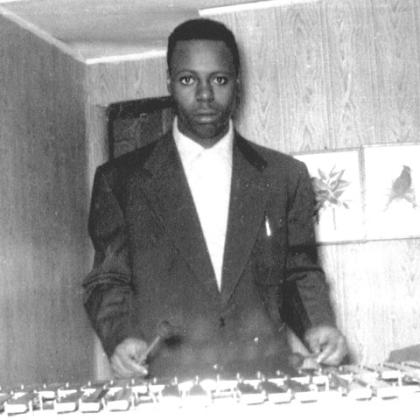
Then Stepney moved on to “a particular gripe of mine. Critics. Music critics. These self-appointed protectors of the literature, who are determined to save the artist from the evils of the arranger. Overproduction they call it. Over-production. Anytime you extend harmonically above the 7th and have more than five guys playing in the background and use more than monosyllabic lyrics – like James Brown's grunt; back to the cave, man! – critics call it overproducing. I've seen arrangers write for the critics. Man, I'll have nothing to do with it. See, I know, and the other people in the business know, these artists simply need to be directed. That's why we have producers.” (pictured left, Charles Stepney c 1965, The Stepney Family)
Elsewhere, Stepney said “I hate to criticise” – coming across as if he was all-too happy to do just this – “but these groups that insist on playing louder than 85 decibels are not really keeping their image. I mean, they protest water and air pollution as a disease of our times, but go right ahead and commit ear pollution. That's as dangerous as cigarettes, as far as I'm concerned.”
There is more. The down beat article is stuffed with talking points.
Eternal Journey is the first-ever, and hugely belated (previously stalled attempts to anthologise Stepney are discussed in the accompanying booklet), collection dedicated to this musically distinctive man’s latterly defined golden years. He went on to be integral to the formation of Earth, Wind & Fire, and was behind the 1976 Denice Williams album This Is Niecy, which included “Free”: massive when issued as single. But his career was cut short by his premature death.
Focussing on his work for the Chess subsidiary labels Cadet and Checker, Eternal Journey also includes a couple of Chess tracks, and one originally issued by the Blue Rock label. What’s here is about what was brought to light in the Nineties.
Stepney’s story is eloquently told in the booklet, both through an introductory essay and a track-by-track commentary. While “What Color is Love,” “Les Fleur” “California Soul” are here, there is more than enough in the other tracks to underline the specialness of Stepney’s classical-jazz hybridisation – a tendency which created a new form of soul music, one which label boss Marshall Chess alluded to desiring when, as quoted here, he told Stepney he had an “idea to form an interracial, soft psychedelic group…I want symphonic effects.” That directive led to the formation of The Rotary Connection.
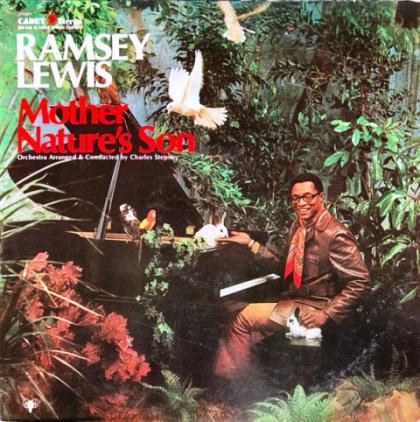
It also resulted in the remarkable Stepney supervised Ramsey Lewis album Mother Nature’s Son, which entirely comprises interpretations of tracks from The Beatles’ White Album. Recording of the Lewis album began, according to the annotation here, on 22 November 1968 – the day the White Album was released. Whatever he thought of The Beatles, Stepney was assimilating what they were up to. At speed.
Another aspect of Stepney’s work is dug into by the final four tracks of Eternal Journey. Each is by an established blues player: Buddy Guy, Muddy Waters, Junior Wells and Howlin' Wolf. In the booklet it says Wolf wasn’t happy with the resultant album, and although the 1969 version of “Smokestack Lightning” included here sounds contemporaneous to the period it was recorded, it is no substitute for the fiery original. As these selections underline, Stepney was a jobbing producer, a staffer employed by Chess, and respected the label’s wishes. His musical persona was not wholly characterised by what was picked up on in the Nineties.
What would the subject of the deep-digging and diligent Eternal Journey - The Arrangements and Productions of Charles Stepney have made of it? It wouldn’t exist without the early Nineties resurgence of interest; it is a product of retrospection reshaping an aspect of a narrative. Judging by the down beat article, Stepney would have had a view. Negative, as the compilation doesn’t represent the full picture? Positive, as it honours an aspect of his oeuvre? We’ll never know. What we do know, though, is that this respectful collection celebrates one of America’s great musical auteurs.
- Next week: The explicitly titled Don’t Let Him Hurt You! Girl Group Sounds USA 1962-1968
- More reissue reviews on theartsdesk
- Kieron Tyler’s website