David Byrne's new book How Music Works has once again brought to the fore the ever thorny debate about the relationship between technology and music. The dance between the two is being conducted at an ever more frenetic pace, and seems likely to continue to do so throughout 2013.
In some countries ringtones now make up a reported 20 per cent of record companies profits - will labels be less inclined to sign or promote music that doesn’t boast a suitable catchy few seconds? ITunes and iPads clearly favour tracks over albums, while it’s become increasingly an advantage for artists to produce music that works with video games. On the other hand, Spotify claim that subscriptions for streaming means people are actually more likely to hear albums in their entirety.
In 1904 composer John Philip Souza predicted the imminent death of live music
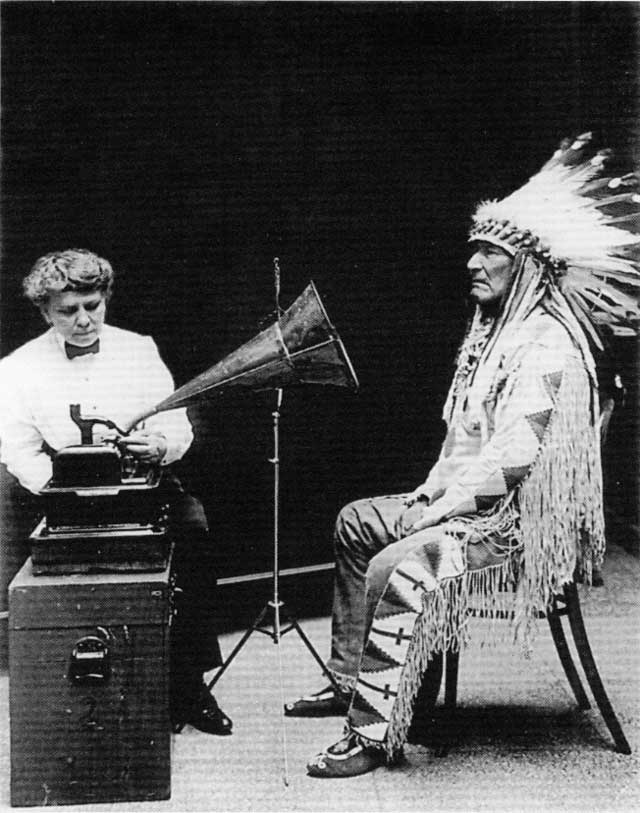
The increasing temperature around the subject has resulted in several books. Mark Katz’s Capturing Sound: How Technology Has Changed Music is a more focused book than Byrne's and begins with Edison’s wax cylinder, invented in the 1870s. Originally Edison believed the major uses for it would be for business purposes and for preserving the voices of the deceased. By 1900, it was being marketed as a purely musical device. The notion that you could listen to music on your own was a novel one – usually people listened to it in groups, even applauding at the end.
Katz, like Byrne, argues convincingly that, from that point, technology has been instrumental in dictating the types of music and musicians that have become popular. The first real star of the new medium was Enrico Caruso, the operatic tenor, whose particular tone cut through the haze of the early technology as, a little later, did Louis Armstrong’s trumpet. Pianos and violins did not fare so well. When Edison attempted to record Johannes Brahms in 1889, performing his first Hungarian Dance, the result, according to critic Alex Ross sounded “as if the Master were coming to us from a spaceship disintegrating near Pluto”. The most famous violinist of the 1920s, Fritz Kreisler developed a trademark, much copied vibrato tone, which worked with phonographs.
 The development of good microphones and magnetic tape by German engineers in the Second World War had a profound effect on popular music. The intimate crooning of Bing Crosby and Frank Sinatra wouldn’t have been possible without it. In India, a country with millions of dirt cheap transistors, the style of Bollywood music was all swooning strings and high-pitched singers like Asha Bhosle (whose first recording was made in 1943, aged 10, and was still in stunning form in London last year). Katz calls this feedback loop with technology “the phonograph effect”.
For all doom mongers, it’s instructive to note that from the earliest days of recording there were dire predictions about the effect of technology. In 1904 composer John Philip Souza predicted the imminent death of live music, as did piano genius Glenn Gould in an essay in 1966. They could still be right, although attendances at concerts seem to be holding up. And there is surely something miraculous about some of the new technology, even if we become rapidly blasé about it. How amazing it would be for someone from the 19th century to think that with a little metal and plastic box in my hand I can talk to someone in New York, or Tibet. Most of us are impressed by the sheer aesthetic pleasure of the shiny iPhone or Galaxy.
But let’s not pretend technology doesn’t have a profound impact. Composers like Bartok and Kodaly in the early 1900s used the phonograph to record the dying folk genres of their time. And what was causing the decimation of traditional folk music? The phonograph, more than anything.
It behoves critics, musicians and audiences to be aware of the impact of technology and if necessary counteract the more detrimental effects of it. In 2013, let’s have more recordings of elderly folk-singers in remote parts of the world. If the iPad generation are stuck in an autistic musical bubble, lets encourage grand, communal music rituals. If ringtones give an advantage to music that can be condensed to a few, melodic seconds, let us promote five hour epics. The epigraph to Katz’s book quotes music critic Hans Stukenschmidt from 1926: “The machine is neither a god nor a devil”. Better Heaven or Hell, though, to a bland musical Purgatory.