Man & Myth, released in September 2013, was Roy Harper’s best album in two decades. The live shows which came on its back were stunning. Amongst this activity – instead of building on the momentum – he was arrested and charged with historic sexual abuse. Police had contacted him about allegations in February 2013. Following an innocent verdict, all other charges were dropped in November 2015.
Of the ordeal, Harper said “I have now been acquitted on all the charges that were brought. This case should never have gone as far as this, or taken so long to resolve. I lost my livelihood and I spent my savings and more, on my defence. Despite coming out of this without a blemish on my name, I cannot recoup my costs and that’s left me incredibly angry. I’m now going to restart my working life where I left off nearly three years ago.”
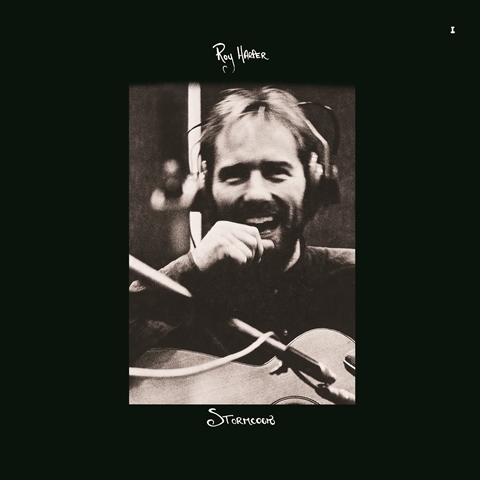
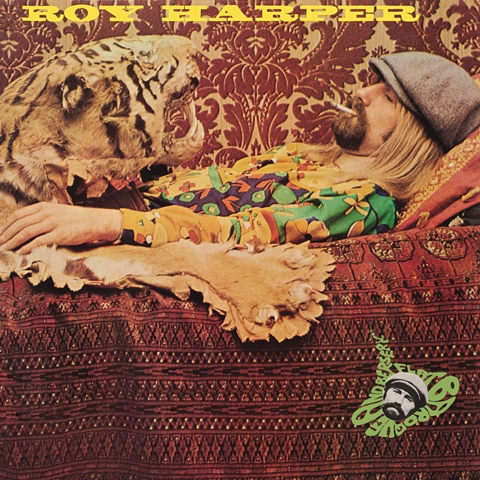 He has restarted his working life and resumed playing live. He has also, on his own Science Friction label, issued limited, vinyl-only editions of the first three albums he recorded for EMI’s Harvest imprint: Flat Baroque and Berserk (1970), Stormcock (1971) and Lifemask (1973) – Harper’s fourth, fifth and sixth albums. Each reissue comes with good liner notes, in a repro of the original sleeve and is remastered with great sympathy.
A comparison of the new Flat Baroque and Berserk and Stormcock to first pressings (I don’t have one of Lifemask) shows that the sound has been opened out rather than rendered anew. Clearly, original pressings and their EQ were referenced in the new remasterings. It as if each album has been refreshed by removing a light layer of sonic murk – one which was not discernable until now.
Anyone looking for a traditional linear progression or development over the three albums will be disappointed. Harper was wilful and each is unashamedly scattershot. This is not to say they are not good: each is and, in its own way, essential to Harper’s catalogue, with Stormcock the all-time classic. Each though is defined by a particularly literate anger: at specifics (Stormcock’s “Hors D'Oeuvres” is a commentary on the Caryl Chessman case; the title of Flat Baroque and Berserk’s “I Hate the White Man” is self-explanatory) and at the human condition in general.
 Despite being his calling card with EMI, Flat Baroque and Berserk was hardly an album the label could easily market. Intimate, almost whispered reflections are set against strident songs during which he all-but attacks his acoustic guitar. The album ends with its only rocker “Hell’s Angels”, which dissolves into (presumably) stoned laughter. On the sleeve, he is reclining, looking into the jaws of a tiger.
Stormcock was and is defined by the track which took up the second part of side two – the reason it should be heard as an album rather than a CD. Orchestrated by David Bedford and running for 13 minutes, “Me and My Woman” was an allegorical examination of where the Sixties had gone in the form of a love song – a “where-are-we-now”. It was deeply serious and seriously impactful. Jimmy Page’s contribution to side one’s anti-organised religion "Same Old Rock" also attracted attention. If an entry point into Harper is needed, this album is it.
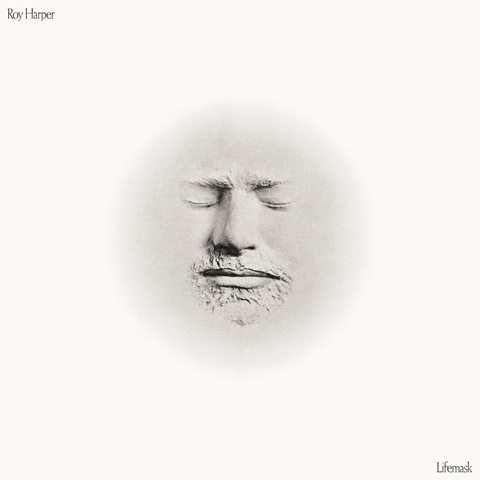 Lifemask was and is harder to get a handle on. The just-short of 23-minutes “The Lord’s Prayer” (also featuring Page) is an intense, almost stream of consciousness song-poem portmanteau piece on the state of the world – or rather, the state of the post-Sixties world as Harper saw it. Much of the album revisited songs composed for the 1972 film Made, in which he appeared as rock singer Mike Preston alongside a single mother played by the ever-typecast Carol White. The album is bitty, does not hang together and radiates stress. Unsurprising, as it was recorded just after Harper was diagnosed with the blood condition hemorrhagic telangiectasia and informed he had seven years to live.
Now 75, Harper has long outlived his doctor’s predication. In itself, that is cause for celebration. Even more so is that he has returned to the fray. His next moves with new music are eagerly awaited. But until they are revealed, these reissues will do just fine.