Thank goodness for selective memory, because although I remember that pop music had something of a mid-life crisis between the sequin explosion of glam rock and the spittle tsunami of punk rock, I had been blissfully spared comprehensive recall of all the grizzly details. That is until I watched what turned out to be another of those cheap-to-make caffeine-charged documentaries which goes off on so many tangents that it’s hard to recall what it was meant to be about in the first place. For last night’s look at what was described as a pivotal year for the BBC’s once-essential weekly viewing experience was all clamorous surface buzz and irritating digressions.
Somewhat fittingly, Sue Perkins narrated. Perkins always sounds like she wants to move on as quickly as possible to the next thing, and so her style only served to emphasise the programme’s can’t-sit-still feel. The alleged subject matter (Top of the Pops in the year of our Lord Michael Grade, 1976), was occasionally alighted upon, but the programme also attempted to embrace the whole history of TotP before and after 1976, the whole history of Radio 1, the birth of the pop video (with “Bohemian Rhapsody”), the dubious value of the Benny Hill girls of pop, Pan’s People, the strikes and social unrest in the country at the time, and of course the arrival of punk (which ironically produced few records that sold enough copies to get them on the show) and disco (which gave us the year’s most ghastly out of many ghastly records, “Disco Duck”). Takes a deep breath. And really - who cares whether “Diddy” David Hamilton got on with toothy Tony Blackburn or not, especially when you’ve only got 50 minutes in which to make your point?
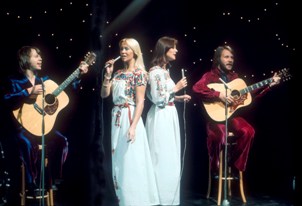 Obviously there’s nothing new about attention deficit disorder TV. But the problem was, several of its myriad digressions suggested hypothetical documentaries I’d much rather have been watching than this one about how a once-essential music show turned into a garish, soulless variety show. Share my pain by reading this roll call of some of the “artists” that appeared in 1976: The Wurzels, Brotherhood of Man, Showaddywaddy, Sailor, Demis Roussos. Had enough yet? Are you going to tell me where the money’s hidden? No? OK, here’s some more then: The Bay City Rollers, John Miles, Dana and the Osmonds. Arguably, ABBA (pictured above) was the year’s only saving grace. But back then, ABBA were also judged to have been making shallow, disposable pop. Only in hindsight has it been decreed they were in fact making classic, timeless pop.
I did take my fingers out of my ears when David Bowie's electrifying performance of “Starman” in 1972 was touched on. It was curiously moving to be reminded of how shocked parents were, and how delighted teens were, on seeing the ethereally androgynous Bowie for the first time, viewed over their baked beans on toast. It turns out to have been a moment shared by the nation just as watching Doctor Who from behind the sofa had been. But isn’t there a whole film to be made on the seismic sexual and musical impact that Bowie, Bolan and Roxy Music had on a generation? Fifteen million people watched TotP at the time, so the impression left by an apparently gay extraterrestrial with a 12-string guitar can’t be underestimated. But, no, Bowie was ticked off the list in a matter of moments, and we were on to something else. The BBC are perfectly capable of producing more focused, edifying music documentaries, so perhaps one day they’ll go into this fertile area.
Watch David Bowie’s Top of the Pops performance of "Starman"
“It all started to slightly parody itself,” claimed Toyah Wilcox at one point. But I think the word “parody” implies intelligent forethought. What happened to Top of the Pops was more death by kitsch. The programme was the highlight of the week’s telly for several generations of teenagers, but by 1976 had turned into a kind of pop music Play School, with dancers in duck costumes, and DJs who looked like the bastard offspring of Bruce Forsyth and Esther Rantzen. Maybe it should have been put to bed then, rather than three decades later. But you’ve got to love the TotP' audience: those tank-topped teens too star-struck or camera-struck to dance, awkwardly swaying about to their own imagined beats. Where are they now? And are there still kids around today who see pop musicians as demi-gods the way some of us did in the early 1970s? That’s two more documentaries I’d rather have watched than this one.
- Watch Top of the Pops: The Story of 1976 on BBC iPlayer