

In a cultural world with no frontiers, French-Lebanese trumpeter Ibrahim Maalouf has a musical CV that ranges very widely: collaborations with Angélique Kidjo, Sting, Quincy Jones, Amadou et Mariam, Archie Shepp and countless others. While rooted in Lebanese and Arab tradition, he moves with ease through jazz, rock, hip-hop and other genres.
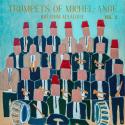
His new album, Vol 2 of the Michel-Ange project dedicated to his trumpet-playing father Nassim whom he revered as a kind of musical Michelangelo, is once again focused on a contagiously festive brass sound, part-Balkan Roma, part-Herb Albert and the Tijuana Brass.
Maalouf’s trademark sound is the quarter-tone or microtonal trumpet, an instrument with an instantly recognisable tinge of longing and melancholy – even on up-tempo dance numbers – that allows him to explore the beguiling spaces between tones of the Arab maqam or mode at the heart of Middle Eastern music. His training in baroque trumpet has given him a virtuosic ability, with fluid runs as agile as those of legendary jazzman Clifford Brown. This guy can play whatever he hears in his head, and it’s a joy to behold.
Almost all the tracks on the album are up-tempo. This is party music, with a distinctly pan-Mediterranean feel: the Lebanese, heirs to the trading Phoenicians, have travel in their bones. An irony-laden counterblast to the horrors that they are living through today: a small country torn apart since the end of the Ottoman Empire – the ill-fated neighbour of Palestine and Israel, and a place from which Maalouf’s family fled many decades ago. As with many exiles, there is a rootlessness, a kind of restlessness too, as well as an almost excessive capacity to absorb other cultures: Maalouf’s music encompasses hints of Middle Eastern dabke wedding music, lilting Cuban bolero with pianist Gonzalo Rubalcaba, flamenco with the Barcelona quartet Las Migas. Some of his star collaborators are not really given enough space in the mix – not least Palestinian flautist and singer Nai Barghouti and French accordeon whiz Richard Galliano – although he does shine on the album’s last track, a lively jazz waltz.
There is something a little relentlessly upbeat - and slightly predictable – about this set. Even though it was recorded live in the studio, this festive music isprobably best heard in the heat of a stage performance. It’s almost as if Maalouf had felt a need to party, as his country of origin goes up in flames - once again. I was left yearning for some of Maalouf’s more meditative work – notably with the French cellist Vincent Ségal, and most of all his breath-taking intervention on the Lhasa de Sela’s song "Anywhere in this Road" (2003)
- More New Music reviews on theartsdesk








Add comment