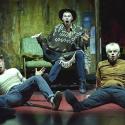
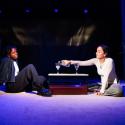
A few days ago I found myself sat in a Finsbury Park pub talking to a man who dismantled bombs for a living, who had completed two tours in Afghanistan fighting the unending war against Improvised Explosive Devices, and I will admit to being more than just a little nervous. You see, he had just read the script of my play Casualties.
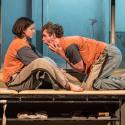
Casualties deals with the effect the pressures of fighting in Afghanistan have on the relationship between two members of a Counter IED team and the woman one of them has left behind. It is of course a dramatic fiction but I felt it was important for it to be based in fact. I wanted to be sure that the characters I had developed were believable, their dialogue authentic, and their situation realistic. To do anything less I felt would be disrespectful and exploitative.
All those who serve out there are under no illusion about the futility of it all
In many ways it was predictable that one day I would write a play about Afghanistan. In my youth I had seen some service, although not enough that I felt I could call myself an ex-soldier, but a brief spell with 29 Commando has stayed an important part of my life. I often look back on those days with a great fondness and a certain amount of regret that it all came to an abrupt end through injury, but then Dr Johnson was quite right when he said, “Every man thinks meanly of himself for not having been a soldier.” So when in 2007 two men from my old battery were killed in Afghanistan I felt a personal connection with the conflict, and I have watched with interest, and a sense of inevitability, the escalation of hostilities, the political cooling off and the cynical attempt to brush the whole matter under the carpet.
You must have noticed how these days we no longer see the funeral corteges passing through Royal Wootton Bassett, the Ministry of Defence having moved military repatriations to the less public RAF Brize Norton, and how the deaths of soldiers rarely make the headlines, reports ending up squashed into a few column inches on page seven. Nowadays a soldier has to be horrifically murdered in Woolwich for the media to take any real notice.
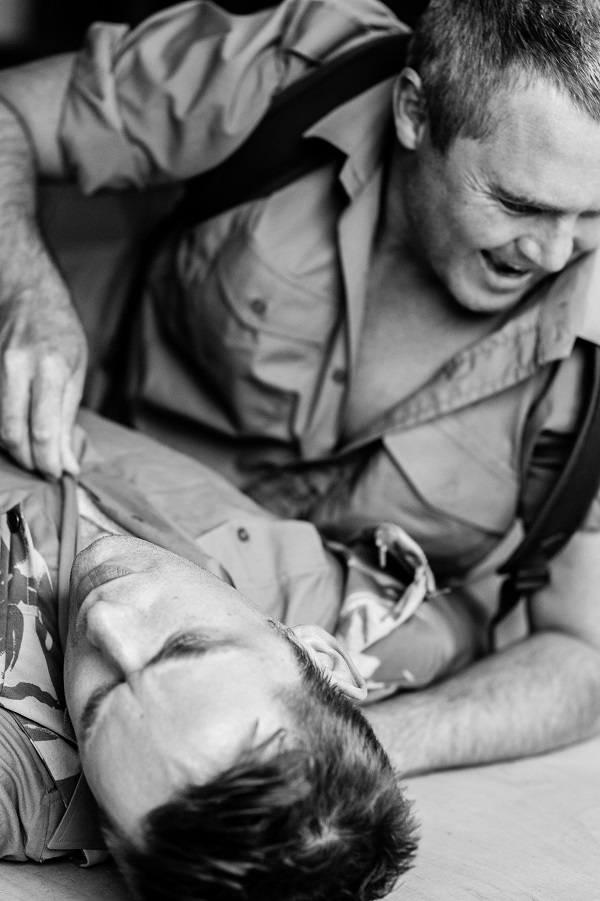 The number of men and women who have suffered violent amputations from IED strikes are also hidden away in the casualty figures, and seeing their stoical interviews on television hardly informs us of the extent of their suffering, and when they tread on that pressure plate they are not the only victims; their families friends and comrades are also affected.
Soon the British army will be withdrawing from that war-ravaged country and the conflict will be consigned to endless documentaries on the History Channel. Most of us will be able to forget about it, but there are those who will carry the mental and physical scars of a pointless little war for the rest of their lives.
“We all know it’s pointless,” my friend across the table informs me. He explains that all those who serve out there are under no illusion about the futility of it all. They know that they will never win the fight and are certain that, when the troops finally pull out, the country will end up in the same state it was in before they got there.
When I eventually managed to pluck up the courage to ask him what he thought about the script I was pleased to hear him say he had enjoyed it very much. There were a couple of minor technical points but overall he found the characters familiar, the dialogue authentic, and the situations believable. In fact he went on to talk about events that he had witnessed or heard about that were similar to those of which I had written, which meant by the end of the evening I was not feeling as pleased with myself as I should have been. You see, all of a sudden, everything had become a bit too real. The events I had written in fiction had actually happened, in one way or another, and that made me feel quite sad.
To me Casualties is just a play, a piece of entertainment that I have written. It does have a message and a purpose, and there is a certain amount of truth in it, but it had come out of my head, or so I thought? Harry Burton, who is directing Casualties at the Park Theatre, has said from the start that it was a story that we have all been chosen to tell. Well, maybe he is right. Maybe the story has been out there all the time and I was just chosen to put it down on paper. In the Finsbury Park pub, it certainly started to feel like that.