

Peter Phillips and the Tallis Scholars have nothing to prove when it comes to Renaissance choral music – few ensembles can match them for clarity, balance and purity of tone. They are perfect guides, then, for this tour of the late Italian Renaissance, an era, as they demonstrate, of surprising musical variety and fast-changing tastes.
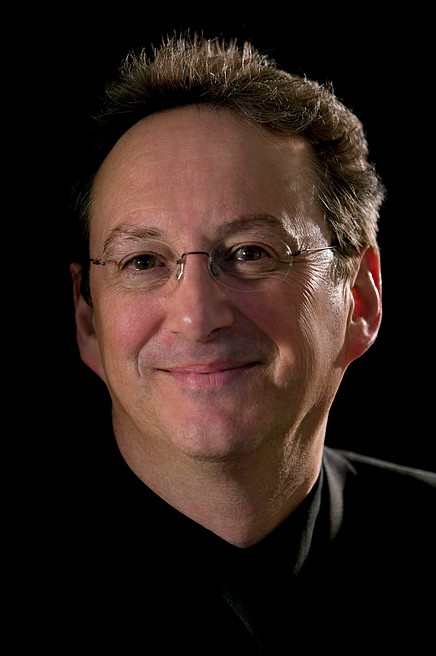
The choir is small, just 10 singers, and Cadogan Hall has a dry acoustic, at least compared to the vast basilicas of Northern Italy, so these were intimate readings. The broadly chronological survey began with Palestrina, whose opulent Laudate pueri lacked nothing for the one-to-a-part presentation. A little Palestrina can go a long way, so Phillips (pictured below) was wise to chose two short and distinctive works. The Virgo prudentissima is less dramatic but more terse in its polyphony, and gave the tenors an early challenge with some punishingly high tessitura. Monteverdi rounded out the first half, with his unhelpfully titled Messa a quattro voci da cappella. This is a late work, published in 1650, but harks back to the time of Palestrina and the stile antico, so plenty of rigorous counterpoint and little harmonic movement. But this is still clearly Monteverdi, with operatic melisma freely decorating the counterpoint. Phillips insisted on a clean-cut, stepwise movement for these florid lines, which sometimes felt a little staid, even in a Mass setting.
 The second half opened with a lollipop, Allegri’s Miserere. Some inventive stagecraft elevated this performance, literally, with the cantor positioned on the balcony high above the stage and an antiphonal choir behind the audience. The now-invisible soprano sounded rushed in some of the ornamentation, but was impressively secure for the top Cs.
Allegri to Gesualdo could have been a nasty shock, but the O vos omnes provided a gentle transition, with the composer’s wayward harmonies only becoming gradually evident. But there was no mistaking the gloomy mood, with misery piled upon misery across the work’s short span. The second Gesualdo motet, Aestimatus sum, was more radical, lingering for its final lines on the tenor and bass voices, both singing low and in close, often dissonant harmony.
Like Allegri, Antonio Lotti is thought a one-hit wonder, and the programme continued with his hit, the Cruxifixus (a 8). In fact, Lotti wrote many Cruxifixus settings, and for an encore we heard a 10-part version. Both are impressive works, lighter in texture than his Renaissance forebears, but no less sophisticated in his counterpoint. The 10-part setting is particularly elegant and forward-looking for its extensive melodic suspensions.
Three Monteverdi motets closed the programme, Adoramus te, Domine ne in furore and Cantate Domino. Again, the choice of works was ideal, with plenty of variety between each of the short numbers. More significantly, they marked the dawn of a new approach, a lighter and more varied sound from the cusp of the Baroque. Cantate Domino seems too cheerful for a sacred motet, everything about it is smiles and radiance, especially when performed with such vitality and grace. Optimistic music to herald a new departure in the Italian choral tradition, but rounding off this programme it felt more like the end of an era.





Add comment