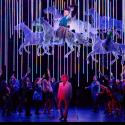
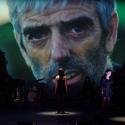
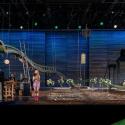
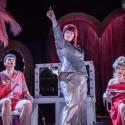
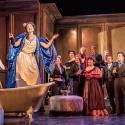
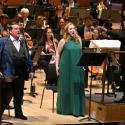
Gorgeous woodland romp, a tale of a vivacious, independent-minded young lady-into-fox objectified by three ageing, disillusioned men or a parable of natural regeneration? The different levels of Janáček’s one-off fantasy, from strip-cartoon origins to wise philosophy, are hard to hold in balance. Director Stephen Barlow sketches the possibilities but no more, meeting many of the veteran composer’s seething orchestral passages with a dramatic blank. That accepted, you simply revel in what a reduced orchestra can achieve under the very impressive Jessica Cottis, and focus hard on some excellent singer-actors.
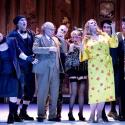
Chief among them are Jennifer France and Julia Sporsén, who for me gave the music-theatre performances of the year back in 2018, when Strauss’s Ariadne auf Naxos came to Opera Holland Park. France is irrepressible as Vixen Sharpears, exuding radiant energy even when she’s not given enough to do (as in the luminous interlude of the heroine’s awakening as a young woman). The voices are only really allowed to blossom when Fox Goldenmane comes a-courting: the hesitations of the Zerbinetta-Composer relationship as director Antony McDonald saw it in the Strauss return in a deliciously different context. Fine, incidentally, that the Fox tells his object of desire that he’s from Forest Hill; but isn’t it a bit naff to play on Pret bags of food as rabbit substitute, or for the Forester to announce that he’d be able to sleep if it weren’t for the peacocks, when Janáček is giving us the buzzing of the flies the libretto cites in the orchestra? 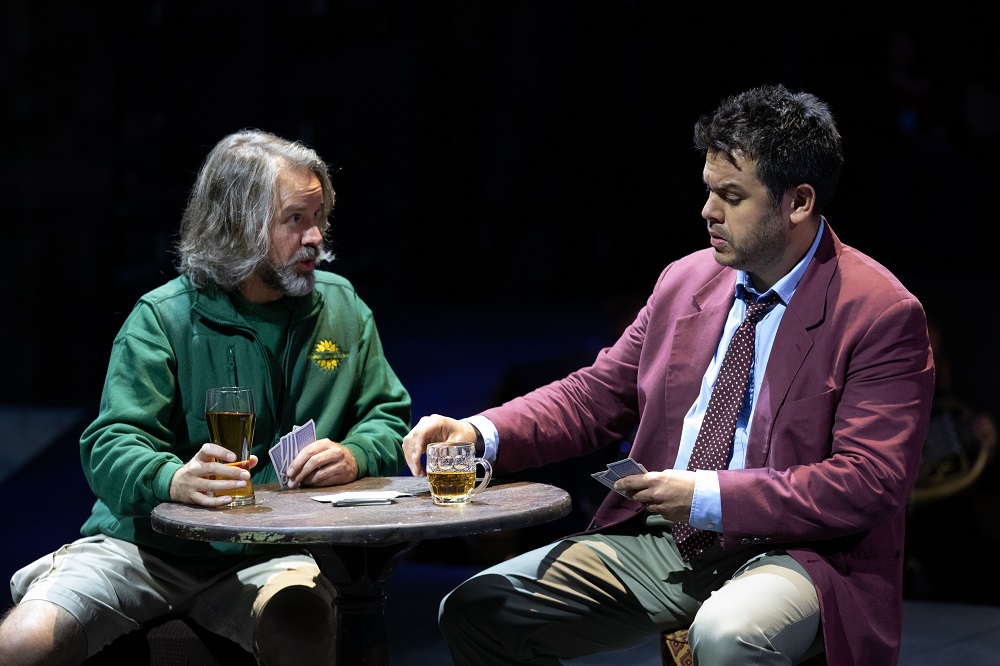 At any rate, Grant Doyle sings his noble epilogue about the passing of time and the meaning of life with total security, and seven years on from playing the Forester in Daniel Slater’s brilliant production for Garsington, he’s also won the right to meditate on ageing. His drinking companions here may still be in the prime of life, but John Savournin as the Greek-quoting Priest manages to move us with little introduction as he reflects on his way home from the pub, and Charne Rochford’s Schoolmaster (pictured above on the right with Doyle) shows us the tenor is ready to be promoted to lead roles.
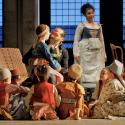
It’s a nice touch in this first inn scene – strictly for adults, though it moves fast enough here for any children not to get bored - to have France as Terynka sitting at another table, leaving in annoyance at the men’s sexist meditations. Production-wise, that’s about it in terms of perception. The opera-ballet dimensions of the work go for nothing, though a choreographer is listed. For the forest creatures, we get the usual kids in animal masks waving things – though they do it well, and sing spiritedly as fox cubs in Act Three – and the only real sense of danger in the woods comes from Ashley Riches as Harasta the Poacher, a ringing and vivid portrayal of a born destroyer (pictured below).  When attention isn’t riveted on him or France and Sporsén, you tend to watch Cottis and the orchestra. Jonathan Dove’s chamber reduction of Janáček’s score is an absolute beauty; the colourings of the original are already more filigree than in the composer’s earlier Katya Kabanova, so you don’t miss full warmth of violins as much as I did in Katya at Glyndebourne. This nonet of strings projects superbly; even just two violas playing the aggressive repeated figure at the beginning of the third act manage to sound like six. With the orchestra, as in Wonderful Town, in a sunken space right at the heart of things, a narrow acting space around it, Cottis is very watchful of the singers behind her, gives ideal space to the big emotional moments and manages Janáček’s tricky tempo changes well. The brass are more than usually exposed in the reduction, and there were some audible splits and fluffs on the first night, but it’s a tough score which asks much from the players in difficult registers. The main thing is that the sounds move us as they must, even if the visuals remain short on point.