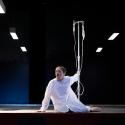
Had one listened to the Chiten company from Kyoto performing Coriolanus with one’s eyes closed, it would have seemed as if the stage were teeming with performers. And without understanding a word of Japanese, a theatregoer could respond to the gamut of moods and rhetoric of the play, from mob fury met with autocratic disdain to political conniving and on to maternal grief and horror: all were audibly evident in a collective tour de force of verbal dexterity, range and expression.
In fact, a nimble ensemble of just five - two men and three women accompanied by a pair of musicians calmly sitting on a rug at the back of the stage - not only played all the roles but managed to do so interchangeably, a four-person chorus singly or in unison confronting, challenging, or acclaiming Dai Ishida’s prideful warrior Coriolanus in turn. Everyone got a chance to shine, Volumnia’s final meeting with her errant son played as if this most fearsome of Shakespearean mums were possessed by multiple personalities.
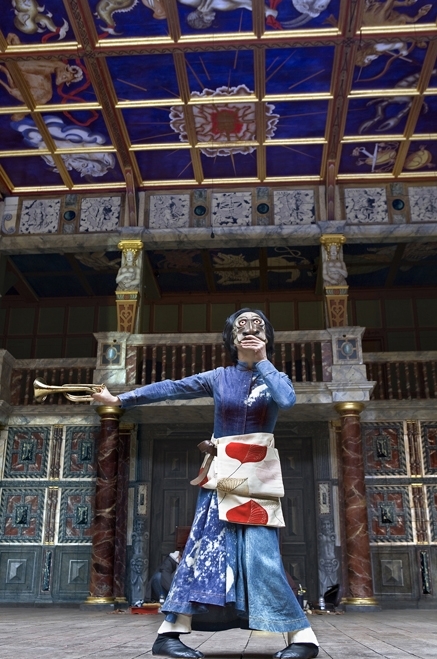 Visually one might have expected or hoped for a samurai-style response to the material a la Akira Kurosawa’s spectacular Shakespearean films (note to the interested: check out Kurosawa’s version of Macbeth, Throne Of Blood, or his take on King Lear, Ran, for two of the best-ever screen adaptations of the Bard). But the tiny troupe, who paraded on in simple but striking variations on a blue, tie-dyed theme and tootling toy bugles, quickly verified their minimalist credentials with a radically contemporary attack.
Ishida impressively delivered most of Coriolanus’s rants, rages and bitter musings at a breathless pace with an upended basket over his head, somewhat bafflingly brandishing a baguette as a multi-purpose prop: it functioned as a horse’s reins, scabbard, symbol of authority and weapon – oh, and as something to be eaten. (No surprises there.) Clearly, the cultural and philosophical fine points of director Motoi Miura’s more imaginative innovations bypassed a largely non-Japanese audience, and some faint hearts left before the interval. Arguably, the staging might work better in a more intimate space, as well.
But one of the best things about this epic season at the Globe has been the warm-hearted atmosphere generated throughout. Bewitching or bewildering, each production has met a largely generous response from audiences who have unfailingly embraced the visiting companies and rewarded their efforts with noisy ovations. The good house for the Japanese offering was never less than interested and intrigued. A Zen state of enlightenment seemed palpable in the wooden O as the drama reached its tragic climax, and Miura and his players radiated delight when receiving their richly earned cheers.