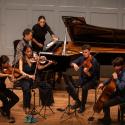
The Fidelio Orchestra Café is where you go for electric-shock and deep immersion therapy from the greatest of musicians. It happened last week with Steven Isserlis in Bach, and last night Alina Ibragimova sent high voltage shooting through the body with the very first gesture of Janáček’s Violin Sonata, joined in supernatural high wire acts by Samson Tsoy on the Bechstein now filling more than the space occupied last week only by the cellist. The two advertised sonatas are febrile masterpieces, but we hadn’t bargained for the deep-meditation extras by Arvo Pärt and Olivier Messiaen, the perfect counterweights in an extraordinary programme.
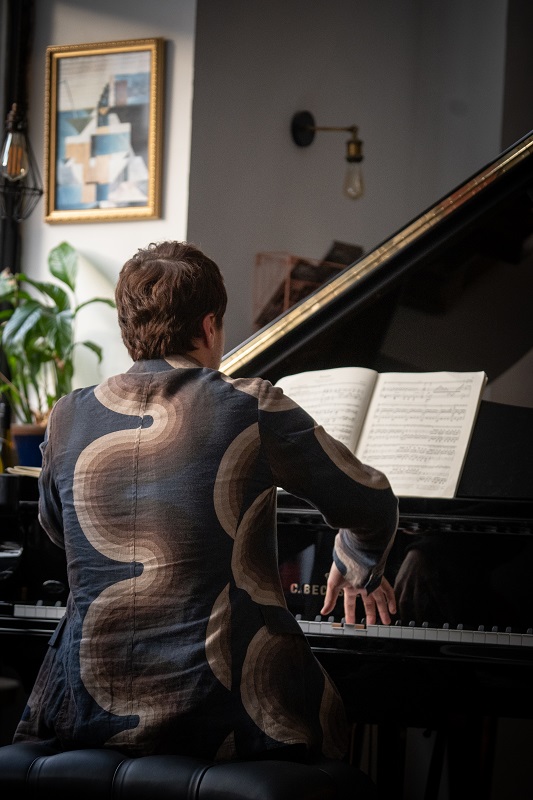 That the sonatas were loud at times in the café space can’t be denied. But it would have been a mistake for performers as vivid as these to scale down: you don’t ask for a dimmer switch on the sun. And in any case even Tsoy’s playing at its most massive is well weighted and focused in Russian piano-school style. The shocks and buffets were essential to music that’s anything but comfortable. Janáček in the fateful summer of 1914 veers between tender lyricism, unease and brute force in a way that anticipates the circumscribed world of Katya Kabanova, four years in the future; even some of the themes are similar, especially the rough folk dance of the scherzo.
When violinist and pianist hit the stratosphere, as Janacek several times asks them to do – Katya, as it were, takes flight – you wondered if the glasses would shatter. Those literal heights were reached again in each of the other works. The first coup of Ibragimova and Tsoy, in a fairly late decision, was to place Pärt’s metaphysical Spiegel im Spiegel (Mirror in the Mirror) between the frenzied activity of Janáček and Beethoven. It didn’t matter in the least that the traffic sometimes roared outside the windows on the Farringdon Road; when players go inside themselves like this, you go with them. Britten’s magic triangle of composer, musicians and audience was at its most luminous here, a second reminder for those of us lucky enough to be in the venue two weeks running of what we and the artists had been missing.
A live charge is surely essential for Beethoven’s “Kreutzer” Sonata, too. While the central variations were the only interlude of the evening in terms of relaxation – though here, too, Ibragimova and Tsoy took us high into unknown regions – it wasn’t just the restless first movement, taking off from authoritatively mysterious piano chords, which proved demonic (you feared that Ibragimova’s astounding pizzicati would break the strings). The tarantella finale was a dash at the most audacious speed – and with near-perfect synchonicity – through hellfire, the players just about living to tell the next tale. 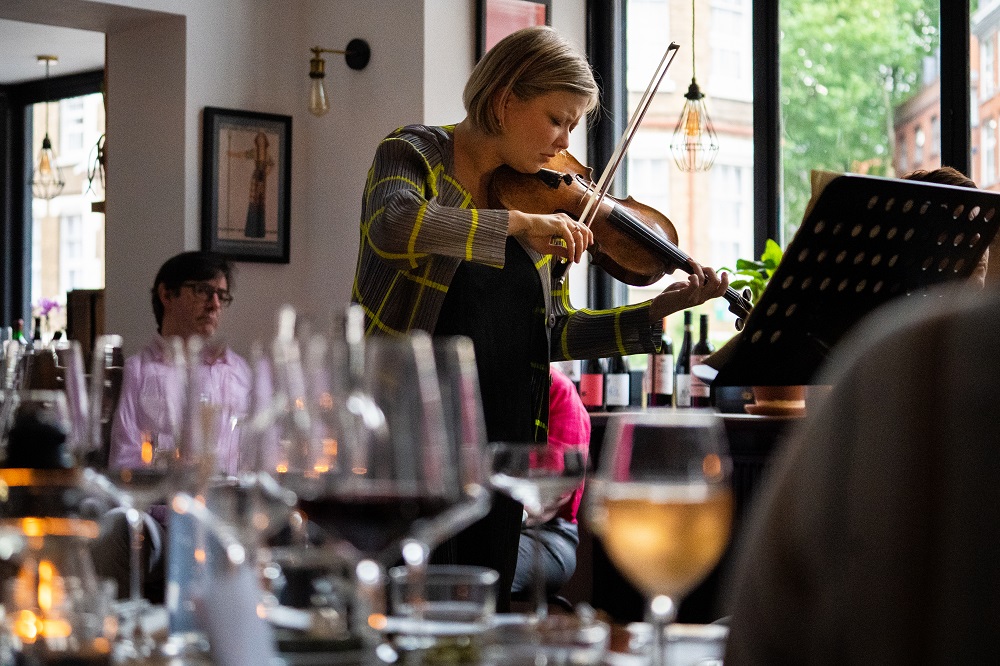 Which was active heaven in the form of “Praise to the immortality of Jesus” (it sounds better in French), the final movement of Messiaen’s Quartet for the End of Time, Ibragimova turning on such intensity in the heights that you came to believe in the reality of the imprisoned Messiaen’s searing 1941 vision. Afterwards, there was wonderful food again, from Alan Rosenthal, and the normality of conversation. But that glimpse of God was truly seared into the soul, even if the earworm you took away was Beethoven’s tarantella. Hard to believe that Ibragimova and Tsoy can repeat such a fierce programme over the four nights to come, but music always gives more life and energy than it takes.