Sibelius: Symphonies 1-7 Helsinki Philharmonic Orchestra/Jukka-Pekka Saraste (Ondine)
Violin Concerto, Lemminkäinen Suite Ava Bahari (violin), Gothenburg Symphony Orchestra/Santtu-Matias Rouvali (Alpha Classics)
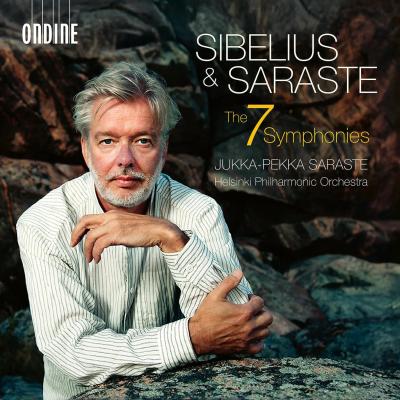
Jukka-Pekka Saraste’s RCA Sibelius discs with the Finnish Radio Symphony Orchestra were assembled in a no-frills box a few years ago. If you can find it, it’s worth buying for the shorter orchestral pieces alone, with exciting, brilliantly played accounts of the Sibelius’s two Scènes historiques suites and the delicious incidental music to Belshazzar’s Feast. Saraste’s 1995 live symphony cycle with the same orchestra on Finlandia is decent but unremarkable, and he’s now recorded the symphonies again with the Helsinki Philharmonic. Personally, I can never get enough Sibelius, and I was intrigued to encounter Aaron Copland’s comments in his book The New Music 1900-1960, Sibelius dismissed as “a hangover from the 1890s”, his music attractive but possessing “a provincial imagination.” Ouch. I’m a huge Copland fan, but claiming that the Finn was prone to “the gloomy pseudo-philosophical broodings of a typically 19th century mentality” suggests that he wasn't paying much attention to what he was listening to; Sibelius’s greatest works look to the future despite having their roots in the romantic tradition.
You can hear that in this set. Tempi are marginally faster than those in the RCA recordings, which doesn’t stop Saraste relishing the nods to Tchaikovsky in the first two symphonies. No. 1’s outer movements are thrilling, and No. 2’s baggy slow movement always sounds coherent. The transition from scherzo to finale is brilliantly managed, the closing bars triumphant without a hint of bombast. Symphony No. 3’s “Allegro moderato” has plenty of energy and the big 4/4 melody which concludes the third movement feels utterly organic here, Saraste giving it refreshing heft. The Helsinki lower strings have plenty of dark depth in No. 4, the stopped horn notes at 2’20” in the first movement like buzz saws. This work should sound unsettling, and Sibelius’s shrug of an ending, a sequence of eight mezzo-forte A minor chords, leaves exactly the right bitter taste. No. 5 is exciting and atmospheric, with impressive horn playing and seamless transitions.
Symphony No. 6’s luminous first movement glows, and I like Saraste’s handling of the chattering wind writing two minutes before the close of the “Allegretto moderato”, sounding suitably avian here. The opening minutes of No. 7 are glorious, the moment just before the first trombone solo always reminding me of Elgar’s “Nimrod”, and Saraste keeps the faster sections moving. The closing minutes pack a huge emotional punch, a blend of exaltation and exhaustion.
White No. 1 is a recent studio recording, the other symphonies were taped live in concerts held 2024 and 2025. Audience noise is minimal, with applause retained after Symphonies 2 and 5. I usually steer Sibelius newbies towards Paavo Berglund’s1970s Bournemouth set, but Saraste’s is an excellent new option, the cycle squeezed onto three discs at a very reasonable price.
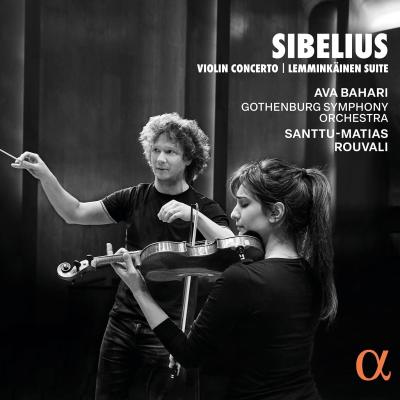
Also out is the latest instalment of Santtu-Matias Rouvali’s ongoing Sibelius cycle with the Gothenburg Symphony Orchestra. I’ve struggled with the Violin Concerto in the past, my go-to recording being that by Pekka Kuusisto, accompanied by Leif Segerstam and the Helsinki Philharmonic. This one, from young Swedish violinist Ava Bahari is pretty marvellous too, much of its success due to Rouvali’s idiomatic, colourful accompaniment. Sibelius’s atmospheric introduction is delicious here, the sudden tutti chord 1’55” like a thunderclap. Bahari and Rouvali hold the long opening movement together well, and the “Adagio di molto” swoons. Bahari’s finale is a propulsive romp, Rouvali making sure that the all-important timpani and horns are always audible.
The big draw is the marvellous Lemminkäinen Suite, an early four-movement work (1896) which is a symphony in all but name, inspired by tales of a dashing hero in the Finnish verse anthology The Kalevala. The opener, “Lemminkäinen and the Maidens of the Island” is thrilling in Rouvali’s hands, ecstatic and dramatic by turns. Listen out for the snarling brass chords at 5’30”, and the tiny passage for divisi strings which follows. “The Swan of Tuonela” features a melting cor anglais solo, and the eerie closing minutes of “Lemminkäinen in Tuonela”, the titular hero’s dismembered body parts reassembled by his mother, are terrific. Which leaves “Lemminkäinen’s Return”, exuberant and punchy, Rouvali ensuring that the tambourine part is prominent in the mix. Great stuff, magnificently recorded.
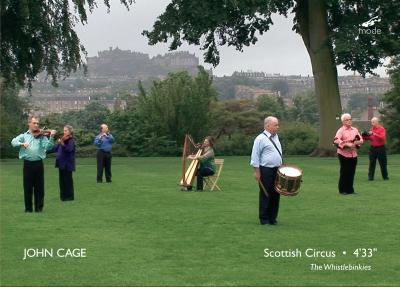
John Cage: Scottish Circus, 4’33’’ (version for ensemble, indoors and outdoors versions) The Whistlebinkies (Mode)
I first checked to make sure that the release date of this one wasn’t April 1st. No, it’s genuine, and it’s very good indeed. The music, never released before, is exceptionally well played and recorded, the documentation in the 24-page booklet is unbelievably comprehensive. There is also an entire DVD that I haven’t seen yet. The story is that in 1984, Mark Francis, the Director of the Fruitmarket Gallery in Edinburgh organised a performance by The Whistlebinkies during an exhibition of Cage’s graphic art. Cage’s long-term fascination with Celtic folk music – and Irish music in particular – was well known, and had already led to the composition of Roaratorio, including the legendary uilleann piper Seamus Ennis. The Musica Nova Festival in Glasgow witnessed the first performance of Scottish Circus in 1990. This music is warmer, less cluttered and more approachable than the Irish work (the violin playing of Mark Hayward deserves a particular shout-out), and the recording made in 2007 – and again left under wraps until now – is very special indeed. 1990, near the end of Cage’s life, was also a time when his dialogue with Sofia Gubaidulina – and her idea of the musician’s “inner clock” – had led him to revisit 4’33” and produce a new ensemble version. Again, it’s all fascinating both to hear and to learn about. This album was released in June of this year with support from Creative Scotland, so it’s a mystery why its unveiling has happened quite so ‘pianissimo’; it feels like an important document. Sebastian Scotney
Robert Laidlow: Reality Eaters BBC Philharmonic/Vimbayi Kaziboni, with Joseph Havlat (piano) (NMC)
Robert Laidlow’s album Reality Eaters, the press release says, “explores ‘latent spaces’: hidden fields of possibility that underpin everything from artificial intelligence to the physical universe.” If this sounds a bit abstract and intellectualised, the music is very much not. The composer clarifies in the liner notes that “despite my interest in these ideas, my music isn’t particularly mathematically – or algorithmically – derived. My intention is to capture how I feel about these topics.” The result is music that is restlessly creative, complex but also direct and entirely human.
There are three pieces on the album, all written between 2018 and 2022, during which time Laidlow was composer in association with the BBC Philharmonic, who play two of the pieces on this album. The first is a 12-minute piano concerto called Warp, enthusiastically played by soloist Joseph Havlat. There is something of the Romantic tradition here in the way the orchestra and piano operate in parallel, almost in competition, before coming together at the end. But the piano has no sense of empty display, its part deftly wrought and played with athletic joi de vivre. Neither is there anything Romantic about the musical language, which is knotty and intense.
Very different is the five-movement string quartet Gravity, excellently played by the Piatti Quartet. Here Laidlow’s language makes reference to music of the past, but always obscured by playing techniques that blur the sense of pitch, or an 18th century tuning system based on Newton’s work, which again distances the listener from finding the material familiar. This is music that is at times granite-like and at others vanishingly fragile and elusive - but the narrative of the piece is always compelling.
The last piece, the 40-minute orchestral triptych Silicon, is the most complex in its conceit and construction, but also the most rewarding. Laidlow creates music that seems in dialogue with the music of the past - represented by the orchestra as an old technology - and the future, where an AI electronic element sees “the BBC Philharmonic encounter its own reflection: an algorithm trained exclusively on its own broadcasts becomes a spectre-ensemble performing alongside the live players”. The result is more engaging than that might sound, with music’s surface characterised by daringly-scored combinations - 26 gongs at one stage! - and the philosophy behind the piece never overwhelms the sonic experience. Silicon is richly multifarious, imaginative, funny (in the best sense), challenging, lovingly played - and, in its last movement, ecstatically peculiar. Bernard Hughes

Terry Riley: The Holy Liftoff Claire Chase (flutes), JACK Quartet (Sono Luminus)
Terry Riley’s The Holy Liftoff is an instalment of flautist Claire Chase’s Varèse-inspired Density 2036 project aiming to create “a bold new repertory for the flute, humankind’s oldest musical instrument.” This being Riley, the first draft sent to Chase featured a hand-drawn four-part flute chorale accompanied by cartoon characters, the doodles intended to encourage the performer to “take a certain attitude towards the music”. Subsequent drawings “weren’t necessarily related to the chorale, but were triggered by my having written it.” Chase’s early multi-tracked flute recordings prompted Riley to produce yet more music, Chase then hiring New York-based composer Samuel Clay Birmaher (“my last name rhymes with 'here and there'") to arrange the music for eight-part flute chorus and string quartet.
Riley’s cool, Stravinskian chorale opens The Holy Liftoff, the four voices initially sounding like a wheezy harmonium before starting to diverge. The work includes a further 21 short sections lasting just over an hour, Birmaher and Chase ensuring that the ear never tires. There’s such variety here: “Hymn” suggests a congregation assembled in a dusty rural chapel, and “Parked Between Two Clouds” is a beautiful moment of stasis. Riley’s voice introduces some sections, notably “C Major Ishi” and “E-flat minor Ishi”, both featuring the sound of stones being scraped.
The longest section, “The Tragedy of What We Lost” is a poignant response to a 2022 school shooting, the chorale’s opening gesture repeated 21 times, one for each victim, before Chase and the JACK Quartet imitate frenetic birdsong. It’s incredibly affecting, casting a shadow over the whimsicality of the two numbers which follow, “Angels in the Snooker Parlor’ and “Horizon Streakers Rag”. After which, “All Arise” is a giddy ascent, Chase providing 18 separate flute lines, and “Pulsing Liftors” opens with an oscillating string figure that sounds like the start of Nielsen’s 5th Symphony. It ends with a blissful, valedictory coda, “Escape”. Riley, now in his 91st year, says in the sleeve notes that he expects “to lift off too, in the not-too-distant future”. Let’s hope it’s not just yet. This is an absorbing, optimistic slice of contemporary music, beautifully recorded.
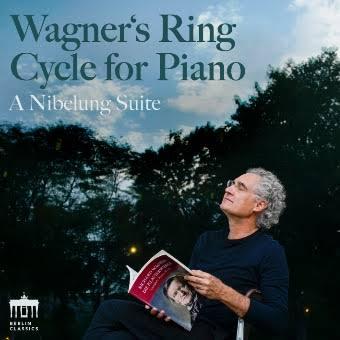
Wagner, arr. Ettore Prandi: Wagner's Ring Cycle for Piano Matthias Kirschnereit (Berlin Classics)
Wagner transcriptions for piano go back a long way. Liszt’s ‘Liebestod’ has justifiably become a repertoire staple (I have a particular affection for Mikhail Rudy’s poetic yet focused reading), and I will admit another definite soft spot for the four-hand transcription of extracts from Parsifal by Engelbert Humperdinck - which, I can’t help feeling, deserves a really decent recording. The whole idea of bite-sizing Wagner is bound to have its detractors; Wagner purists and zealots will predictably reject the idea as heresy anyway. Nonetheless, the task of making Wagner’s works more performable and accessible (or just shortening them) will continue to occupy some musical minds.
This is Matthias Kirschnereit’s second album of arrangements released in a couple of years. The first Wagner Liaisons (Berlin Classics, 2025), feels more like a selection of salon pieces themed around Wagner, although Wagner’s daringly/oozingly chromatic (and deliciously short) “Notenbrief für Mathilde Wesendonck / Schlaflos” is always worth hearing.
According to the blurb for the new release, Wagner's Ring Cycle for Piano has a loftier agenda and a tendency to take itself rather more seriously, to the point where all of the eight tracks are put to bed with ten seconds of rather portentous silence. The new album marks the twin 150th anniversaries of “the founding of the Bayreuth Festival and the first complete performance of The Ring with eight character pieces condensing the sixteen hours of the tetralogy into an intimate, chamber-music-style mini-cycle”. That feels like an overclaim. People seeking extreme gestures will be drawn by the reduction of Wagner’s story-telling, the removal of all texture to home in on a single, unaccompanied line, as in “In Hunding's House. Nocturne”. Mark Twain once fantasised about Wagner being “unvexed” like this. It’s an interesting if counter-intuitive idea, and maybe other people will find themselves getting carried along with it more than I was. Sebastian Scotney