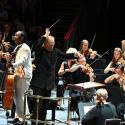
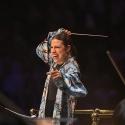
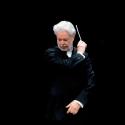
It was a pleasure to see conductor Duncan Ward back in Manchester. His Hallé debut was by no means his first time in the city – he trained at the University of Manchester and the Royal Northern College of Music and has conducted the BBC Philharmonic and Manchester Camerata in the past, and some may even remember him as a student with an orchestra he took to the Arndale shopping centre, making music in the malls, back in 2011.
He was something of a Wunderkind then – pianist, organist and composer as well as budding conductor, a product of Mark Heron’s joint course at the two Manchester institutions, and as a 24-year-old had an apprentice-style position created for him by Sir Simon Rattle at the Berlin Philharmonic.
This time he was taking the place of Lionel Bringuier at short notice to conduct a programme of two mainstream favourites and one curiosity, with Julius Asal, winner of the most recent Terence Judd- Hallé Award (also formerly a Radio 3 New Generation Artist, and Deutsche Grammophon exclusive recording artist) as piano soloist. The combination of Ward and Asal made what could have been a fairly run-of-the-mill exercise into something vastly rewarding and exciting.
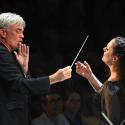
All the right notes, and necessarily all in the right order, is of course the minimum expectation from anyone who plays Grieg’s Piano Concerto. This performance was much more than that. The opening piano-and-orchestra chord was like a pistol shot, and the first movement’s themes were beautifully shaped, first by the orchestra and then by the piano. Ward and Asal (pictured) each like to bring rhythmic flexibility to their presentation of melodic passages, and even more so when those are reprised: the conductor sensitively and attentively accompanying the soloist where appropriate.
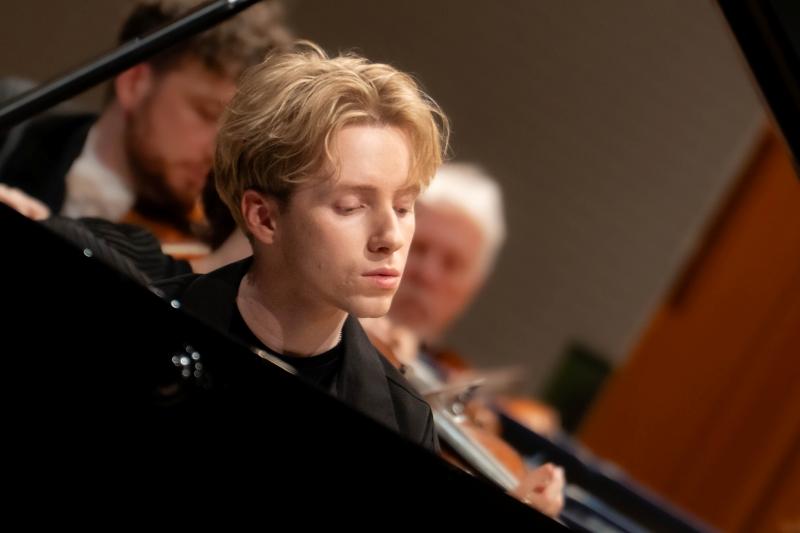
Julius Asal’s gifts include a creamy kind of tone (with lots of pedal to help) and the ability to make cadenza-style passages sound as if they are being improvised on the spot, sometimes mysterious and magical, sometimes overwhelmingly powerful. I especially liked his characterization of the opening tune of the slow movement, finding a second melody inside the melody (Laurence Rogers’ horn solo was also glorious), and his pianissimo ending of it. The third movement also shot off like a gun and was marked by ingeniously varied dynamics and thoughtful phrasing, with a very grand finish.
Asal celebrated with an encore in the shape of his own transcription of the Knights’ Dance from Prokoviev’s Romeo and Juliet ballet (he’s recorded this among other excerpts). He has a sense of fun, too, I think … momentarily, in the central section, Prokoviev in the style of Asal touched base with Grieg in the style of Eric Morecambe.
The concert had opened with Esa-Pekka Salonen’s Helix, a nine-minute jeu d’esprit in which pulse accelerates constantly, the effect being rather like listening to a steam engine’s start-up and trying to hear discrete rhythmic units in its ever-faster mechanical repetitions. Salonen writes phrases over the successive thuds (timpani first, pizzicato basses and also cellos later, and then all kinds of other things) which make it sound like music nonetheless, and you feel as if that makes for a series of gear-changes. If Ravel could make a piece out of constant crescendo in Boléro, why not make one out of constant accelerando? Salonen says it should be “almost manic” by the end – forget the “almost”.
Duncan Ward had something more solid to get his teeth into with Sibelius’ Second Symphony. The orchestral strings were upped compared with the concerto, and he created tension from the start, making the first tempo change very gradual and subtle. The second movement was vividly presented, its speed-up obvious and power-hungry, so that the contrasting theme to the opening was if evil had been met by purity. He draws clear lines from the thickest textures, and made impressive contrasts of weight and menace in the third to match its tempo changes. It’s a symphony that ends in brassy triumph, and its finale was electric and anthemic.
- To be repeated on 25 January
- More classical reviews on theartsdesk