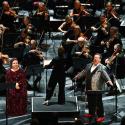
What does a spectacular backdrop give to – or maybe take from? – a music festival? Exit the Wigmore Hall and, however transcendent the performance, you find yourself gazing on a posh kitchen showroom. Nothing in the vicinity can compete with the music. Leave the Église Saint-Michel in Chamonix and the Mont Blanc range soars upwards with improbable drama, the perpetual snows of its summit girded by a squad of jagged, saw-toothed peaks.
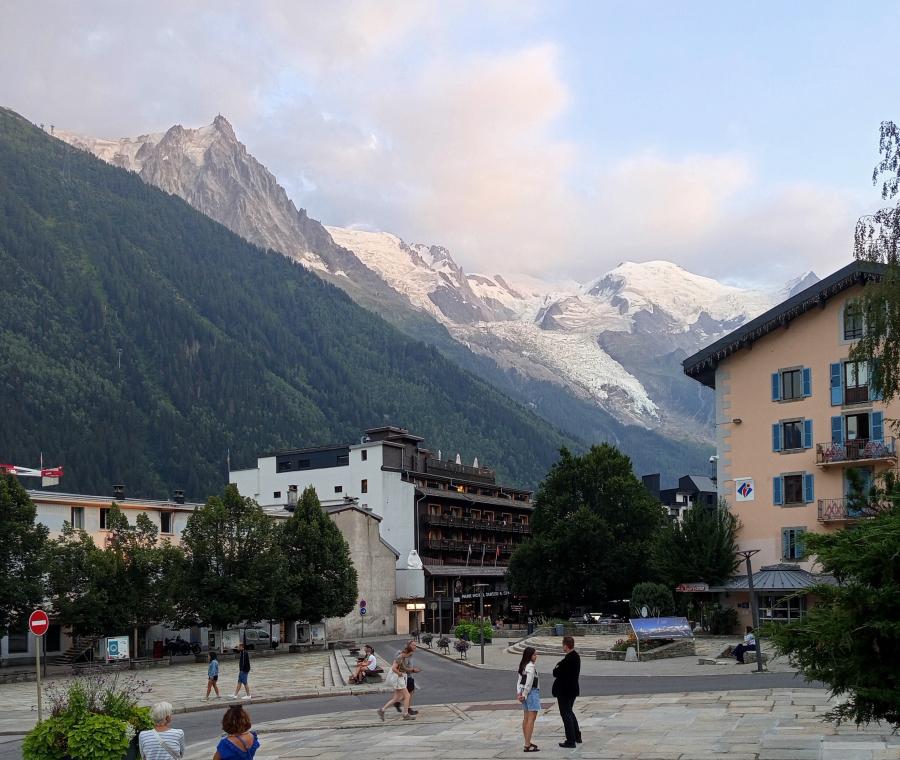
This (pictured above from outside the church) was the iconic vista that fired the awe of Romantic artists and poets, as Shelley (one among many) sought a kind of secular salvation amid these heights: “Thou hast a voice, great Mountain, to repeal/Large codes of fraud and woe”. Festival habitués, however, will know that the guaranteed blessings of an A-List landscape may mask the mediocrity – or just complacency – of a safety-first programme. Lower your horizon of ambition, and the music can come to feel like a background soundtrack to the view.
At Chamonix (pictured below), an infant festival seems determined to avoid that crevasse. Created in 2023 by London barrister David Joseph and the late Bernard de Launoit (head of the Queen Elisabeth Music Chapel at Waterloo outside Brussels), Chamonix Vallée Classics honours its peerless setting in the high Alps where France, Italy and Switzerland touch. Still, it does not feel wholly overawed, or defined, by its stellar geography. Essentially, the festival offers a Wigmore-standard week of premium-quality chamber performances either in the Baroque splendour of Saint-Michel, or the more workaday surroundings of the nearby civic centre. The church delivers a warm, involving acoustic experience; the auditorium not so much, though I found it a bit less arid than I had expected.
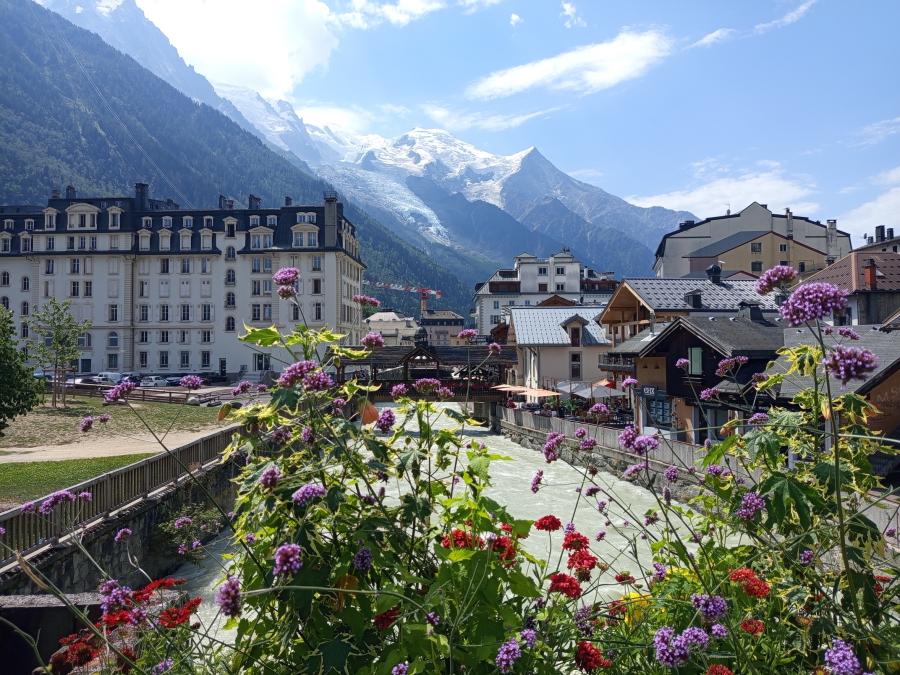
Over the border in Switzerland, long-running annual jamborees at Verbier, Gstaad and Lucerne have expanded into summer behemoths that swallow processions of lustrous global names. Here in the French Alps, Chamonix – surprisingly – has no rivals in the neighbourhood. It also has a very different vibe: more sporty, less swanky, the valley bars, as well as the forests, meadows and rock-faces, packed in summer with youthful hikers, bikers and climbers. (Chanel tried, and failed, to make a go of an outlet here.) Informality of atmosphere matched by consistent quality sounds like an optimum recipe for a start-up festival: a challenger, as app-developers say. On the evidence of the latest edition, which finished on Wednesday, Joseph and his colleagues have started their journey in style.
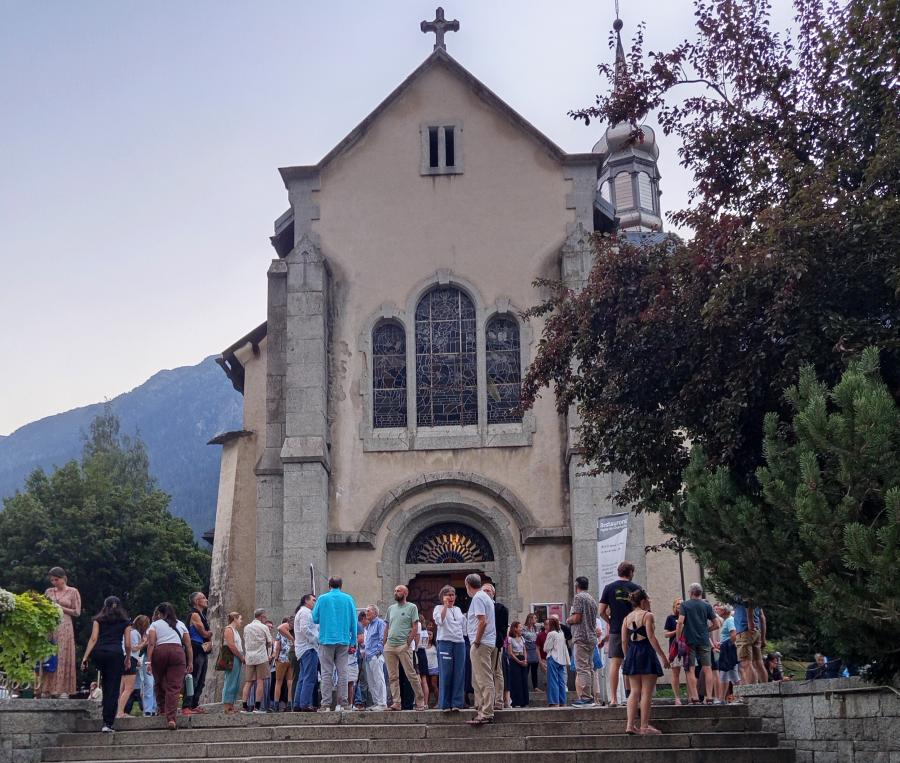
He aimed, he reports, for a concentrated burst of “all killer, no filler”, with the key requirement not just a batch of pretty pieces in a lovely frame but a positive answer to the question: “Would I book a ticket for this in London?” – or Paris, or New York. World-class artists proved far from immune to the charms of the venue; the opening concerts in 2024 included Angela Hewitt and the Jerusalem Quartet (Hewitt, and the Jerusalems, return in 2027). Local backing began robustly and has solidified, with a doubling of ticket sales this year. Supporters and patrons include the co-founder’s widow, Vanessa de Launoit. The warmth of the welcome in the valley allows Joseph to be “confident that we can make this a permanent thing”. Joseph now seeks to add another venue or two – perhaps outside – to the church (pictured above) and centre. The festival offers blocks of free tickets for under-30s: those global throngs of hikers and bikers surely represent a tempting prospect for future growth. In the Chamonix events calendar, the next major landmark will be the UTMB running festival, crowned by its legendary 175km ultra-trail around Mont Blanc. Verbier it is definitely not – and a good thing too.
It was the fresh appreciation of mountain scenery like this at the dawn of the Romantic age that prompted Edmund Burke to forge his taste-changing distinction between the “sublime” and the “beautiful”. The beautiful soothes, delights and consoles, but the sublime arouses feelings not just of wonder and “astonishment” but “terror” that must then be controlled by the forms of art. As for the concerts I heard (I missed piano recitals by Boris Giltburg and Jean-Efflam Bavouzet, and a song recital from soprano Axelle Fanyo with pianist Kunal Lahiry), they managed to mingle the incontestably beautiful with the demandingly sublime.
The Danel Quartet began their programme with a double dose of Shostakovich: hardly an obvious first choice for a fledgling summer season. If the first quartet harked back to a lost serenity – with nobly expansive playing from Marc Danel’s first violin and Vlad Bogdanas’s viola – the Danels found a restive, biting quality in the finale that hinted at darker moods to come. That darkness descended with the sombre intensity of the eighth quartet, a public memorial (“to victims of Fascism and war”) that encodes private anguish. Its opening movements unfolded with a well-blended intimacy (with Yovan Markovitch’s cello irresistibly warm). Folksy exuberance then collapsed into the searing, smouldering largo of the final movements, ardent but fiercely introspective. The smallest lapse can break the spell here, but the Danels secured our breathless focus to the end.
Shostakovich’s dark night of the soul seemed to cast a retrospective shade over their interpretation of Tchaikovsky’s first quartet. Although the playing had vigour and charm, there was a brooding inwardness that, for instance, saved the famous Andante cantabile (inspired by a Ukrainian folk tune) from any hint of schmaltz. In the fiery dance of the Scherzo, and the galloping syncopations of the closing Allegro, Danel – almost bouncing off his seat – led his team with a festive brio that, nonetheless, never quite dispelled the shadow of the Eighth. Here, it was profundity, not prettiness, that left the deepest trace.
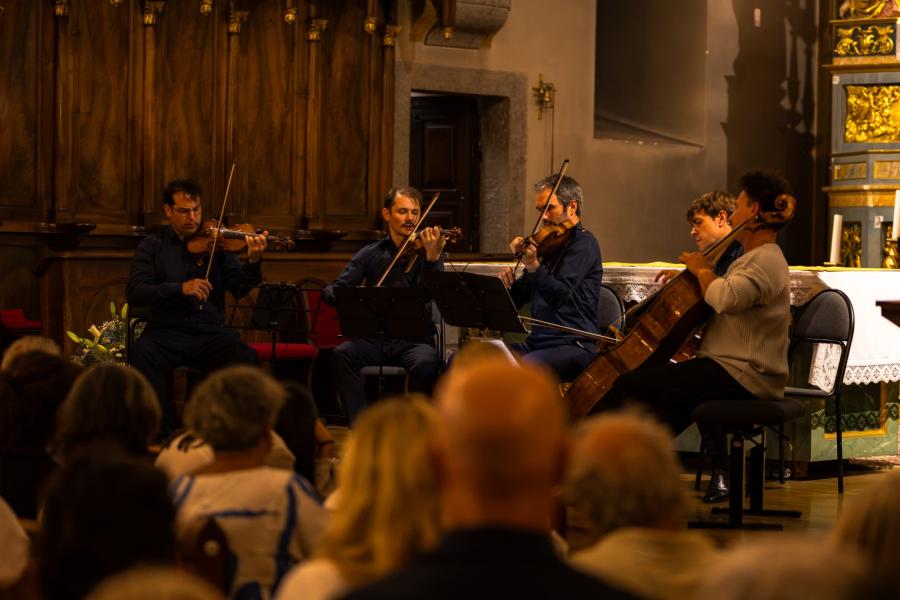
The Modigliani Quartet (pictured above with Edgar Moreau) likewise balanced a saunter through unashamed beauty with a tougher exploration of the Romantic sublime. Beethoven’s early quartet, Op. 18 no. 6, sailed along with debonair ebullience until, in the adagio, came the sudden strangeness and sadness that the finale (“La Malincolia”) will explore. First violinist Amaury Coeytaux guided this journey with gravity and serenity, even if it was the velvety depth of expression in François Kieffer’s cello that seems the anchor in the combined ensemble effect. Even at this stage, Beethoven makes sure that the musical weather changes fast. The bubbling rhythmic frenzy of the scherzo – complete with wild violin solo – and the execution of breakneck prestissimo passages in the finale both dazzled.
Like the Danels, the Modiglianis had kept a satisfying equilibrium between strong individual voices and a fully integrated quartet sound. How would the arrival of Edgar Moreau – a much-garlanded rising star of French music – as second cello in Schubert’s C major quintet alter the mix? He blended well, even if the sheer firepower of the two cellos (his and Kieffer’s) threatened to dominate from time to time. However, violist Laurent Marfaing stoutly held the line, a rich-toned intermediary and interpreter between the violin and cello pairs. Together, they raised the Adagio – its desolate, otherworldly stillness shattered by a terrifying tempest – to the heights where it belongs. Music of this hushed and fragile density needs good listeners as well as great players: it seemed to have found them. If the scherzo gave evidence of the quasi-orchestral power summoned by the Modiglianis and Moreau, the rhythmic leaps and twists of the Allegretto displayed their celebratory dash and vim.
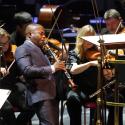
With Bach’s solo cello suites, we climb up to the pure air of the peaks. Perform them in a church (as Edgar Moreau, pictured below, did) and you risk sliding from proper respect into undue reverence. These are, after all, dance suites, for all their spells of mystic rapture – and sometimes skittish, show-off ones at that. Very much a cellist of the French school (though not as theatrically mannered as, for instance, Paul Tortelier could be), Moreau joined expressive force with technical prowess in readings that grew in impact as the recital progressed.
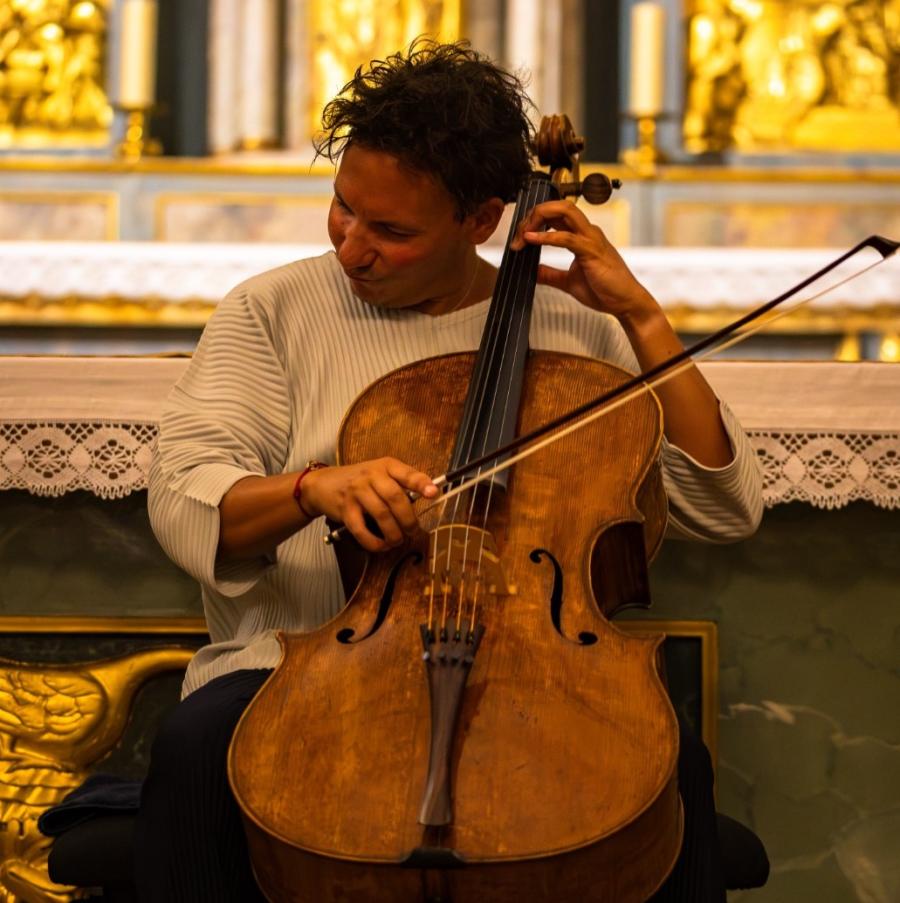
He played four of the six pieces, omitting the sombre second and the fifth, with its elegiac sarabande. However, his opening salvos – the first and third suites – did not make for an especially suave or frisky introduction. Clenched, brisk, intense, uniting weight with agility, Moreau played with a ferocity and flexibility that still appeared to default to big-boned earnestness. Double-stops, flurries of sixteenth-notes, athletic left-hand somersaults: he mastered every challenge thrown up by the works, and gave a fine, firm account of their polyphonic, contrapuntal complexity as the cello miraculously turns into a multi-voiced choir. Yet some spirit of delight eluded him.
Until, perhaps, the closing Bourée and Gigue of the third, capped by an explosive Prelude to the fourth. If he planned to take us gradually up to the topmost peaks of feeling, the strategy certainly worked. Fervour, and playfulness, took over from furrowed sobriety in the later dances of the fourth suite. The sixth proved a thrilling fireworks party – or perhaps an Alpine storm. Blistering virtuosity in Moreau’s prelude gave way to the freedom, openness and sheer exhilaration of the dance sequence, from tender Allemande to ecstatic Gigue. Interpretations of the suites tend to stress either purity or passion; Moreau’s trajectory gave us plenty of both. By the buoyant close, we had reached the summit, and the prospect was – yes, properly sublime.
In the more humdrum environment of a municipal auditorium, a piano quartet made up of violinist Alena Baeva, violist Mathieu Herzog, cellist Kyril Zlotnikov and painist Vadym Kholodenko invited us on a vividly coloured tour of Romantic beauty and the turbulent feelings that inspired it. Mozart’s first quartet – more a prefiguration of the Romantic landscape than a feature of it – prefaced Schumann’s sole piano quartet, and the third (Op. 60) by Brahms. With the Danels and Modiglianis, tightly-knit cohesion had coexisted with strong instrumental flavours; here, perhaps, the solo character of each player came to the fore, although the ensemble never sounded in danger of fragmenting.
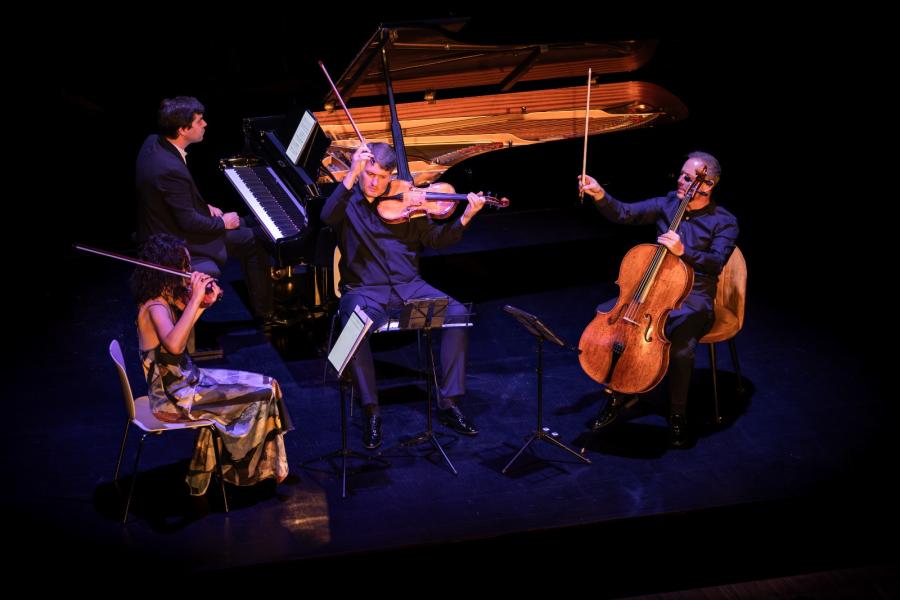
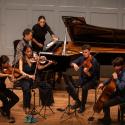
In the Mozart, Baeva’s lyrical, singing violin sometimes aimed in another direction to Kholodenko’s elegant pianism, while Herzog – whose full-flavoured viola never for a moment sounded anything like a second fiddle – and Zlotnikov’s cello drove us joyously through the final rondo. Both the Schumann and Brahms quartets encode the anguished, yet inspirational, love-triangle of three composers: the creators of the works we heard, and Clara Schumann, née Wieck. Herzog told us of their woes and encouraged us to hear the love story that soars and pines, most obviously, in Schumann’s ravishing Andante cantabile. Neither Zlotnikov, with his great cello melody, nor Herzog (pictured above with Alena Baeva, Vadym Kholodenko and Kyril Zlotnikov) himself stinted on heart-tugging piquancy and pathos. The acoustic may have been dry; many eyes were not. But the foursome also turned in a high-octane rendering of the vivace finale that erupts into a delirious fugue-sonata. The Schumanns, I remembered here, had played a central role in the rediscovery of Bach’s cello suites: Robert even wrote lost piano parts to accompany them.
If Brahms’s own quartet yields more elusive, shadowed pleasures, the quartet responded with perhaps their best-balanced playing of the night. Zlotnikov made the yearning, lovelorn solo theme of the Andante ache and weep, but his dialogue with Baeva’s gorgeously eloquent violin cut just as deeply. Viola and piano – especially in the unsettled, uncanny finale – accentuated the sweet sorrows of this tale of unrequited love, begun in Schubert’s last years but completed by the forlorn suitor almost two decades later. With the mountains of the massif stretching skywards just outside, here was a reminder that for Romantic artists, the ultimate heights – and the lowest abysses – lay within.
- Chamonix Vallée Classics Festival returns from 28 July-5 August 2027: www.cvc-festival
- More classical reviews on theartsdesk