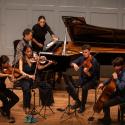
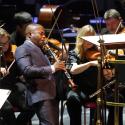
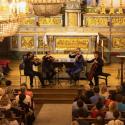
It has taken until halfway through this year’s Edinburgh International Festival before we got to the first string quartet in the Queen’s Hall’s chamber music series, but when it came, the venue was packed to the gills. Maybe that’s the Sheku effect. Mr Kanneh-Mason (pictured below) was joining the Kleio Quartet to play one of the central pillars of the chamber music repertoire, Schubert’s String Quintet, so it’s hardly surprising that people came in their droves.
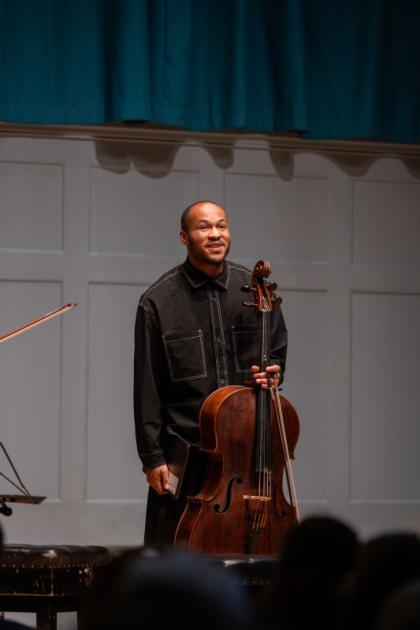
And it was worth it. This was the first time Kanneh-Mason had played with the Kleios, but the blend of the sound was marvellous. Every so often you got a slight sense that the bass line was stronger than usual, but generally speaking this Schubert was characterised by a singing upper line and an overall beautiful sweetness of tone, with beautiful lightness to the phrasing and shaping. The busy developmental passages sounded impeccably balanced and, importantly, the slow second movement kept moving, centring on a stormy central section after which the five players seemed to be able to do little more than survey the emotional wreckage, so tentative and delicate was their playing.
Sometimes there was a feeling that they loved the music a little too much, that they were holding on to each phrase in a way that caressed it so lovingly that they were reluctant to let it go. That meant that the soft chords that ended the first two movements sounded heartbreakingly lovely, but it also entailed the Trio section of the third movement being slowed down so much that it felt disconnected from the rest of the movement. In the same way, aspects of the finale felt overly smooth, but they could hardly have been glossed over in a more appealing way.
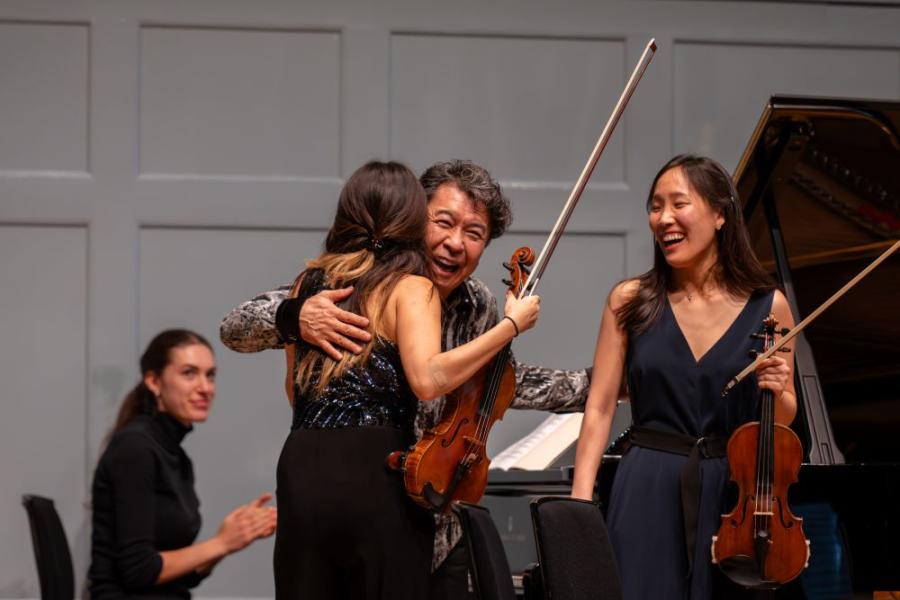
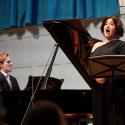
After the interval, Kanneh-Mason stood aside for Makoto Ozone (pictured above with members of the quartet), a musician who described himself as “a jazz pianist who plays classical.” He’s a wonder, though he was on his best behaviour for a performance of Bartók‘s early Piano Quintet, which gave him precisely no windows for improvisation.
Even within that framework, however, Ozone was a dynamo, and seemed to drive the performance forward in all four movements. This youthful piece feels very much like Bartók before he was Bartók, and the first two movements sound like young Béla doing his best impression of Dvořák. However, some distinctively Hungarian character begins to emerge in the third movement, and by the finale it feels like Bartók is tapping into his roots in a way that wouldn’t be out of place in any Budapest salon. The five musicians seemed to understand it from within, and drew out all of the nuances in a way that underlined the music’s distinctiveness. More than that, they seemed to be having a blast.
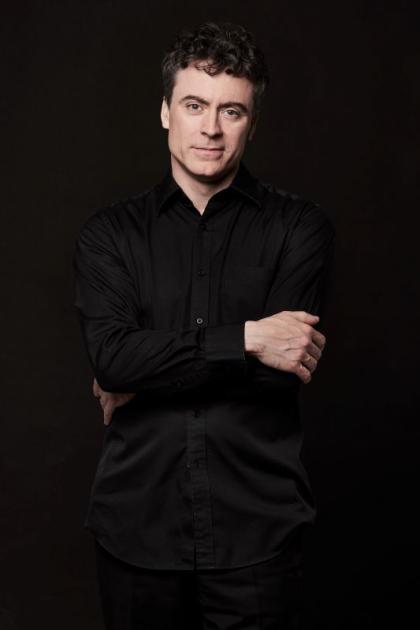
Part of this year’s Queen’s Hall series comprises a tribute to the late, great pianist Alfred Brendel, who was a regular guest at the EIF between 1970 and his retirement in 2008. Three pianists who had a link with them perform recitals that in some way reflect his legacy. On Thursday morning it was the turn of Paul Lewis (pictured right by Kaupo Kikkas), who studied with Brendel, and whose programme reflected Brendel in its Mozart and Schubert, if less so in his Chopin.
Lewis is a poet of the keyboard whose playing always seeks to bring out something in the inner heart of the music he plays. That was true for two Mozart sonatas (Nos. 13 & 17) where his beautiful softness of touch brought a gorgeous, flowing legato to the music, centring on the poetic, songful slow movements. His Chopin had a similar sense of flow to it and was, therefore, slightly less convincing, particularly in the C sharp minor Polonaise, which felt a little monochrome. So did the two Nocturnes Opus 32, but they were meant to. The highlight was Schubert’s Drei Klavierstücke D946, each of which felt like a deep drama of the soul, sometimes in their outer sections and sometimes in their central interludes, but always tapping into the emotional ambiguity that makes Schubert's piano music so special.