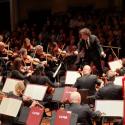
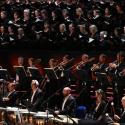
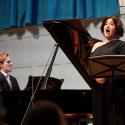
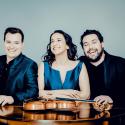
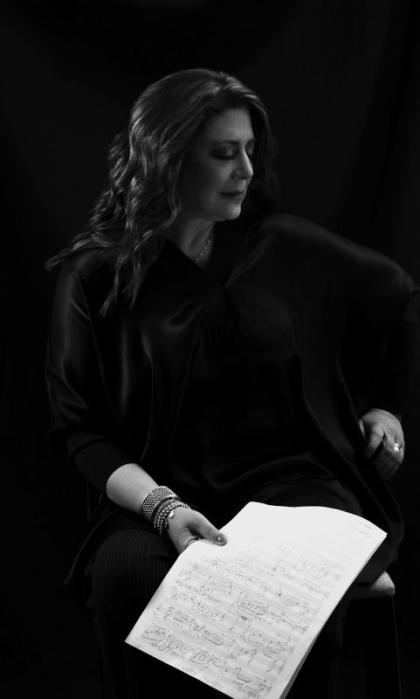
The clue is in the name, I suppose. Revolución diamantina – Glitter revolution – was written in 2023 by Gabriela Ortiz (pictured below) as a response to violence against women in Mexico, inspired by mass movements where protesters threw glitter on the police. However, there is glitter in Ortiz’s music, too, and in many ways it’s the ballet score’s energising force. Tintinnabulating percussion, glittering piccolo, beautifully scored effects of light and, perhaps above all else, dashed clever use of the women of the Los Angeles Master Chorale: all of these effects combine with the score’s edgy cross-rhythms to create a pounding, exciting ballet score that grabs the attention.
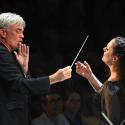
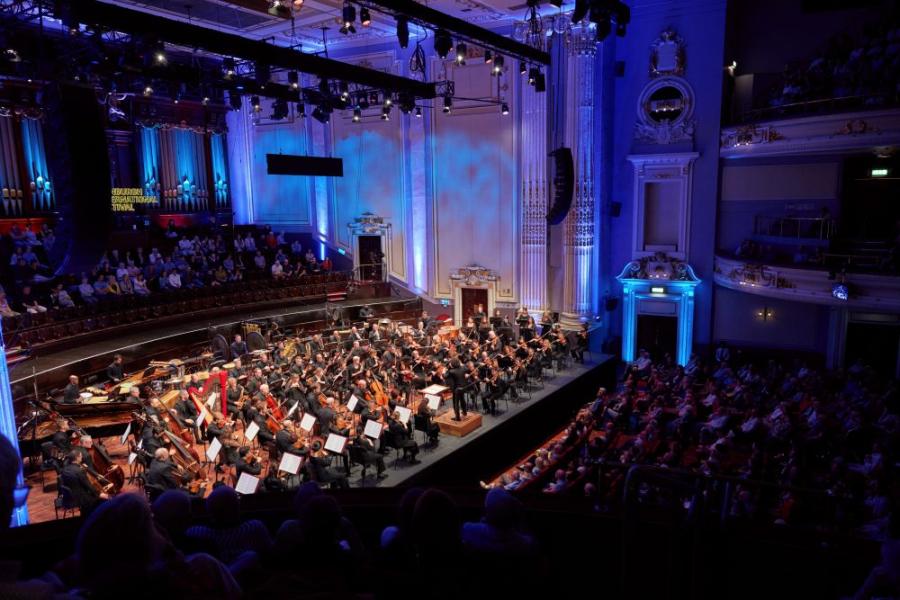
In that sense, it’s perfect choice for Gustavo Dudamel’s final visits to the Edinburgh International Festival as the Los Angeles Philharmonic’s Music & Artistic Director. It’s glitzy, large-scale and engaging, and it suits the orchestra’s shiny sound very well indeed. The tightening excitement of the fifth section saw everyone on stage – players, singers, conductor – throwing themselves into the action to generate maximum impact, and the expansive mysticism of the final section seemed to give the score a spiritual edge that up to that point it had been lacking.
I’m not sure how much depth lay below that glittering surface, however. The first time you encounter it, it’s the dazzle that gets you, but the score seemed to say little beyond the driving rhythms and glittering effects. Some episodes felt over-extended, and there’s only so much repeated material that can be forgiven by the fact that it’s a score designed to be danced to.
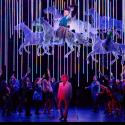
Thomas Adès’ Inferno, on the other hand, feels like the real deal at first hearing. Played on night two of the LA Phil’s EIF residency, this ballet score is hellishly atmospheric, helped by the fact that it has a scenario to depict. It does no harm that it’s also unashamedly melodic – I left the concert humming one of the tunes, which doesn’t happen with every premiere – and it has all of Ortiz’s sense of rhythm but with a greater sense of purpose because it’s telling a story, that of Dante’s descent through the deepening circles of hell.
Adès is also a terrifically gifted orchestrator, giving each encounter a distinctive colour, be that in angry trumpets for the wasps stinging the selfish, the darkly undulating strings for Charon’s boat, the braying brass of the suicides, or the magisterially dark shimmer of Satan in the lake of ice. There’s a structural problem in that Satan’s appearance is inevitably anticlimactic, coming after the outrageously uproarious orchestral cancan that accompanies the thieves being devoured by snakes. However, every element sounded terrific as played by the LA musicians, which is hardly surprising considering that they gave the score its premiere in 2019.
It’s not a competition, of course, but I think I’d turn to Adès again before Ortiz, though we should be grateful to have two recent ballet scores that stand up on their own in the concert hall, as we haven’t had many of those since Stravinsky.
Both of the LA Phil’s Edinburgh concerts also featured a Beethoven symphony: No. 7 with Ortiz, No. 6 with Adès. They were never meant to be the stars of the show in the company of the ballet scores, but they were lovely examples of a playing style that you thought had died out with Karajan. That LA shine meant that this was Beethoven as a highly polished sports car, Dudamel driving it with relaxed surety in the certain knowledge that it was never in any danger of coming off the road. The west coast of the USA is clearly a very long way from the land of historically informed performance, but if you like your Beethoven at bath temperature, you’d have loved this.