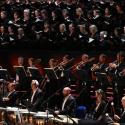
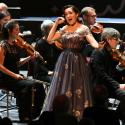
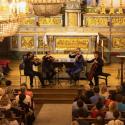
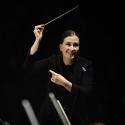
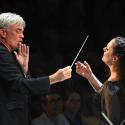
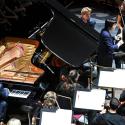
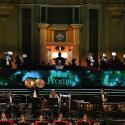
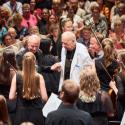
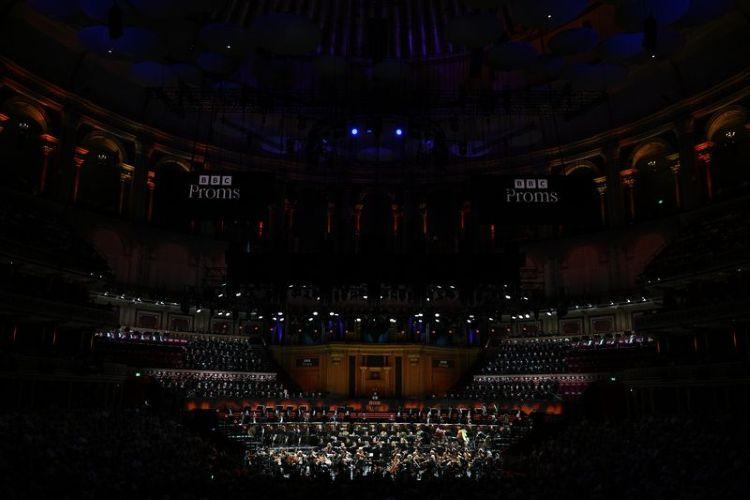
So much has vanished from my memory of the time I had a half-season Arena Proms pass back in 1982, but not the performance of Berlioz's Requiem (Grande Messe des Morts) with the four brass bands placed at compass points of the Albert Hall, emulating the composer's original positionings in Saint-Louis des Invalides. I awaited the same with rather childish glee for Antonio Pappano's marshalling of a large orchestral and choral army. It was not to be: two of the bands were left and right, respectively above the women and the men of the combined London Symphony and BBC Symphony Choruses, the other two centrally, at the top and back of the orchestra. Stereo, then, rather than quadrophenic, if anyone remembers that short-lived phenomenon.
Why so? Maybe Pappano wanted tighter control over his forces. Curiously the biggest impact of the louder moments came from the massed winds of the orchestra proper. Even the array of timpani across the entire back of the platform looked more impressive than it sounded. It was unfortunate that choral tenors were so exposed in the moments of terror; ballasting with professional voices would have helped. No such problem with the greater number of basses.
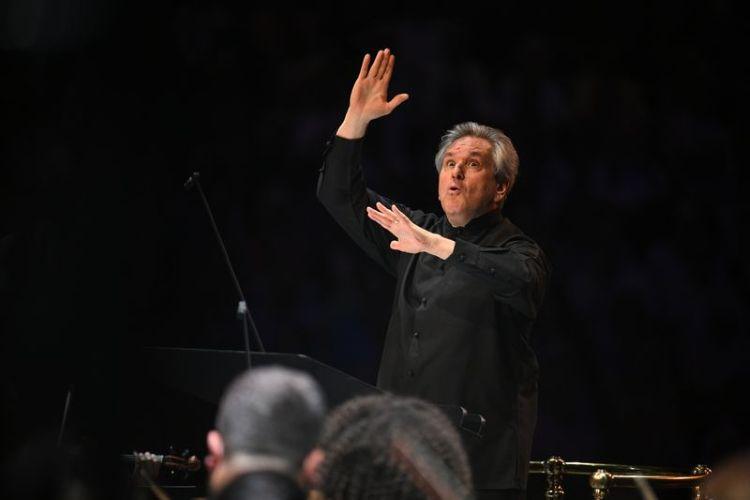
But then, while Berlioz wants to awaken the dead in his Dies Irae panoply, his moments of greater inspiration are the quiet ones. The mournful unisons, in which Berlioz makes the most of simple rising figures and falling portions of the chromatic scale, stamp the inward drama from the start, And his careful journey of a soul from the depths to the heavenly heights before returning to the starting point gave us the greatest radiance in the "Sanctus" of fine French tenor Julien Henric with the women's voices, violins and violas only among the strings and one high-line flute (later we get Berlioz's strangest effect, the adorning swish of multiple cymbals). The Albert Hall cavern is the perfect place, too, for the trombones in lowest register with flutes high above in the "Hostias" (they return later).
For all his unforgettable special effects, Berlioz retreats behind many of the religious tropes of the time. It is - for me, at any rate - an impressive rather than a deeply moving experience, and this one felt at arms' length, coming closer in the marvellous orchestral weave around the choruses' two-note (minor second) oscillation in the "Offertorium", where Pappano was most able to urge instrumental personality. But the perception of the whole may have been different from other parts of the hall, or on the radio.