It's a reviewer's unkind luxury to moan about having to sit through yet another performance of Elgar's Cello Concerto simply to hear a rarer work; there will always be audience members, especially among the 5000 in the Royal Albert Hall, who'll never have heard the concerto live. Yet it's also a singular masterpiece, and last night Spanish cellist Pablo Ferrández plumbed its melancholy depths and keenly reflected Vasily Petrenko's nuanced Royal Philharmonic Orchestra at every point. This was the perfect link between more-than-curtain-raiser Webern and Walton's fascinating Second Symphony.
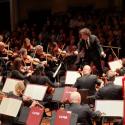
Unless you wanted a more extrovert take on the Elgar (I certainly didn't), it would be hard to fault any aspect of this perfectly focused Prom. The RPO has always shone here, even during its leaner times; under its inspirational Music Director, it positively dazzled. Petrenko compelled urgency in Webern's Op. 1, the Passacaglia, concealing its elaborate set of variations on a ground bass, balancing its spider-web of sound with muted trombones occasionally leaping out in snide violence.
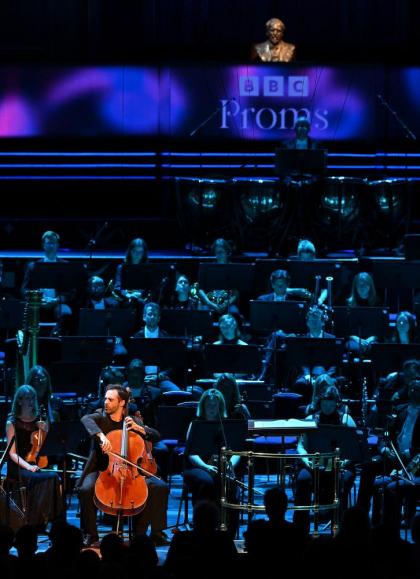
From its D minor, a mooring constantly under threat, we moved to E minor, from a prophecy of collapse in 1908 to Elgar's elegy for loss at the end of the First World War. Ferrández and his fellow strings frequently retreated to the cusp of audibility, reminding me of Barenboim's dictum that in this hall, you draw the audience in rather than reach out. The cellist's playing was all the more remarkable for keeping to a minimum the emotional portamento, that carrying from one note to another which so many of his colleagues overdo, and he went straight to the heart of the Adagio, making me wonder how anyone could ever miss here (many do).
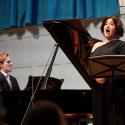
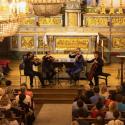
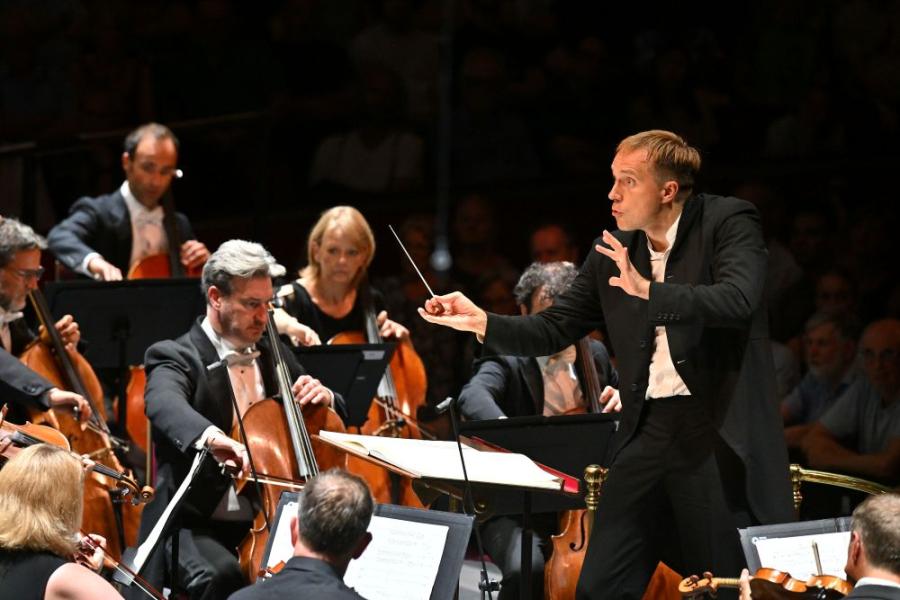
His collegiality with the marvellous RPO strings was fun to watch in the more rumbustious lollopings of the Finale, but how quickly he took us back to introspection before the abrupt end. Only a sensitive encore would work, and that was Casals' arrangement of the Catalan "Song of the Birds" (pictured above) - instant soul again in marked contrast to the extroversion with which Ferrández made heartfelt saluted to the orchestra and the audience.
Fast forward from Elgar's elegy to Walton's chameleonic Second Symphony finally completed 15 years after the end of World War Two, and while the melancholy is never far away, the composer is still the Till Eulenspiegelish prankster he always was, this time with a spooky incandescence to the sound - the vibraphone helps - and an elusive concentration of thematic material. As with the Webern, Petrenko swept us through the sarcastic high jinks and pauses for thought of the first movement, which seemed over shortly after it had begun.
What to make of the central Lento assai, reaching out to lush romanticism but undermining it with processional throbs that have something in common with Elgar's Rondo in his Second Symphony? Again, the compelling shifts of sound and melody in this beguiling performance kept the question at bay. Fabulous horn playing here and throughout from Ben Hulme.
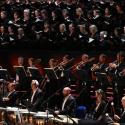
Then the collective brass let rip with the twelve-note theme of the finale, a new mood which should have kept those critics complaining of "reactionary" Walton at bay. We're back to the Passacaglia form with which the Prom began. Walton plays around the theme's stern returns with kaleidoscopic variations, has fun with a fugato and finally answers the seemingly inexorable decree with a vivacious tonal slam. A brilliant work, which deserves equal status with the more monumental First - and, John Wilson notwithstanding (he was in the audience, having argued for Walton's Cello Concerto earlier in the season), it couldn't have had a better performance.