There can be few more cultivated ways to spend a morning than with the chamber music of Francis Poulenc. The Gallic wit that’s so evident in his larger scale work is even more prominent in his music for the salon, where an arch smile or a sly wink seems to accompany almost every phrase.
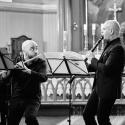
The wind soloists of the Scottish Chamber Orchestra understood this well in their Friday recital at the Queen’s Hall (★★★★★), the elegance and wit dialled up even further by the fact that these musicians play with one another all the time and know each other well. That meant that André Cebrián could bring gallantry and wit to the Flute Sonata, and make it all sound like it was no effort whatsoever, while in the Clarinet Sonata Maximiliano Martín polished off all of Poulenc’s absurd acrobatic feats without so much as breaking a sweat, as nonchalant as a Parisian flâneur.
All that arch insouciance in Poulenc’s music means that, when the sincere moments come, they can tear your heart out, and we got that in the gorgeous, flowing lines of the Oboe Sonata, played here by Clara Schweinberger with long-breathed, seamless legato. All three were then joined by Cerys Ambrose-Evans (bassoon) and Kenneth Henderson (horn) for a saunter through Françaix’s L’heure du berger that made it sound like a comedy revue, and a performance of Poulenc’s Sextet that managed to bring out the work’s musical architecture, almost convincing us that Poulenc had a serious side.
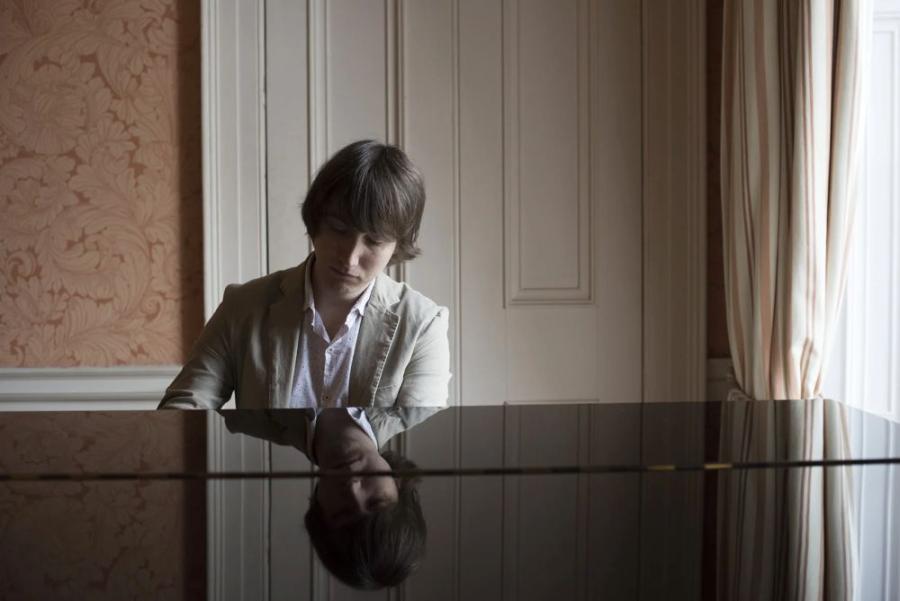
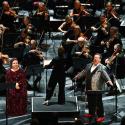
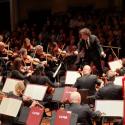
The constant in the whole programme was Maxim Emelyanychev (pictured above by Magnus Fraser), the SCO’s Principal Conductor, here playing the piano with riveting energy. He brought dynamism, flair and fizz, if not always complete accuracy; but if the effect was as galvanising as this then nobody minded, particularly when he could make the piano sound like an out-of-control police car in the Clarinet Sonata’s finale. He even got his own solo moment in a performance of Ravel’s Jeux d’eau that was fluid (obviously) and surprisingly poetic.
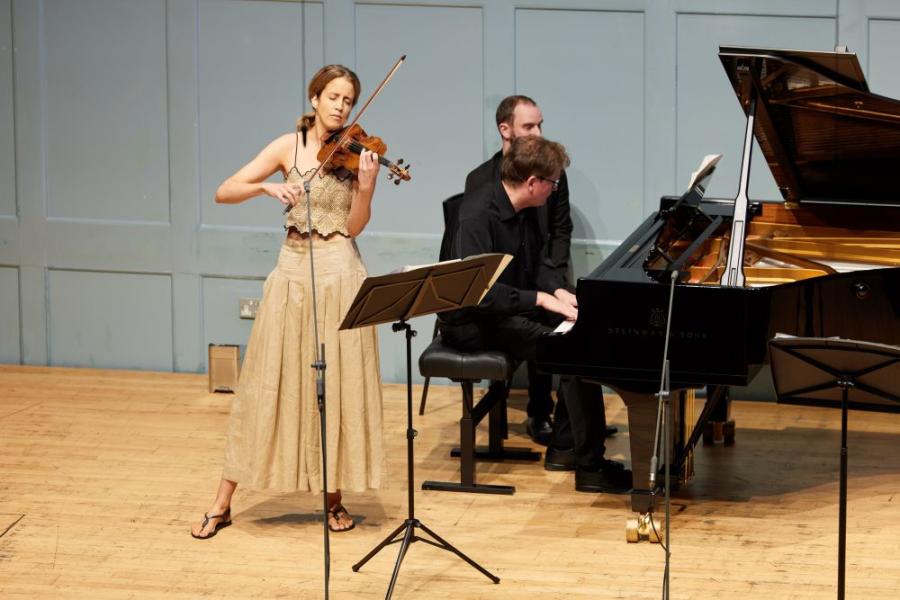
There wasn’t anything like as much fun to be had in Vilde Frang’s recital the following morning (★★★★), though fun is in pretty short supply in Bartók's First Violin Sonata; more expressionist angst and emotional stretch. That said, Frang and her pianist Olli Mustonen (pictured above by Andrew Fraser) seemed determined to find the lyricism in a musical landscape of fractured glass. Even when, or sometimes because, the piano and the violin were forging completely separate paths, every so often Frang’s violin would sing out a heartbreakingly lovely melody, all the more moving for being so fleeting, like a songbird over a warzone.
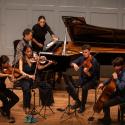
The rest of the programme consisted of folk-adjacent music; sometimes Bartók’s variants on folk songs from his homeland, and sometimes actual folk tunes from various corners of the old Habsburg empire. Frang played only a bit-part in this: most of the heavy lifting was done by Hungarian brothers Benjamin and Salamon Eredics (pictured below with Frang and Mustonen), who between them played – wait for it – trumpet, kontra, tambura, accordion, shepherd flute (!) and recorder.
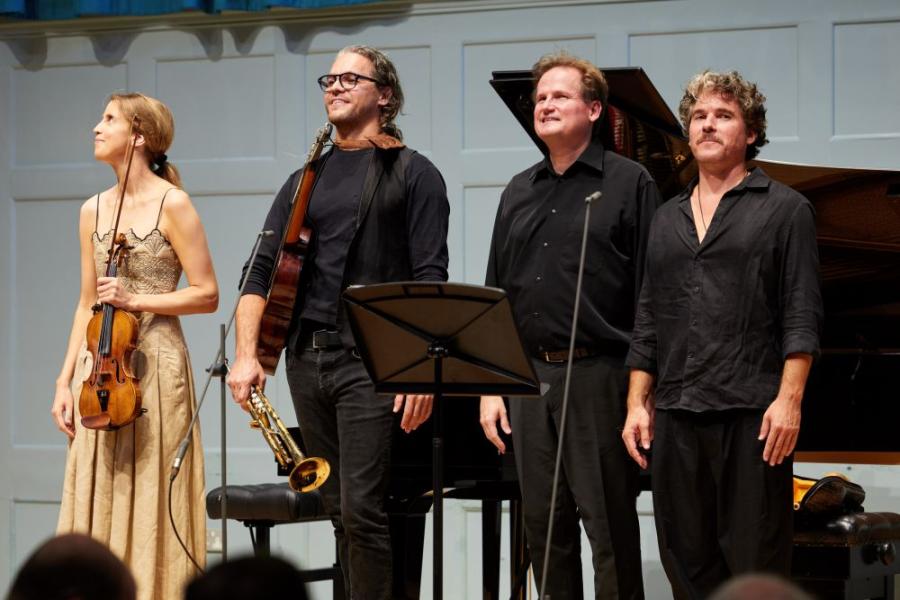
Sometimes it was enlightening, sometimes diverting, sometimes oddly flat in the slower music, though they all seemed to enjoy themselves the most in Benjamin’s own Trio Ornamentum. The funny thing was that, for all that Bartók drew so much inspiration from this music, in this company his violin sonata felt like a visitor from an alien world, something that couldn’t have sounded less like it had come from this landscape. Maybe that was the point after all.