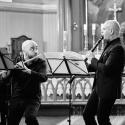
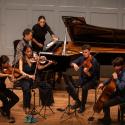
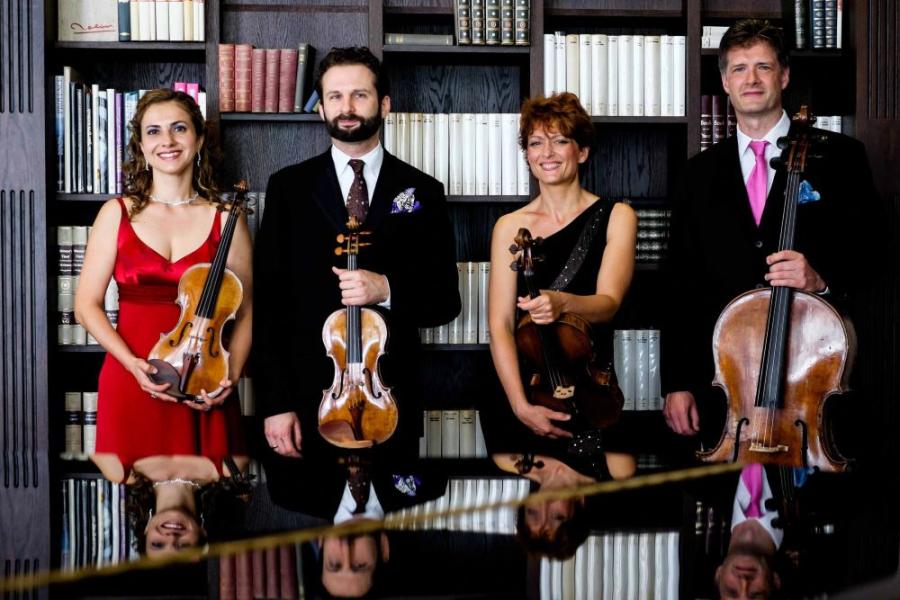
Interspersal programmes – or “mind melds”, as I like to call them – can sometimes open up new vistas of listening and sometimes be tokenistic piffle. Happily, Monday morning’s EIF programme from the Gringolts Quartet (pictured below by Tomasz Trzebiatowski) was the first of those, mostly.
Their idea was to take the four movements of Schubert’s final string quartet and to intersperse them with three pieces for string quartet by György Kurtág, the objective being, in Ilya Gringolts’ words, to bring Kurtág’s lyricism to the fore. The EIF isn’t doing much to commemorate Kurtág’s centenary this year, and this was as creative a way of marking it as any. And, yes, hearing the two composers in conjunction did open up new ways of listening to both, shining a light across the centuries and hinting that if the two composers might not be bedfellows then they do at least speak to one another.
Kurtág’s use of occasional but expressive dissonance in his Hommage à Jacob Obrecht, for example, wasn’t that different to the way Schubert uses harmonic clash in his slow movement, and the Hommage’s strangely lovely closing Larghetto was an uncannily effective way to bleed into the lyricism of Schubert’s slow movement. Likewise, the spidery, whispered runs of music in Kurtág’s Officium breve, in memoriam Andreae Szervánsky weren’t a million miles away from Schubert’s technique in the shuddering outer sections of his Scherzo.
I was less convinced by the use of Kurtág’s 12 Microludes, even though the sixth of them plays with the major/minor ambiguity in the same way that Schubert’s first movement does, and with any programme like this you can’t shake the question of why the quartet chose to make their point with these two composers. Couldn’t they have made some equally persuasive Kurtág links with, say, Beethoven or Brahms? Anyway, the playing was terrific throughout, be it in Schubert’s lush romanticism or Kurtág’s similarly lyrical modernism, and the switchblade exhilaration of Schubert’s finale was so expertly articulated that it managed to keep us all guessing right to the end.
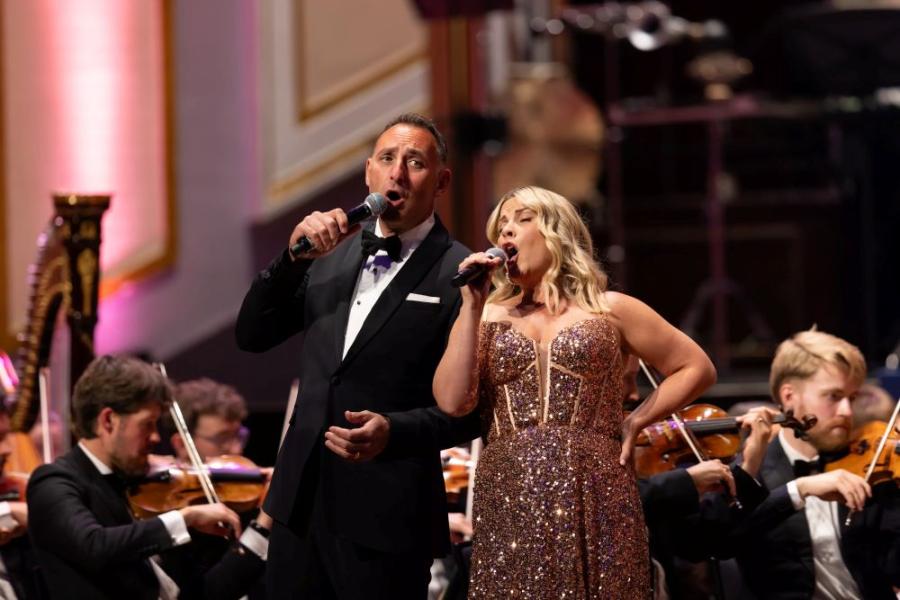
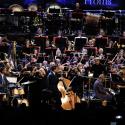
That evening, a concert at the Usher Hall celebrated what has a pretty strong claim to be the opposite end of the musical scale to Kurtág. John Wilson and his Sinfonia of London were in town to celebrate “The Golden Age of Hollywood” in a concert of music from MGM musicals of the 1930s, 40s and 50s. And what a treat it was! It’s worth remembering that this is a musical team whose Rachmaninov can move you to tears, or whose Respighi can raise your heart, so it’s a delectable treat to hear them bring the same musical rigour to music that’s too easily dismissed as populism. That’s not the same is being popular: hearing it taken as seriously as this, Wilson and the orchestra convince you that, if Verdi and Puccini had been alive in the 1940s, this is the sort of stuff they would have written.
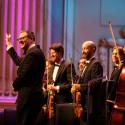
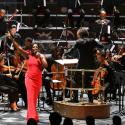
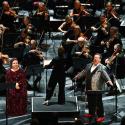
With string playing that’s the fullest of fat and brass that can bray like the best of them, not to mention a cracking big band at the heart of the orchestra, it was swoon-inducing to hear them play music by Cole Porter, the Gershwins, Lerner and Lowe, and many others, often done in the swooshworthy arrangements of Conrad Salinger, and conducted by Wilson in his best bandmaster mode. Vocalists Louise Dearman and Matthew Ford (pictured above) got into the spirit as much as the players, though their microphones didn’t flatter them in the balance. And I’d excuse you if you thought a whole evening of this stuff was too much: the effect was like golden syrup poured over chocolate mousse, washed down with a strong cup of cocoa.
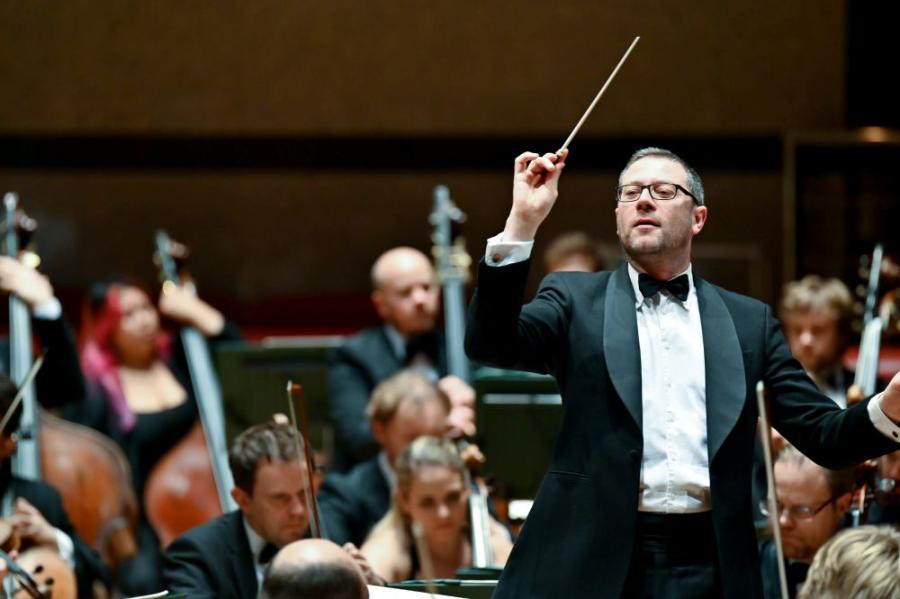
For a few hours, however, the audiences was in Hollywood heaven, and it’s chucklesome to think that in the middle of the 20th century most of the western world was immersing themselves in this, roundly ignoring Kurtág and his ilk while they were forging new pathways of musical modernism. It’s a helpful corrective to any idea that musical development moves in only one direction.