Enough is as good as a feast, they say. But sometimes, especially at Christmas, you crave a properly groaning table. At the Wigmore Hall, The English Concert, directed by Harry Bicket, concluded their festive Baroque banquet with Bach’s Magnificat – complete with its four Christmas-tide interpolations. They had prefaced the Bach with a trio of lesser-known seasonal pieces dating from the preceding decades, by Charpentier, Stradella, and Purcell. That might sound like a light plate of rather scholarly, even austere, hors d’oeuvres. Not all all: Bicket’s enterprising first half proved that late-17th-century festivities might uncork composers’ fancy, charm and even extravagance. This was sacred fare from around Europe with sauce, and spice, in abundance.
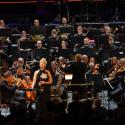
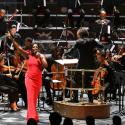
Written for St Paul-St Louis, the principal Jesuit church in Paris, Charpentier’s motet In navititatem Domini nostri Jesu Christi canticum tells the story of angels, shepherds and manger with an utterly captivating charm and tenderness. Led by Nadja Zwiener, a pair of the consort’s violins kept up a sort of melodic commentary on the gospel action, with rich, descriptive vocal characterisation for the angels and shepherds themselves. Soprano Chiara Skerath brought the good news from on high with elegance and radiance. Tunes that brought to mind not Parisian Jesuit majesty but carols at some spit-and-sawdust inn in the Auvergne – notably, the lovely “Salve, puerule” – kept us happy down on earth. Italianate flourishes, a ravishing string ensemble, and cosy rusticity among the sheep-watchers combined to create a thoroughly endearing piece.  With Stradella’s slightly earlier cantata Si apra al riso ogni labro – another dramatisation of the shepherds-and-angels chapters from St Luke, this time in Italian rather than Vulgate Latin – the elaborate expressivity of Monteverdi and his generation winds through sinuous vocal lines, and in the hyper-dramatic “madrigals” that punctuate the shepherds’ dialogue. Skerath (pictured above by Capucine de Chocqueuse), along with alto Jess Dandy and bass Morgan Pearse, mastered soaring, snaking melismatic lines and came smartly together for duets and trios that showcased a satisfying blend of wholly different voice-types. Maybe the sheer virtuosity of Stradella’s acrobatic, ornamental writing means that feeling yields here to technique (in contrast to the heartfelt Charpentier). But the three singers – and the consort’s always-eloquent strings – supplied pace and shape as well as brilliance.
Purcell’s rare Christmas piece from 1687, “I bring you glad tidings”, began with a dark, sombre string overture that paved the way for a splendidly atmospheric bass solo from Pearse: a mixture as dense and fruity as Christmas cake. For festive music, this is a piece painted in strikingly dark tones, with an almost-menacing edge to the good news of salvation. The consort’s players and singers built up each rhythmically intricate layer with power and precision until the jubilant affirmation of the “Glory to God on high” dispelled the clouds.
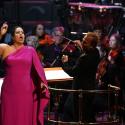
In the Bach Magnificat, the English Consort’s ten singers (including soloists) and 17 instrumentalists managed to fill the hall with a resonant joy where necessary, while still making each voice count. The Wigmore acoustic allowed the continuo parts in particular – Joseph Crouch’s cello, Sergio Bucheli’s theorbo – to emerge with the prominence that their sensitive playing earned. Katie Bray, in the “Et exultavit”, and Skerath with “Quia respexit”, brought radiance and refinement to the higher solos. But, for me, it was the mellow glow and dark-toned sweetness of Jess Dandy’s contributions lower down that made this Magnificat sing. To have that true contralto lustre and sheen from Dandy (pictured below by Clare Park) in the “Esurientes”, or duetting exquisitely with Way’s tenor in “Et misericordia”, added a welcome course to the seasonal menu. 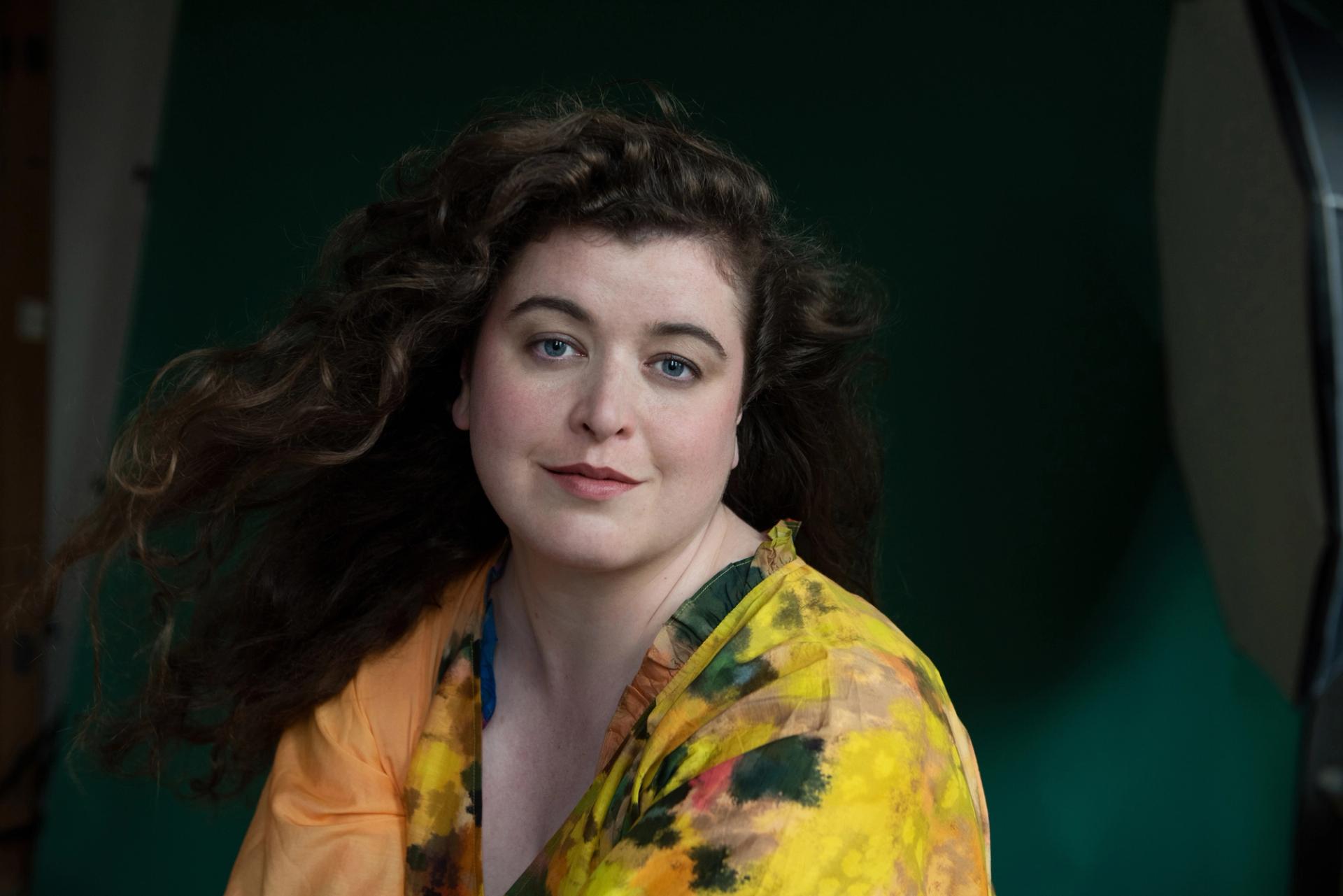 That accommodating Wigmore acoustic made delicious obbligato episodes – the flutes of Katy Bircher and Rosie Bowker, the oboes of Clara Espinosa Encinas and Sarah Humphrys, Simon Munday and a trio of exultant trumpets – stand out in bold relief. Meanwhile, all the singers trod agilely through the thrilling step-by-step fugue of “Omnes generationes”, and they punched out the final “Gloria” with clean-edged ferocity and swagger.
The strength-in-depth of this full-blooded Magnificat may have served as the evening’s meaty centrepiece. Still, those early courses delivered far more than pretty trimmings. Picturesque and heart-warming, Charpentier’s country-comes-to-town nativity surely deserves to match the fame of his Messe de Minuit and win a regular place at choral Christmas tables.