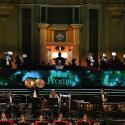
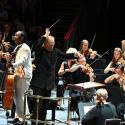
Somehow those of us required to translate the musical experience into words look for the moments which defeat us. One such was the extraordinary sound of muted first violins and cellos at the start of the second movement in Sibelius’s First Symphony last night. Pinpointing its essence feels impossible, but it could only have come from the London Symphony Orchestra’s special relationship with its new Chief Conductor Antonio Pappano.
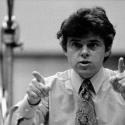
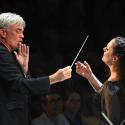
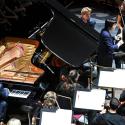
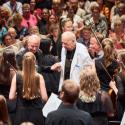
It can’t have been planned at the time of the commission, but an alliance was forged between the Sibelius symphony and the new work on the programme, James MacMillan’s Concerto for Orchestra, “Ghosts” (conductor and composer pictured below). Both make unorthodox switches between wildly contrasted textures unique to their composers, and yet it all hangs together. MacMillan’s first allegiance is to his work’s title. It doesn’t feel symphonic: though the most extended of the slow sections tries with exposed writing for strings (another Sibelius link, though often with MacMillan's familiar Celtic turns), the kind of depths Bartók and Lutosławski achieve in works with the same name aren’t quite reached. 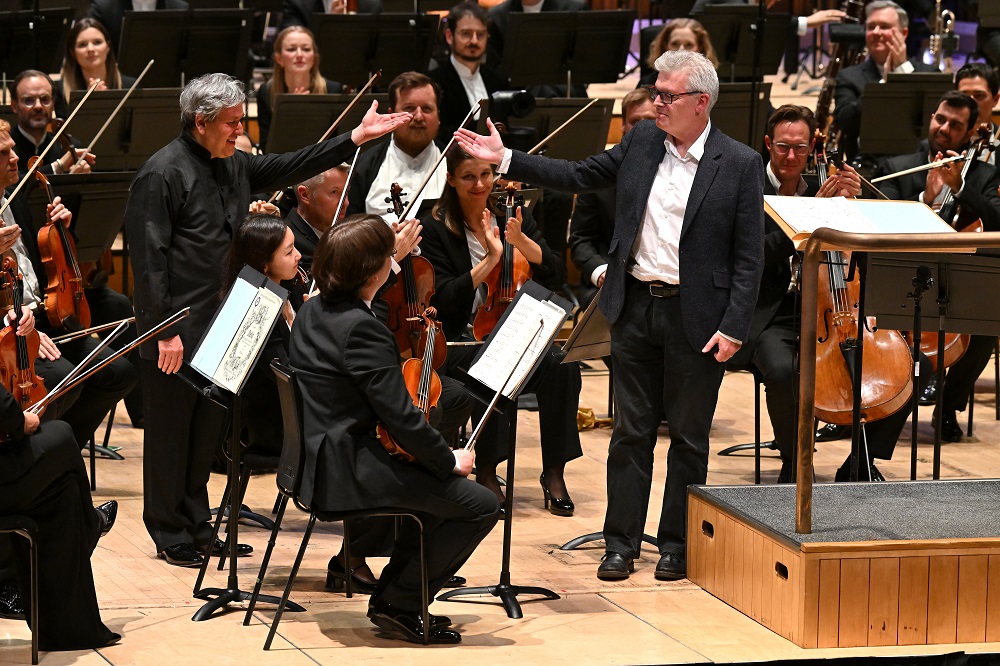 Yet what sounds, from sudden harp, percussion and celesta twilights to rollicking bassoons in harmony, piccolo and tuba together, brass given plenty of rhythmic fun and games. In that respect MacMillan, and not the usual suspect among British composers, is the natural heir of Britten, whose shimmering originality continued to resonate from the Garsington Prom of A Midsummer Night's Dream the previous evening. The quotations, or transformations, of two trios by Beethoven (the “Ghost”, hence the suggestive part of the title) and Debussy hint at personal meanings, but essentially this feels like a public showpiece which never loses the attention, a sequel to the success of MacMillan’s Violin Concerto in the same hall with the same orchestra, a former Chief Conductor we don't talk about much any more and soloist Vadim Repin. Having heard the Concerto for Orchestra once for the sound, I’d like to revisit it for the sense.
No-one could have been left in doubt of the sense in the Sibelius, given Pappano’s vivacious and atmospheric sleights of hand in shifting the moods. This has to be the most original of first symphonies (I can only think of Mahler’s, featuring in the fourth of Pappano’s inaugural concerts on 19 September, and Schnittke’s as of comparable personality). Chris Richards was left on his own – well, with a timpani roll to start with – in shaping the melancholy vocal clarinet solo (some principal players replaced others in the second half of the concert). Then, tremolos and legatos blazing, the strings gave the optimistic challenge. 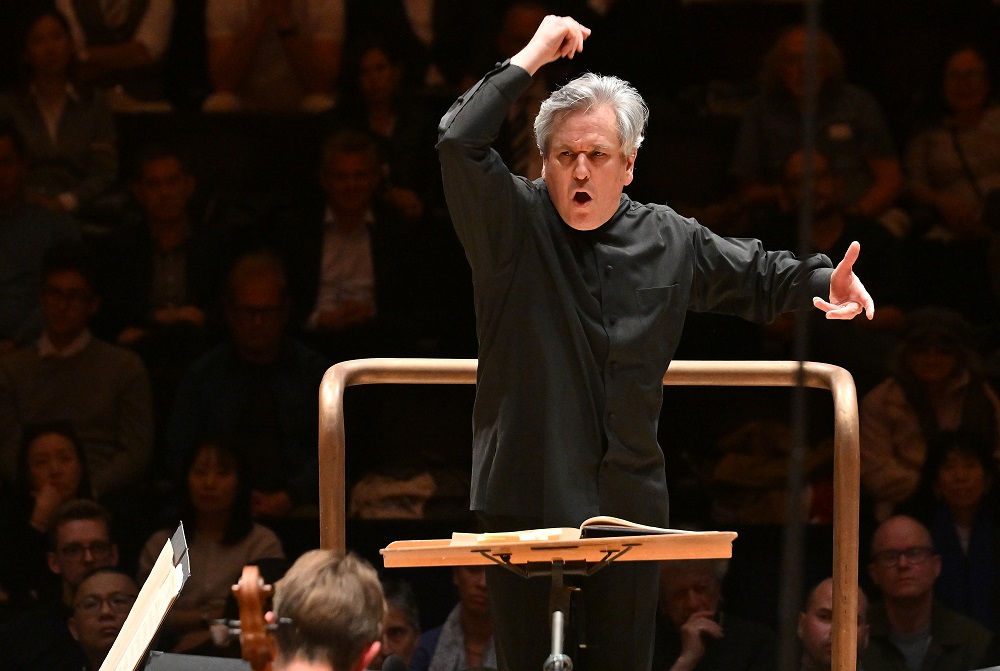 It was good to be back in the Barbican Hall, for all its overamplifying faults, after the challenge of Albert’s colosseum, to get such sharp definition in every moment – blaze, protest, mystery. Pappano held the tension of the finale, which can seem to fall apart, from opening outcry – the clarinet motif at full pelt on strings, like Mahler's "cry from a deeply wounded heart" in his First – to decisive pizzicato cut-off. A stunner.
As, in its more organic way, was Nielsen’s Helios Overture - a canny starter, horns magnificently leading us to dancing light and back to rest. Somehow this, too, reflected the personality of a conductor whose sunrise choice proved distinctly original and who will never give us an under-engaged performance; only the interpretations may be questioned and they haven’t been in his brllliant LSO concerts to date.