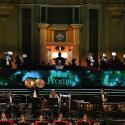
There’s a Proms paradox that’s familiar to Early Music fans. Some works are too challenging – too big, too expensive, too uncommercial, too obscure – to do anywhere else. The trouble is, the Royal Albert Hall is the absolute last place you’d want to hear them.
So you go, and half-hear, half-imagine a performance that requires you to fill in the blanks of acoustic, space and detail, superimposing cathedrals, ducal staterooms or Venetian balconies as required. It’s not nothing, but it’s not the full Monteverdi either.
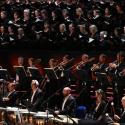
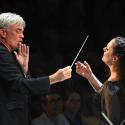
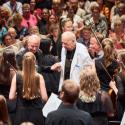
Luckily for us, Hervé Niquet and his Concert Spirituel had done quite a lot of the imagining already this weekend, constructing a liturgical fantasy with Alessandro Striggio’s 40-part Missa Ecco Si Beato Giorno as its centrepiece. From the processional opening – singers and instrumentalists all walking on to the sound of plainchant over a vibrant drone – to the closer, Striggio’s monumental motet Ecce beatam lucem, this was musical theatre, making the best of a difficult space. The Striggio Mass is a piece more known-of than actually known. Presumed lost until a few decades ago, when it was found – mislabelled – in France’s Bibliothèque Nationale. It has since had a handful of performances and recordings, but still remains – in the UK at least – very much in the shadow of the work it supposedly inspired: Thomas Tallis’s 40-voice Spem in Alium.
To say this Mass is dense is to say that the Amazon is large. With the greatest concentration in the world you’d still struggle to follow the 40 individual lines, which leaves a sort of sonic sea-voyage, carried from texture to texture, passed back and forth and surrounded by the five choirs of voices and instruments. The effect is hypnotic but strangely unvaried, despite the colours of sackbuts, cornets, dulcians and a Regal buzzing grittily away mid-texture.
Breaking up the sequence of movements were textural variants on a theme. There were Palestrina motets, boldly declaimed by the brass, short works by Francesco Corteccia in which plainchant (male voices) anchored diaphanous solo-voice embellishments in upper voices, as well as supple upper-voice motets by Domenico Massenzio. Best of all was music by Orazio Benevolo, whose rhythmic playfulness and bold colours broke through the wash of sound with remarkable clarity. His double-choir motet Laetatus sum fired long streamers of melody from side to side, movement swaying and lilting in barely-suppressed joy, while the Magnificat alternated verses of polyphonic interplay with instrumental episodes – solos, duets and trios in which a cornet wriggled or a bass Sackbut belched pungently.
This is music that should engulf and overpower, should flood space and senses to capacity, not sound intriguing at a distance. By the end, Niquet’s choir of soloists was audibly tired, drained by the massive effort of projecting this intricate music into such a vast space. This was a monumental effort, but one yielding diminishing returns. Authenticity is all very well, but perhaps 16th-century music performed in a Victorian hall needs massed Victorian forces, or maybe even some 21st-century ambient enhancement to recapture that original impact.