

How easy it is to fall instantly in love with the Dvořák Cello Concerto. And particularly when it is played by an orchestra as fine as the Czech Philharmonic.
Everything’s there in the opening minute. We get our first, wonderful. ear-wormish theme straight away, from the subtle grenadilla wood of a lone clarinet in A. Then we hear it build in what seems no time at all to the blaze of the full orchestra. Dvořák marked that first glorious arrival “Grandioso”, and the whole of the strings, wind and brass are involved, every single player throwing her or his whole being into the fortissimo. On the way to it, the massed violins and violas have already been required to scrub away at their slashed quavers for dear life. And yet we’ve already also had more than a hint of the ease, of the pastoral gentleness which breathes so naturally from this music.
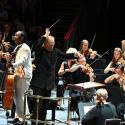
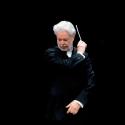
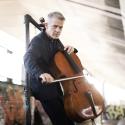
With Jakub Hrůša at the helm, the Czech Philharmonic play Dvořák’s music like Gods. Hrůša has such a gloriously decisive upbeat, the players know when and how and with what total clarity they are about to land. The opening out of the conductor’s eloquently expressive left hand will, for example, inspire the principal oboe to make a phrase bloom like a flower. And the unanimous sense of purpose achieved by each of the string sections is something quite unbelievable. 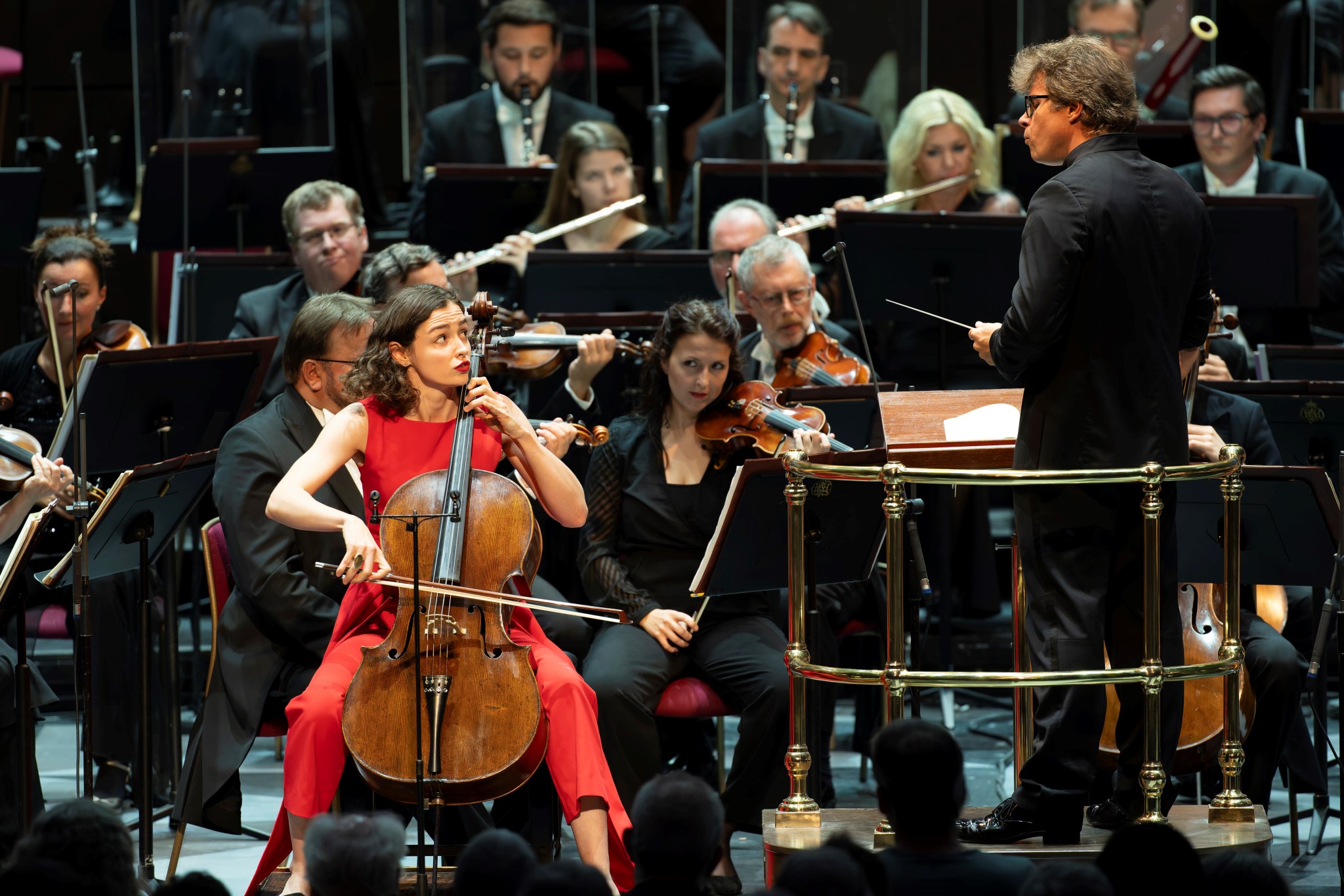 The cello soloist in the concerto, Anastasia Kobekina, was having a less successful night. She was clearly thrilled to be in the Royal Albert Hall, where the audience welcomed her with its habitual affection and warmth. In the second movement, she worked well with the orchestra and produced a fine sound, but the outer movements left doubts. Kobekina’s wilful rubato created moments when she was surprisingly out of synch with the orchestra, and her occasional way of letting a phrase die rather than carrying the story forwards worked against this music whose constant flow and evolution needs the passion of continuity. Kobekina received an enthusiastic reception for her encore, a lively folksy “Gallardo” for cello and tambourine which her father, opera composer Vladimir Kobekin (presumably) wrote for her. Kobekina will doubtless have more successful evenings than this.
If Dvořák’s melodically overflowing masterpiece is instantly loveable, then Josef Suk’s Asrael Symphony, named after the angel of death, is not so obvious as an object of infatuation. One commentator has described it as a “bewildering landscape”, not least because Suk deliberately avoided sonata form. The piece has only ever been brought to the Proms once before, in 1991, during the 12-year reign of Libor Pešek at the Royal Liverpool Philharmonic, though Hrůša performed it with his Bamberg Symphony Orchestra at the Edinburgh Festival earlier this month, where theartsdesk's Simon Thompson greatly admired it.
That suggests that Hrůša is a huge advocate for Asrael, and he performs the fiendishly complex hour-long work from memory. The conductor has explained in an interview that he loves Suk’s composition because of “his ability and courage to embrace human emotion in minute detail and offer the whole of humanity, the most honest reflections of both the happiest and the darkest sides of our psyche.”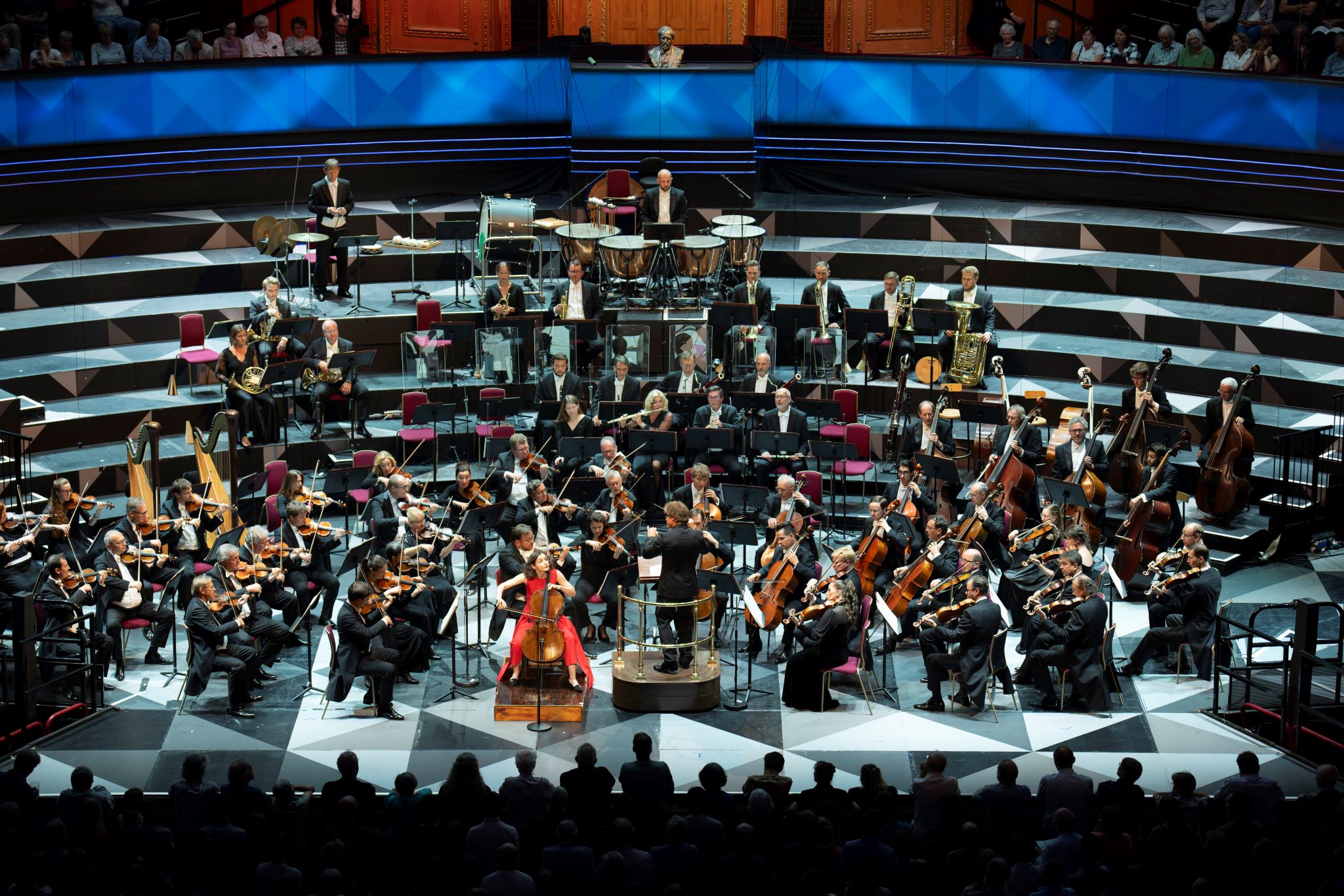 The circumstances of Suk writing it speak for themselves, He started to work on Asrael after the death of his idol (and father-in-law) Dvořák in May 1904. Fourteen months later, Suk was devastated by another profound loss, the death of his wife of just six years, Dvořák’s daughter Otilie. Suk builds the work from melodic cells, of which the original one is a quote – aptly – from Dvořák’s Requiem. The problem is – in complete contrast to Dvořák – that the melodic content might be interesting and persuasive, but is never memorable.
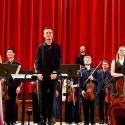
In the end one can only marvel at the constant flow of miracles and the super-human playing which Hrůša is able to draw from this fine orchestra as the vast canvas evolves. After the performance he brought a host of individual players to their feet and it has never felt more deserved. To mention just two at random: the solo violin playing of Jan Fišer had unbelievable pathos and depth. And there is a daring moment when a slow piccolo trill forms the basis of a texture… which is then held... seemingly beyond the normal point of human endurance as all kinds of magic happens under it.
This was a concert which raised questions, but the opportunity to hear every member of the Czech Philharmonic come to such glorious life on this big stage was unforgettable.




Add comment