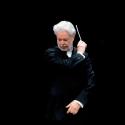
Those of us schooled in the English choral tradition know and love Hubert Parry's "My soul, there is a country", but few have sung or heard it live as the first of a mighty cycle. Parry completed the six Songs of Farewell not long before his death 100 years ago. In the sensitivity of their word-setting and the harmonies used to underline the text, they are as much of a collective masterpiece in their way as Strauss's Four Last Songs of 44 years later – featured, with astute Proms planning, in the evening Prom – and they need a fine conductor to marshal their speech-melodic flow. It must have made a difference to the BBC Singers to have Sakari Oramo, nephew of two Finnish choral conductors and a great orchestral master, standing before them.
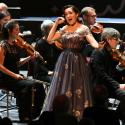
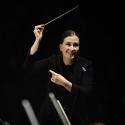
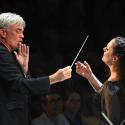
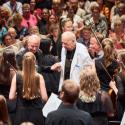
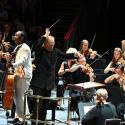
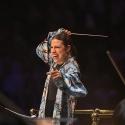
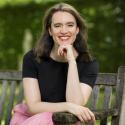
Oramo also had an unexpected connection to the sixth of the women composers commissioned by the BBC in these superb Cadogan Hall lunchtime Proms. Laura Mvula was 12 when she played the violin in the CBSO Youth Orchestra under Oramo. His seemingly sincere words about her new work, Love Like a Lion, were justified by the premiere: the gift to be simple in the two winged outer numbers, a more complex departure from the basis of a spiritual in the most individual setting, "I will not die (for him)". The (uncredited) soprano solo had the ideal stratospheric ease here, but the visuals as well as a certain type of British choral reserve gave us a big question mark: can the BBC Singers really not have a single chorister of BAME origin? Quite apart from anything else, it would probably make a difference to the rather monochrome as well as monocultural essence. Time to move on. 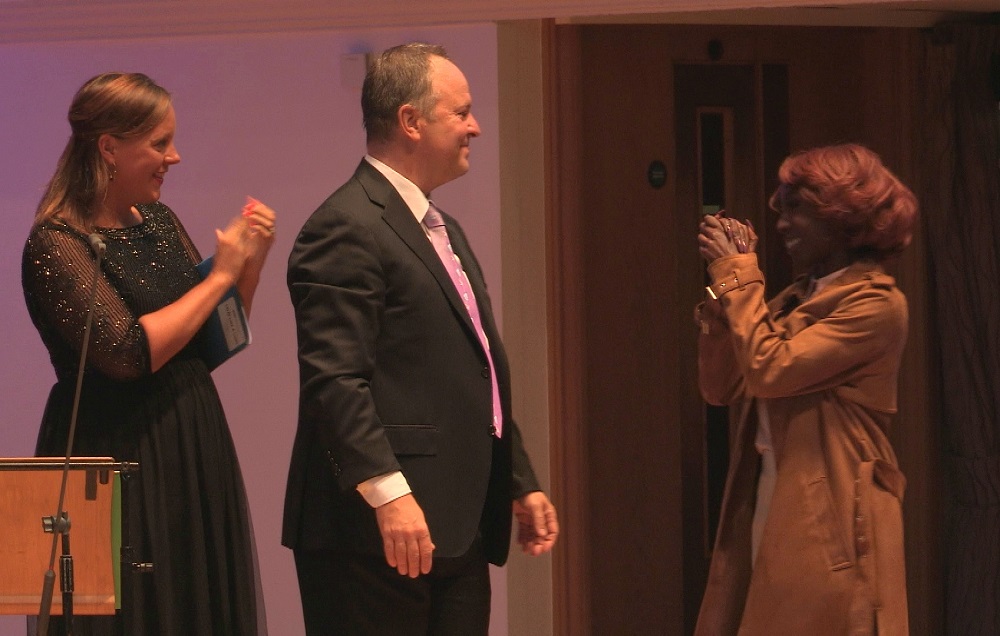 At least it was good that the Proms spotlighted Mvula the composer (pictured above with Oramo and a member of trhe BBC Singers - both performance images © BBC Studios), as well as Ben Okri, her chosen writer, an African in a distinguished line of poets ranging back to Donne, Shelley and Christina Rossetti. Frank Bridge's Music, when soft voices die was a gem to start the programme, even if it set the mood for what should have been a late-night meditation rather than a lunchtime spectacular. Double choir enriched Holst's very individual Nunc dimittis, unpublished until 1979, a setting with one of the most winsome "Glorias" in the cathedral repertoire.
Parry steadily opens up across the Songs of Farewell from four to seven parts, but each setting is perfect in its way because of the way the poetic sense is so beautifully underlined. In the second verse of John Davies's "I know my soul hath power to know all things", the ear is held rapt by the contrast between "wretched" man "mocked" in everything and the pride that survives all that. 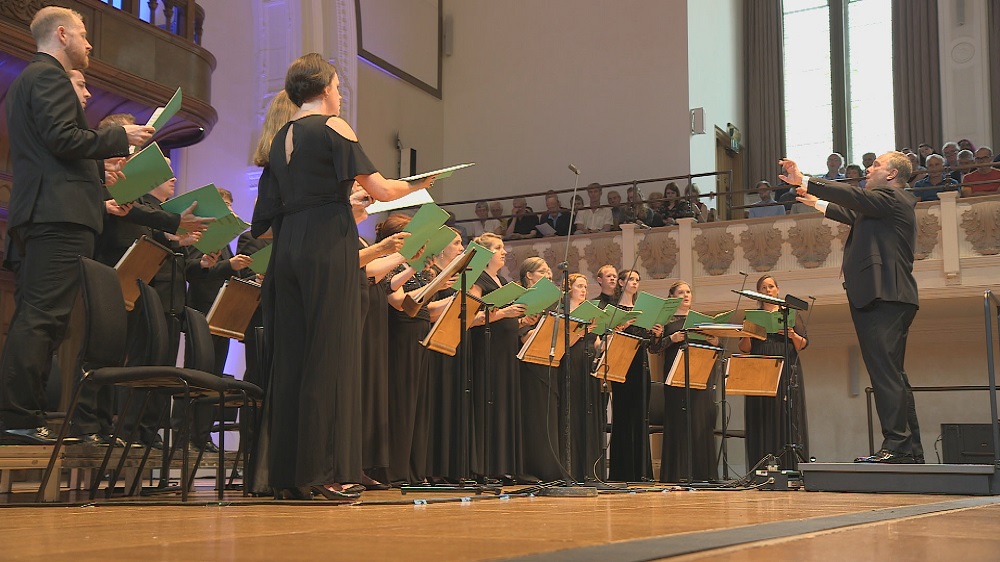 Most moving, for me, is the unique response to Lockhart's "There is an old belief". The sentiment is tear-jerking in itself: the mortal must hold to the stated creed that "Beyond the sphere of grief/ Dear friends shall meet once more" – the plainsong Credo unexpectedly surfaces in this intimate setting – and to hope, but cautions "Eternal be the sleep, if not to waken so". Parry's repetitions of the words and his startling chords show total, deeply-felt mastery. Wonderful, too, the way the last two numbers descend from the myriad glories which launch the Donne setting – again, great setting of "you numberless infinities" – to the slow fade at the end of Parry's chosen lines from Psalm 39. With Oramo shaping lovingly but never ostentatiously, the sense was always clear, strands of individual voices allowed to tell among the richness from time to time. Masterly.