

I’ve always liked to think that, when it comes to artistic performance, comparisons are odious (or oderous, as Dogberry had it). There is one glory of the sun and another of the moon, etc. A performer should be judged on what they do on one occasion, how it speaks to their audience, and not by saying that they’re better or worse than someone else.
And yet we do it all the time. We compare X’s performance with Y’s – reviewers do it constantly – and we may have one in mind from the past, or a recording, that’s our benchmark for everything else. And today’s world of classical music, including orchestral conducting, is intensively competitive at the top. That’s why we have competitions. People like the gladiatorial nature of the process, too, and on a more practical and worthwhile level, aspiring youngsters can gain exposure even if they don’t win things.

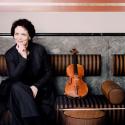
The winner of last night’s Siemens Hallé International Conductors Competition 2026 was Aku Sorenson (pictured right), a Finnish-American born in California 1997 and based in Finland for the last 10 years. He holds degrees in conducting and violin from the Sibelius Academy in Helsinki, where he studied under Sakari Oramo. The other two conductors (from a shortlist of eight) who made it to the final were Nina Haug, from Switzerland and now based in Oslo, where she is a member of the elite programme Dirigentforum and teaches conducting, and the UK’s Claudia Fuller, who is a current member of the Royal Philharmonic Society’s Conductors Programme, and was a Britten-Pears Foundation Young Artist (2024-25).
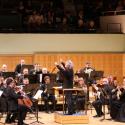
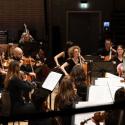
One issue that always arises with the structure of events of this kind is the difficulty of comparing like with like. Is it even fair to have the contenders each do the same piece in turn (as last night in the shape of Bernstein’s Candide overture, which each of the three had to do before a differing longer piece)? The orchestra – the Hallé led by Roberto Ruisi on this occasion – might get better at it with practice… or they might get fed up with it and lose focus as they went on… or, when they listen to each other as carefully as the Hallé musicians do, they might realise that something went very well in ensemble terms in one go at it and reproduce that in another, regardless of who’s up front with the stick.
But when the conductors get to do their individual pieces, are there not reasons why some works will offer greater opportunities for them to show their skills and sense of musical coherence than others? Last night we had one 19th century work and two 20th century ones: Brahms’s Third Symphony, Sibelius’ Fifth Symphony and Rachmaninov’s Symphonic Dances (in reverse chronological order, in fact). They each call for very different gifts: only one of them, the Rachmaninov, requires the conductor to have an eye to a percussion department in addition to the timpanist.
In fact the final result, determined by a five-strong panel, including the Hallé’s Principal Conductor and Artistic Advisor Kahchun Wong and chief executive David Butcher, was based on more than the final performances – there were sessions with the Hallé Youth Orchestra on Sunday (the winner gets to be music director of the HYO), an “Ensemble Day” on Monday, and interviews as well as the performance for the final three, out of eight shortlisted, yesterday.
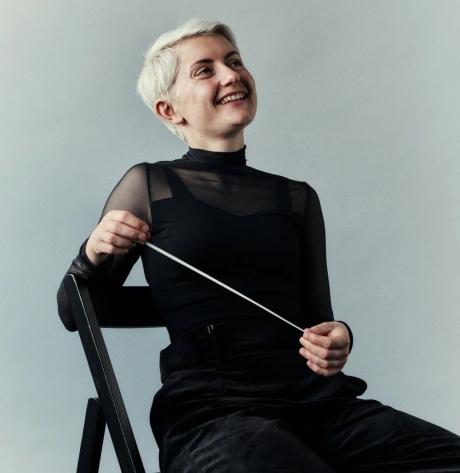
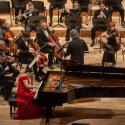
When it came to it, my own impressions of the three were all very favourable. Claudia Fuller (pictured left) was first on, with the Rachmaninov. Claudia is cool and collected, with a clear beat and an expressive left hand and, it seemed, an instant rapport with the orchestra. They made an attractive, rounded sound, with gentle touches of rubato from the winds and strings in the first dance. You had the sense that they were simply allowed to play, as the professionals they are. The waltz was distinguished by subtlety of phrasing and vivid contrasts of tone and intensity, and excellent control of all the tempo changes. The finale was incisive and exhilarating.
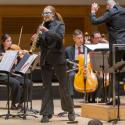
Nina Haug (pictured below) presented the Sibelius no. 5 – details of the orchestra’s colours well emphasized, the accelerando of the first movement smoothly controlled, the second emerging as an oasis of peace and tranquillity before tension was built and then relaxed, the last offering the brass “swan” theme anthemically on both occasions and the final chords like pistol shots.
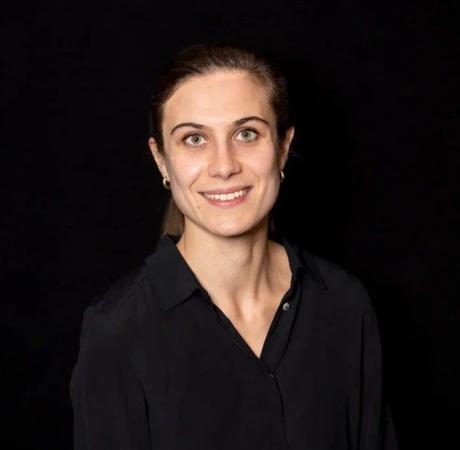
Aku Sorenson had Brahms to contend with. He brought well-built climaxes and clear structural landmarks, with a refreshingly mobile, almost vigorous, opening to the Andante contrasting with its impressively calm middle section. There was lovely cantabile playing in the Poco Allegretto, and a masculine and imperious approach to the finale’s main theme, bringing a sense of exultation before a much contrasted coda.
This was only the third appointment of an Assistant Conductor of the Hallé since the role was created under Sir Mark Elder to be made through the Siemens Hallé International Conductors Competition – the first seven (beginning with Edward Gardner and continuing with some notable names in today’s conductor-sphere) were given the job without a public competition process.



Add comment