Send in the paradoxes. Richard Rodney Bennett (1936-2012) had been so obsessed as a young man by music of the avant-garde, he would hitch-hike to Darmstadt to be in the same room as his (then) idols Berio, Maderna, and Boulez. He and Cornelius Cardew premiered important works by Boulez in the UK. And yet this was the same man who would later write, sing and play a cabaret song, “Early to Bed”, based on an endearing habit of Blossom Dearie.
This was a composition student thrilled to receive his first film commission – to score a film glorifying the robustness of British insurance – and who would also go on to write the music for Murder on the Orient Express and Four Weddings and a Funeral, and yet who would later write a very fine string orchestra work playable by amateurs, Reflections on a 16th Century Theme, which continued the direct line from Holst and Vaughan Williams.
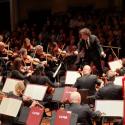
The Richard Rodney Bennett Immersion Day at the Barbican – I did a nine-hour version rather than the full, six-event, eleven-and-a-half hours – illustrated, celebrated and explained the range and achievements of a man described as a "completely natural musician" (Edward Seckerson) and as “the most complete musician of our time” (Simon Callow). It was an attempt to describe both the man in full and his music in fascinating cross-section.
The centrepiece of the day was a very well-judged and informative talk by Gerard McBurney, illustrated by film footage from the documentary Crossover (1987) by Barrie Gavin and an interview for TV by Tom Service, which segued into an illuminating discussion with Bennett’s publisher Gill Graham and his older sister, the poet Meg Peacocke. The latter presented a vivid picture of a boy who at four years old would be entranced by the sounds and acoustic properties of vacuum cleaners – he later wrote electronic music – and felt an intense and lasting pride that his mother had sung in the choir at the premiere of Holst’s The Planets.
There were five musical events, which involved no fewer than four of the BBC’s performing groups, and parts of the day were criss-crossed into the broadcasting schedules of BBC Radio 3’s “Pass the Baton!” day, focusing on all of their ensembles.
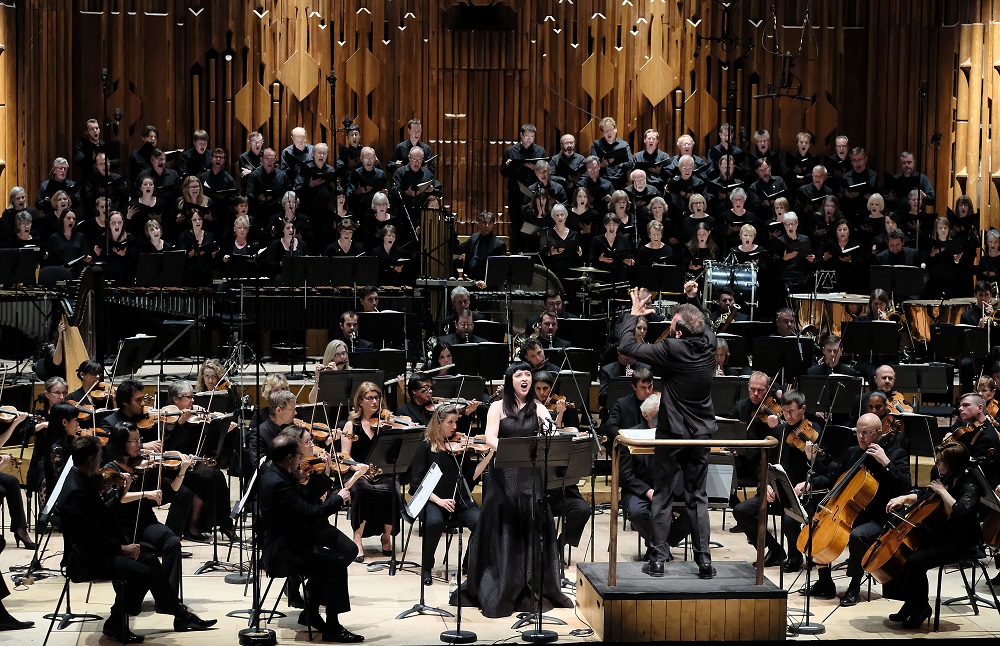
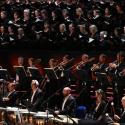
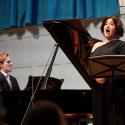
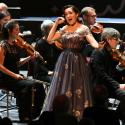
The range of music on offer was mesmerising. The most knotty and avant-garde came late in the day. Spells (1972) for soprano, chorus and orchestra had a soprano part which had originally relished the singer Jane Manning’s ability to soar or to swoop down any conceivable musical span, and received a characterful and emotional performance from Tasmanian-born soprano Allison Bell (pictured above with Rumon Gamba conducting the BBC Symphony Chorus and Orchestra). The BBC Symphony Chorus also made a very strong case for the unaccompanied choral piece “Spell of Sleep”, beautifully paced, and enjoying every dissonance. The piece immediately preceding it was derived from Bennett’s film music of the same period. Lady Caroline Lamb: Elegy for viola and orchestra seemed to be under the spell of Michel Legrand’s "Windmills of Your Mind".
The BBC Concert Orchestra’s concert – with a central section from the BBC Singers – concentrated on the more approachable music. Bennett described the orchestral piece Partita (1995) as ‘full of tunes’ and the unashamedly lyrical side was brought to the fore by all sections of the orchestra, perhaps the pick of the players to capture this infectiously melodic style being oboist Gareth Hulse. The strings made a very strong case for the “Reflections on a 16th Century Theme”, and Claire Martin captured the emotionally poignant “living will” song “Goodbye for Now,” and the carefree “Let’s Go and Live in the Country”, a song which advocates the exact opposite of its title.
A piece which stays in the mind from the early part of the day was a solo piano exploration “The Noctuary - variations on a theme of Scott Joplin”, with astonishing variety. Emiko Edwards played it well, but I wondered if there wasn’t more contrast, character and logic than she found in it. This was part of a concert by the Guildhall New Music Ensemble – recorded for Radio 3 and available here.
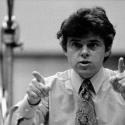
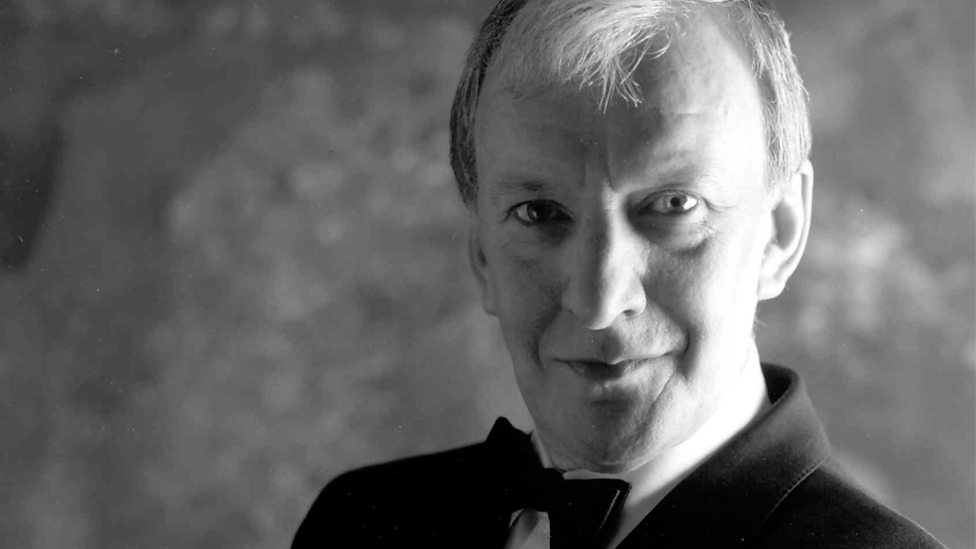
A recurring aspect of Richard Rodney Bennett’s work (the composer pictured above, copyright Novello & Co) is ways he ends pieces. There were the occasional, humorous and playful “jazz” endings, but above all a tendency to find repose and peace at the end of pieces.
There is a widespread tendency to knock the BBC when it attempts a complex task like bringing out the variety of a composer, but Richard Rodney Bennett might just be the perfect subject for a day like this, and the whole celebration of what would have been his 80th year was very well conceived and achieved. If only he could have still been around - he would have enjoyed it.
- The concerts were recorded and are available on the BBC Radio 3 website